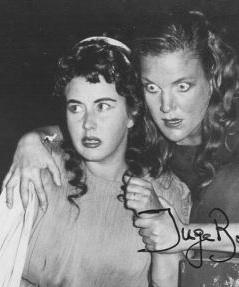
Here is the obit I wrote for this blog just before Ariadne, though having taken a few months off, I'm wondering if my hesitation in posting it is a sign I shouldn't let it go quite yet. Anyway I love a valedictory, so put on Haydn's Farewell or Wotan's Farewell or any other you've got by the Brunswick, and if I end up posting tomorrow, you can't say you didn't have time to figure out that I'm flighty and inconsistent.
***
Five years is a long time to do anything.
Well it's not quite five years. Four and a half. But sometimes life hands you bookends. It appears the first thing I wrote up on here--no, wait, the first thing I blogged is what I typed first, and I don't see any reason to disavow the medium with all its idiocies and minor glories--was Ariadne. It was October, 2005 in the same beloved production with Urmana, Villars, and Damrau. "By the end of the best evenings at the opera, of course," this all began, "you feel as if you'd run a marathon."
The last thing I'm going to blog is also going to be Ariadne. [This did not turn out to be true exactly, though La Cieca posted a Wellsungian chat about it between me and the Squirrel.]
I'm not giving it up altogether. I've gotten too attached to it. But I've come to despair a little of writing another review of a production I already told you about a year ago and trying to make some little joke because it otherwise feels stale. And maybe more importantly, I think I need to be doing something else with my writing, but that's less for you to worry about.
So as far as My Favorite Intermissions is concerned, the gongs done gung as I am wont to say during actual intermissions. I'm hoping to write things elsewhere, if asked. But as far as this is concerned, in the form in which you have indulged it, I think the time has come.
Insofar as I leave you, it is with a few words from Onegin, always dear to me.
While all those cupids, devils, serpents,
Upon the stage still romp and roar,
And while the weary band of servants
Still sleeps on furs at carriage door;
And while the people still are tapping,
Still sniffling, coughing, hissing, clapping;
And while the lamps both in and out
Still glitter grandly all about;
And while the horses, bored at tether,
Still fidget, freezing, in the snow,
And coachmen by the fire's glow
Curse masters and beat palms togeher;
[D'Annato] now has left the scene
And driven home to change and preen.
This intermission is ending. Enjoy the opera.
With gratitude for your attention,
MD'
Next up: either a spring roundup or nothin'.
Thursday, March 25, 2010


Tuesday, February 02, 2010
In which I am an idiot
Um, yes. I wrote that entire review and did not say the name of the opera company. I have to have like ten hours of sleep or I'm not functional. It's very sad really.
dell'Arte Opera Ensemble. And, as an anonymous commenter helpfully adds, photos are available at the company's site. [www.dellarteopera.org, if that link isn't working, which for some reason it seems not to be.]
dell'Arte Opera Ensemble. And, as an anonymous commenter helpfully adds, photos are available at the company's site. [www.dellarteopera.org, if that link isn't working, which for some reason it seems not to be.]
Sunday, January 31, 2010
On with the show/Off with her head
You know, If you'd told me I'd get my first opportunity to see Anna Bolena in a little theater with maybe twelve rows of seats in the East Village I'd have told you to pull the other one, but that's how it went down. I've listened to Bolena on recording for half an age and have been dying to see it. I s'pose you could call me Bo-curious. But you don't have to.
These tiny productions, like this and the Poppea at Poisson Rouge (which shared cast member Cherry Duke, interesting onstage in both) are not about note perfection, but often provide a kind of musico-theatrical satisfaction unavailable in a huge house. See it's actually more stirring when someone leaves the stage to be beheaded ten feet from you than when the same thing happens a hundred yards away. This is true. And I guess it's only in New York that a tiny company would put on Bolena instead of Barber of Seville, right?
So listen. I don't find myself inclined to review small company stuff the same way as stuff on a grillion dollar budget. Going detail by detail you might find things that are less than polished, and it isn't the point. There were weaker and stronger voices here, though I can't help but throw some verbiage in the direction of Jill Dewsnup, the bright voiced lyric whose star shone brightly enough for a larger house. (This isn't about volume--who can tell in a theater the size of a Dallas garage? She's just very good, and made much of the wonderful final scene.)
But meanwhile, the experience as a whole was utterly enjoyable. Particularly in ensembles, individual weaknesses seemed to cancel out, individual strengths to build on one another, and music usually heard from a balcony box to envelope one in the taut crescendi Donizetti, in his best work, manages to make stirring beyond the music's straightfoward materials.
I think this was opera put on with great affection, as if you and a bunch of your friends all decided to fix up the barn and put on a Tudor Queen or two, only somehow you magically became really good musicians, which presumably you mostly aren't. The artistic director notes (appropriately, in the Artistic Director's Note): "...we've tried not to worry too much about the historians and the purists. Instead we're just trying to create good sung-story-telling, being as true as possible to the style and tradition, and creating something that audeinces can appreciate." They have succeeded in this.
Oh, you know, I'm also going to throw a little extra praise to Matthew Anchel, our Enrico, who if my program math is right, has the vocal means of someone further along in his career.
For the hell of it, I will mention that I found myself wondering a little, as long as they were going with a spare approach scenically, if it might not have made sense to do that street clothes thing* that they do at BAM sometimes, see how it frees people up physically, though the costumes were made with evident care. The "Director's Note", to my amusement, contains a dig at the big R, the aesthetic we have all come to call Regie, so maybe I'm just being contrary.
Later in the year, it looks like they're putting on Konigskinder and, really, how often do you get a chance to see that? Put it on the calendar!
*ok I'm sure nobody wears what they'd wear to run to the bodega for cat litter and Little Debbies
These tiny productions, like this and the Poppea at Poisson Rouge (which shared cast member Cherry Duke, interesting onstage in both) are not about note perfection, but often provide a kind of musico-theatrical satisfaction unavailable in a huge house. See it's actually more stirring when someone leaves the stage to be beheaded ten feet from you than when the same thing happens a hundred yards away. This is true. And I guess it's only in New York that a tiny company would put on Bolena instead of Barber of Seville, right?
So listen. I don't find myself inclined to review small company stuff the same way as stuff on a grillion dollar budget. Going detail by detail you might find things that are less than polished, and it isn't the point. There were weaker and stronger voices here, though I can't help but throw some verbiage in the direction of Jill Dewsnup, the bright voiced lyric whose star shone brightly enough for a larger house. (This isn't about volume--who can tell in a theater the size of a Dallas garage? She's just very good, and made much of the wonderful final scene.)
But meanwhile, the experience as a whole was utterly enjoyable. Particularly in ensembles, individual weaknesses seemed to cancel out, individual strengths to build on one another, and music usually heard from a balcony box to envelope one in the taut crescendi Donizetti, in his best work, manages to make stirring beyond the music's straightfoward materials.
I think this was opera put on with great affection, as if you and a bunch of your friends all decided to fix up the barn and put on a Tudor Queen or two, only somehow you magically became really good musicians, which presumably you mostly aren't. The artistic director notes (appropriately, in the Artistic Director's Note): "...we've tried not to worry too much about the historians and the purists. Instead we're just trying to create good sung-story-telling, being as true as possible to the style and tradition, and creating something that audeinces can appreciate." They have succeeded in this.
Oh, you know, I'm also going to throw a little extra praise to Matthew Anchel, our Enrico, who if my program math is right, has the vocal means of someone further along in his career.
For the hell of it, I will mention that I found myself wondering a little, as long as they were going with a spare approach scenically, if it might not have made sense to do that street clothes thing* that they do at BAM sometimes, see how it frees people up physically, though the costumes were made with evident care. The "Director's Note", to my amusement, contains a dig at the big R, the aesthetic we have all come to call Regie, so maybe I'm just being contrary.
Later in the year, it looks like they're putting on Konigskinder and, really, how often do you get a chance to see that? Put it on the calendar!
*ok I'm sure nobody wears what they'd wear to run to the bodega for cat litter and Little Debbies
Friday, January 29, 2010
FOUR WORDS
LOS ANGELES
ZAJICK
ORTRUD
but since I never stop at four words: this makes me sad to live so far away, as someone who has often found Zajick a mix of staggering and a little bit mundane but who has on occasion thought "oh but I bet in Wagner...."
Anyway it's happening in December. In my fantasy world, it's an out-of-town tryout for an appearance in the Wilson Lohengrin (a piece you will admit is in some way we are too polite to specificy well-suited to Ms. Zajick's dramatic instincts) to star Jonas Kaufmann and Dorothea Roschmann. COME ON UNIVERSE MAKE IT HAPPEN.
Actual entry soon. I think.
ZAJICK
ORTRUD
but since I never stop at four words: this makes me sad to live so far away, as someone who has often found Zajick a mix of staggering and a little bit mundane but who has on occasion thought "oh but I bet in Wagner...."
Anyway it's happening in December. In my fantasy world, it's an out-of-town tryout for an appearance in the Wilson Lohengrin (a piece you will admit is in some way we are too polite to specificy well-suited to Ms. Zajick's dramatic instincts) to star Jonas Kaufmann and Dorothea Roschmann. COME ON UNIVERSE MAKE IT HAPPEN.
Actual entry soon. I think.
Wednesday, January 27, 2010
!!!
Friday, April 15, 2011 at 8 PM
CHICAGO SYMPHONY
ORCHESTRA
Riccardo Muti, Music Director and Conductor
Aleksandrs Antonenko, Tenor (Otello)
Krassimira Stoyanova, Soprano (Desdemona)
Nicola Alaimo, Baritone (Iago)
Barbara Di Castri, Mezzo-Soprano (Emilia)
Juan Francisco Gatell, Tenor (Cassio)
Antonello Ceron, Tenor (Roderigo)
Paolo Battaglia, Bass (Montano)
Eric Owens, Bass-Baritone (Lodovico)
Chicago Symphony Chorus
Duain Wolfe, Director
VERDI Otello (concert performance)
Don't know from Alaimo but Antonenko and Stoyanova:
!!!
More on the Carnegie season.
CHICAGO SYMPHONY
ORCHESTRA
Riccardo Muti, Music Director and Conductor
Aleksandrs Antonenko, Tenor (Otello)
Krassimira Stoyanova, Soprano (Desdemona)
Nicola Alaimo, Baritone (Iago)
Barbara Di Castri, Mezzo-Soprano (Emilia)
Juan Francisco Gatell, Tenor (Cassio)
Antonello Ceron, Tenor (Roderigo)
Paolo Battaglia, Bass (Montano)
Eric Owens, Bass-Baritone (Lodovico)
Chicago Symphony Chorus
Duain Wolfe, Director
VERDI Otello (concert performance)
Don't know from Alaimo but Antonenko and Stoyanova:
!!!
More on the Carnegie season.
Wednesday, January 20, 2010
Go West!
Genuinely appealing seasons coming up in Toronto and San Francisco.
SF gets Mattila as Emilia Marty before the Met does, Hot Luca in Figaro, and a Ring cast that goes from strength to strength, Larisa Diadkova and Mark Delavan being two of those strengths. COC has a Carsen Orfeo, Jill Grove and the Radvan in Aida, and the splendid Ms. Bayrakdarian in a couple of roles. This is the time of year when Maury traditionally feels confirmed in his "travel is overrated" shtick. Not this year!
SF gets Mattila as Emilia Marty before the Met does, Hot Luca in Figaro, and a Ring cast that goes from strength to strength, Larisa Diadkova and Mark Delavan being two of those strengths. COC has a Carsen Orfeo, Jill Grove and the Radvan in Aida, and the splendid Ms. Bayrakdarian in a couple of roles. This is the time of year when Maury traditionally feels confirmed in his "travel is overrated" shtick. Not this year!
Tuesday, January 12, 2010
Plácido Domingo Announces Washington National Opera's 2010-11 Season
Or so says google. 34 minutes ago. Can't get the link to work.
Ah, jeez. Ms. Midgette breaks it to us gently: "WNO's 2010-11 season to be filled with popular, less risky works."
Highlights include Racette as Iphigenie and Voigt as Salome. The rest--you got fingers, eh? Click like the wind!
Ah, jeez. Ms. Midgette breaks it to us gently: "WNO's 2010-11 season to be filled with popular, less risky works."
Highlights include Racette as Iphigenie and Voigt as Salome. The rest--you got fingers, eh? Click like the wind!
Surprise!
First things first: season announcements are upon us. Last year it seems to me it was Opera Tattler who pounced on them, so check there. Meanwhile, the nice folks at Spoleto emailed me (which I just now saw) about their season, now up on their site. Of particular interest to you lot, an opera called Flora:
"A wronged heiress, a faithful lover, a resourceful maid and, of course, an avaricious uncle play out their roles in the first opera ever performed in the American colonies. Flora swept the British Empire in the 18th century as one of the first ballad operas with lyrics written to the accompaniment of popular tunes of the time. In 1735, Flora reached Charleston and was such a success it was repeated the following year in the first purpose-built theatre in America, the Dock Street Theatre. Now 274 years later, Flora returns to the Dock Street as the theatre reopens after three years of renovation, in a delightful production that will thoroughly illuminate just why this was a theatrical staple throughout the 18th century."
What's not to like? I went to Spoleto twice as a teen, and it's divoon. Opera and chamber music in a historical, picturesque setting not far from the beach. It's like the next best thing to the Bermuda Couch Opera. Oh, wait, haven't gotten there yet.
***
Anyway, I crawled out of the hiatal cave to go to--of all things--Stiffelio last night. May be kind of dead-blogging it later with Squirrel, so only a word or two now, or maybe seven paragraphs.
You may know of the Bermuda Couch Opera, only probably you don't because it's an inside joke between me and J von Wellsung*. Anyway what you almost definitely don't know is that it is the BCO's policy not to perform any operas ending in -elio. To this bylaw was added a rider (I don't actually know what either of those words means) stating that in such operas as exclusively do not end in "-elio", no tenor shall be cast whose name terminates in "-ura."**
I had actually wondered for years about Jose Cura, because he made such a splash somehow with his early recordings, be that because of the color and phrasing that suggested a large, dramatic voice, or the pictures that made plenty of listeners want to sing beloved 19-century opera duets with him, as one not-much-used euphemism would have it. There are two disappointing facts for which, I assume, the reality of the opera house rather than the ravages of time are responsible. One is that the voice isn't really that big or even that present--some growling went on as the evening went by, but none of it made any impression at all. The other is that, for the entire first act, he sang with a kind of careless, maybe even sloppy musicality that won him no love from me or my klatsch.
God knows there was time to get around to any sort of commentary during the intermissions, which were as long as you've heard. My Least Favorite Intermissions, a line I'm surprised I haven't used before.
Notable also on this night, Andrzej Dobber who I heard nothing particularly kind about after his debut as Amonasro sounded solid and refined as...oh which character is which is this silly opera...Stankar? Not kidding as usual, that's an actual character's name. Michael Fabiano, in whom all of us at the auditions that year feel a kind of investment I'll wager, didn't have a lot of opportunities to knock anyone over with Raffaele's music, but was in swell voice and cuts a fine figure on stage.
Radvanovsky is a pet diva around here, so it won't surprise anyone when I agree with the enthusiastic opening night crowd. Opening night on a Monday, jeez. I'm going to start using the phrase "less fun than a Monday night Stiffelio" and see if it catches on. Let me know if you hear it like a year from now on a sitcom. Oh anyway right. I still feel like Radvanovsky is very strangely utilized at the Met, but I suppose Lina constituted a reasonable vehicle for her unique sound.
The thing is I get people's gripes about the voice. It's peculiar. The vibrato can sound grainy, if that's not too intersensory a description, and depending on whether you're me or someone else this strikes you as individual and interesting or weird, respectively, I guess. There's not a lot of mezzo-forte available. But the impact of it when she cranks it into overdrive remains utterly visceral for me, and the floaty pianos are not overused and awfully pretty, so if there's not a lot between two compelling extremes, I can't find much cause to kvetch. And hey, if her acting remains unsubtle, at least she's in an appropriate rep for it.
What I remembered last night is that the physical acting is secondary, as it might as well be in things with schlocky librettos. What she does, that I thought was what everyone wanted, is to find the pathos in the arch of a phrase, the "dying fall" if I'm clear on what Shakespeare meant by that. It's not a theatrical sense so much as a more broadly aesthetic one: this is not perhaps great drama, but as far as I'm concerned, it's great singing.
Domingo conducted and I don't really have to tell you what that means.
Next up: Bernarda Fink recital I'm not sure I'll blog because WTF do I know about lieder, and then dell'Arte's Anna Bolena. But before then look for the Maury & Squirrel show on like Friday.
*later inflated to a bit of internet weirdness by a third party altogether. Um, feel free to become a Friend of the Bermuda Couch Opera on facebook. Feel equally free not to.
**special dispensations may be made in the case of Anthony Laciura, but not Shura Gehrman, who I'm not sure-a was a tenor.
"A wronged heiress, a faithful lover, a resourceful maid and, of course, an avaricious uncle play out their roles in the first opera ever performed in the American colonies. Flora swept the British Empire in the 18th century as one of the first ballad operas with lyrics written to the accompaniment of popular tunes of the time. In 1735, Flora reached Charleston and was such a success it was repeated the following year in the first purpose-built theatre in America, the Dock Street Theatre. Now 274 years later, Flora returns to the Dock Street as the theatre reopens after three years of renovation, in a delightful production that will thoroughly illuminate just why this was a theatrical staple throughout the 18th century."
What's not to like? I went to Spoleto twice as a teen, and it's divoon. Opera and chamber music in a historical, picturesque setting not far from the beach. It's like the next best thing to the Bermuda Couch Opera. Oh, wait, haven't gotten there yet.
***
Anyway, I crawled out of the hiatal cave to go to--of all things--Stiffelio last night. May be kind of dead-blogging it later with Squirrel, so only a word or two now, or maybe seven paragraphs.
You may know of the Bermuda Couch Opera, only probably you don't because it's an inside joke between me and J von Wellsung*. Anyway what you almost definitely don't know is that it is the BCO's policy not to perform any operas ending in -elio. To this bylaw was added a rider (I don't actually know what either of those words means) stating that in such operas as exclusively do not end in "-elio", no tenor shall be cast whose name terminates in "-ura."**
I had actually wondered for years about Jose Cura, because he made such a splash somehow with his early recordings, be that because of the color and phrasing that suggested a large, dramatic voice, or the pictures that made plenty of listeners want to sing beloved 19-century opera duets with him, as one not-much-used euphemism would have it. There are two disappointing facts for which, I assume, the reality of the opera house rather than the ravages of time are responsible. One is that the voice isn't really that big or even that present--some growling went on as the evening went by, but none of it made any impression at all. The other is that, for the entire first act, he sang with a kind of careless, maybe even sloppy musicality that won him no love from me or my klatsch.
God knows there was time to get around to any sort of commentary during the intermissions, which were as long as you've heard. My Least Favorite Intermissions, a line I'm surprised I haven't used before.
Notable also on this night, Andrzej Dobber who I heard nothing particularly kind about after his debut as Amonasro sounded solid and refined as...oh which character is which is this silly opera...Stankar? Not kidding as usual, that's an actual character's name. Michael Fabiano, in whom all of us at the auditions that year feel a kind of investment I'll wager, didn't have a lot of opportunities to knock anyone over with Raffaele's music, but was in swell voice and cuts a fine figure on stage.
Radvanovsky is a pet diva around here, so it won't surprise anyone when I agree with the enthusiastic opening night crowd. Opening night on a Monday, jeez. I'm going to start using the phrase "less fun than a Monday night Stiffelio" and see if it catches on. Let me know if you hear it like a year from now on a sitcom. Oh anyway right. I still feel like Radvanovsky is very strangely utilized at the Met, but I suppose Lina constituted a reasonable vehicle for her unique sound.
The thing is I get people's gripes about the voice. It's peculiar. The vibrato can sound grainy, if that's not too intersensory a description, and depending on whether you're me or someone else this strikes you as individual and interesting or weird, respectively, I guess. There's not a lot of mezzo-forte available. But the impact of it when she cranks it into overdrive remains utterly visceral for me, and the floaty pianos are not overused and awfully pretty, so if there's not a lot between two compelling extremes, I can't find much cause to kvetch. And hey, if her acting remains unsubtle, at least she's in an appropriate rep for it.
What I remembered last night is that the physical acting is secondary, as it might as well be in things with schlocky librettos. What she does, that I thought was what everyone wanted, is to find the pathos in the arch of a phrase, the "dying fall" if I'm clear on what Shakespeare meant by that. It's not a theatrical sense so much as a more broadly aesthetic one: this is not perhaps great drama, but as far as I'm concerned, it's great singing.
Domingo conducted and I don't really have to tell you what that means.
Next up: Bernarda Fink recital I'm not sure I'll blog because WTF do I know about lieder, and then dell'Arte's Anna Bolena. But before then look for the Maury & Squirrel show on like Friday.
*later inflated to a bit of internet weirdness by a third party altogether. Um, feel free to become a Friend of the Bermuda Couch Opera on facebook. Feel equally free not to.
**special dispensations may be made in the case of Anthony Laciura, but not Shura Gehrman, who I'm not sure-a was a tenor.
Subscribe to:
Posts (Atom)