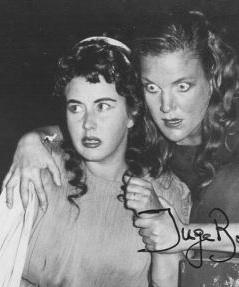
Funny how, when you're approximately the only person that liked something, you feel like its defender and champion even if you liked it in a decidedly tepid way.
Here's what I think happened, though I didn't come up with this entirely on my own: people read/heard/read about/heard about Dessay's dismissive remarks about Sonnambula and it colored their reaction to the entire piece, made them see satire and condescension where, by and large, it wasn't there (even if what was there wasn't exactly beauty or genius.) Central to this idea, for me, is the now much bemoaned piece of business in which Dessay makes her entrance to that enchanting orchestral bit just before singing "Ah, se una volta sola..." and walks up to the board on which has been written "Village Square" and all that, and dreamily writes "ARIA" in big letters.
Judging by the reaction, people find this to be a gigantic "fuck you" to Bellini, to the audience, to the stagehands, to Jesus, and pretty much everyone else. I kind of understand why, especially when I reach back and think of Mark Morris' kitschy-cute biz for Amor in his Orfeo, but I just think this reaction is mostly about things external to the moment. When I saw it, before the angry outpouring, I found it to be gently funny, albeit basically of a piece with the shallow self-referentiality that even I concede makes the Concept ultimately unworkable.
There is only one truly derisive gesture in the piece (coupled with one absolutely inexplicable one, the tearing of the scores and that whole hoedown before the first curtain) which is the aggressively dopey Swissing it up for "Ah, non giunge." Perhaps people are right to feel poked in the eye by that one. Since I don't love the opera itself, I found it funny, but this is (a little to my surprise, I'll admit) a minority opinion.
Listen, our forgiveness of ridiculous libretti is, I think, directly proportional to our love for the music. I guess I might get indignant about a production that seemed to mock La Gioconda even though it's asking for it. I pissed off a friend by calling Sonnambula nonsense: it's no more nonsensical than plenty of other things. I've just never found the music sufficiently wonderful to transport me to that land of suspended disbelief we ideally inhabit in the opera house when we need to.
The reaction at the prima still feels bitter and puritanical to me, but only in tenor and volume; I'm willing to grant that Ms. Zimmerman took a potshot at her audience (and by this I mean the people she should have considered her audience--the people who love the opera she chose to conceptualize) with the sarcastic folk-dancing, even if it felt more like a gentle nudge to me.
Thursday, March 05, 2009


Wednesday, March 04, 2009
briefly noted
Check 5BMF.org for details: March 20 @ 7:30, a recital by former (?) blogstress and very fine soprano Anne-Carolyn Bird et al.
Tuesday, March 03, 2009
ETA, sort of
There's actually one thing I wrote that I just reread and felt like an asshole for saying, which is that people who love Sonnambula probably don't have adventurous tastes in theater, basically. I was take to task for a couple of things, but not this one for some reason. It's just not fair, and I wish to request those words on a plate with some sauce, k?
Monday, March 02, 2009
Another openin', another show
So when I was studying some language or other, the professor, if you said something in a way that was viable but unlikely, would reach his right arm around the back of his head and grab his left ear [you should do this. it still won't necessarily make sense but I want to feel I have some influence in the world] and say "that's one way of saying it."
That's more or less my reaction to Mary Zimmerman's perfectly acceptable, occasionally charming new production of Vincenzo Bellini's perfectly acceptable, occasionally charming opera La Sonnambula. Because the re-imagining of La Sonnambula as...uh, let me see if I can get this right...mostly stuff that happens backstage during rehearsals for a production of La Sonnambula, except when it isn't quite that, leads one into a number of scenes that don't make sense unless we're suddenly exploring the liminal spaces between performance and reality, which frankly I just don't think we are. But...
Here's the thing. La Sonnambula is, but really, nonsense, and your two main options if you are saddled with the task of reviving it are 1) run with it, whoop it up, let the sweetly nostalgically ludicrous parts as opposed to the just plain dumb ones happen where they happen, give the core audience for La S the Swiss Miss commercial they are craving, or 2) fuck with it a little because maybe you'll hit some of the right notes, though if you're not perceived as having hit enough of them, you'll get violently boo'ed. Like seriously the only time I've ever heard anything like it was when Djokovic told 4,000 people "you don't like me anyway because I'm not Andy Roddick."*
Anyway, that's how it went down, because one thing I guess Mary Zimmerman or Peter Gelb might have thought of is that people who really think La Sonnambula is great are not usually the ones saying "did you catch that nutty new Hedda Gabler with the dwarves at BAM?" They are, however, the ones who tonight were heard to yell (in what might have devolved into violence) "Go back to Greenwich Village" in an argument right after the abbreviated curtain calls. This is the funniest insult ever for reasons I hope are obvious.
Now you will possibly exhume the corpse of Callas, the better to beat me with, and say if it's so goddamn stupid, Maur Bear*, why was it the best thing that ever happened on earth when Callas sang it? Which I won't answer because I wasn't born then, but my guess is it was a beacon of Kalageroupoliciousness in a sea of drivel, but I don't really know because not only was I not there, but I don't listen to it much. Actually, it's slightly interesting to imagine Callas in this production (I started to say "the instant offense" but that's just habit) because it never would have worked. On the basis of recordings and my own personal Callas mythology which may not be yours, how she put stuff like Amina over was some combination of a somewhat profound lack of critical intelligence that let her take such a story fairly seriously and the explosive creative genius we all agree on that rested upon an ability to somehow make any character** mythical in stature.
This is kind of the opposite of Dessay. Dessay goes at a character in a calculated way, and when the character isn't as smart as she is, as Jonathan von Wellsung points out, she sometimes makes great sport of, y'know, mocking the character a little. She and Mary Zimmerman must have ganged up on Amina that way (btw Amina is a fictional character and has no feelings, so please don't start feeling sorry for her even if I do have some old couch cushions sitting in my apartment because I can't put them on the curb when it's snowing. It's diff.) because the very last scene change, for "Ah, non giunge!" is absolutely in the same spirit. In it, Ms. Zimmerman seems to say: look, I could have given you Natalie Dessay in a fucking dirndl doing everything but yodeling, but I thought that would be dumb. Don't you agree? Because in fact the vaguely deliniated rehearsal-within-an-opera is over and JDF slaps on some Lederhosen and they all look like a bunch of idiots. I think this is what pissed people off to the point of almost violence. Well, this and my very favorite detail, which is what Dessay writes on the chalkboard just before "Ah! Non credea" which I won't spoil, but it made people laugh. Come on now--you know I'm pissy about overly laughy audiences, but I thought it was a funny-sweet moment and absolutely unoffensive.
The thing is it's all so harmless. It's the most superficial makeover imaginable, basically an excuse for modern dress, which I found vastly refreshing to see on the Met's stage. The only noteworthy sin of the production is that, as I think I started to say, the rehearsal/real life conceit makes almost everything having to do with count Rodolfo tough to fish any sense out of without excessive use of situational quotation marks. But you know me, I have trouble with the plot of Mary Tyler Moore episodes sometimes, so maybe I'm not the person to ask.
Certainly there are some other misfires sprinkled throughout. The stock diva stuff at Dessay's entrance, this and that. But there were also scattered lovelinesses, like the small redemption granted to Lisa at the last minute. I guess what I heard people reacting to most was the production making light of the material, and again, if you really love the material, that's kind of a fair charge. I really don't.
Oh but Dessay, right. Really I think in healthier voice here than in either Lucia or Fille, much as I liked her in both. She's obviously not doing as much vocal tearing-it-up as in Lucia, and it leaves her some room to breathe. The 93-year-old gent who sat beside us and who didn't love the updating but managed not to get hysterical about it said: she's perfect in this. And I think in fact she has become very good in this, despite a voice that isn't quite right for it. "Ah! Non credea" was very fine-grained but the line was firm, and though she busted loose a little more with her high notes at the dress, there was nothing to complain about. The ornamentation was, to my ear, inventive but idiomatic, the trill realish and the scales and arpeggios clean and unhesitant. Less than before I had the sense of hearing a too reedy voice trying to fill out music that wanted something fatter.
Our 93-year-old friend went on to say that he didn't think Florez was quite right for Bellini, better in purely flashy things where the fluidity and the top are all he needs, probably alluding to his indisputable success in Barbiere. He was probably basically right about this, too, though the second act aria and cabaletta were awfully convincing. He didn't express his thoughts, our pal, on Jane Bunnell but I was kind of happy to see her given a role that suited her nicely and not made to wear some dowdy wig.
Honestly, the rest of the singing I don't have strong opinions about, but I'm sure someone else will. Same goes for the conducting, though I was a little surprised at the total lack of rowdiness at the conductor's call. I think people were doing Lamaze exercises in preparation for their response to the production team.
By the way, once in a while it's good to pretend you're not an opera fan, for perspective, I mean not a hardcore one, and think: how would I be responding to this if I were not funny in the head? We did this accidentally by talking to this totally cute fellow in front of us during the chorus of disapproval. "Who are those people?" he asked, and we explained that they were the production team. He started laughing and eventually shouted "may god strike them all dead!' Yeah, exactly.
So basically if you love Sonnambula you shouldn't go see this because you're going to get your feelings hurt, and if you hate Sonnambula, you maybe shouldn't see it either because the production doesn't do sufficient violence to the material. It's sold out anyway, so either way you're in luck.
Next up: can't remember. It's late.
oh hey p.s. it's the next morning and I'm trying to do the "Am I a Hypocrite" test which is almost always worth doing. The case in point being my kvetching about Mark Morris', uh, fanciful reimagining of Gluck's Orfeo. I didn't boo, because I don't, but I probably shouldn't call people oversensitive when I felt pretty enraged at an assault on a thing I hold dear. So yes, looks like this is me being a hypocrite. Welp, that's the internet for ya, a forum for the parts of ourselves we would, in a perfect world, keep to ourselves.
*which was absolutely true, but not the sporting thing to point it out
**yeah, I grew a beard at the suggestion of my waistline
***except maybe Rosina. Ow. And that other Rossini role she recorded, Muffaletta or whatevs.
That's more or less my reaction to Mary Zimmerman's perfectly acceptable, occasionally charming new production of Vincenzo Bellini's perfectly acceptable, occasionally charming opera La Sonnambula. Because the re-imagining of La Sonnambula as...uh, let me see if I can get this right...mostly stuff that happens backstage during rehearsals for a production of La Sonnambula, except when it isn't quite that, leads one into a number of scenes that don't make sense unless we're suddenly exploring the liminal spaces between performance and reality, which frankly I just don't think we are. But...
Here's the thing. La Sonnambula is, but really, nonsense, and your two main options if you are saddled with the task of reviving it are 1) run with it, whoop it up, let the sweetly nostalgically ludicrous parts as opposed to the just plain dumb ones happen where they happen, give the core audience for La S the Swiss Miss commercial they are craving, or 2) fuck with it a little because maybe you'll hit some of the right notes, though if you're not perceived as having hit enough of them, you'll get violently boo'ed. Like seriously the only time I've ever heard anything like it was when Djokovic told 4,000 people "you don't like me anyway because I'm not Andy Roddick."*
Anyway, that's how it went down, because one thing I guess Mary Zimmerman or Peter Gelb might have thought of is that people who really think La Sonnambula is great are not usually the ones saying "did you catch that nutty new Hedda Gabler with the dwarves at BAM?" They are, however, the ones who tonight were heard to yell (in what might have devolved into violence) "Go back to Greenwich Village" in an argument right after the abbreviated curtain calls. This is the funniest insult ever for reasons I hope are obvious.
Now you will possibly exhume the corpse of Callas, the better to beat me with, and say if it's so goddamn stupid, Maur Bear*, why was it the best thing that ever happened on earth when Callas sang it? Which I won't answer because I wasn't born then, but my guess is it was a beacon of Kalageroupoliciousness in a sea of drivel, but I don't really know because not only was I not there, but I don't listen to it much. Actually, it's slightly interesting to imagine Callas in this production (I started to say "the instant offense" but that's just habit) because it never would have worked. On the basis of recordings and my own personal Callas mythology which may not be yours, how she put stuff like Amina over was some combination of a somewhat profound lack of critical intelligence that let her take such a story fairly seriously and the explosive creative genius we all agree on that rested upon an ability to somehow make any character** mythical in stature.
This is kind of the opposite of Dessay. Dessay goes at a character in a calculated way, and when the character isn't as smart as she is, as Jonathan von Wellsung points out, she sometimes makes great sport of, y'know, mocking the character a little. She and Mary Zimmerman must have ganged up on Amina that way (btw Amina is a fictional character and has no feelings, so please don't start feeling sorry for her even if I do have some old couch cushions sitting in my apartment because I can't put them on the curb when it's snowing. It's diff.) because the very last scene change, for "Ah, non giunge!" is absolutely in the same spirit. In it, Ms. Zimmerman seems to say: look, I could have given you Natalie Dessay in a fucking dirndl doing everything but yodeling, but I thought that would be dumb. Don't you agree? Because in fact the vaguely deliniated rehearsal-within-an-opera is over and JDF slaps on some Lederhosen and they all look like a bunch of idiots. I think this is what pissed people off to the point of almost violence. Well, this and my very favorite detail, which is what Dessay writes on the chalkboard just before "Ah! Non credea" which I won't spoil, but it made people laugh. Come on now--you know I'm pissy about overly laughy audiences, but I thought it was a funny-sweet moment and absolutely unoffensive.
The thing is it's all so harmless. It's the most superficial makeover imaginable, basically an excuse for modern dress, which I found vastly refreshing to see on the Met's stage. The only noteworthy sin of the production is that, as I think I started to say, the rehearsal/real life conceit makes almost everything having to do with count Rodolfo tough to fish any sense out of without excessive use of situational quotation marks. But you know me, I have trouble with the plot of Mary Tyler Moore episodes sometimes, so maybe I'm not the person to ask.
Certainly there are some other misfires sprinkled throughout. The stock diva stuff at Dessay's entrance, this and that. But there were also scattered lovelinesses, like the small redemption granted to Lisa at the last minute. I guess what I heard people reacting to most was the production making light of the material, and again, if you really love the material, that's kind of a fair charge. I really don't.
Oh but Dessay, right. Really I think in healthier voice here than in either Lucia or Fille, much as I liked her in both. She's obviously not doing as much vocal tearing-it-up as in Lucia, and it leaves her some room to breathe. The 93-year-old gent who sat beside us and who didn't love the updating but managed not to get hysterical about it said: she's perfect in this. And I think in fact she has become very good in this, despite a voice that isn't quite right for it. "Ah! Non credea" was very fine-grained but the line was firm, and though she busted loose a little more with her high notes at the dress, there was nothing to complain about. The ornamentation was, to my ear, inventive but idiomatic, the trill realish and the scales and arpeggios clean and unhesitant. Less than before I had the sense of hearing a too reedy voice trying to fill out music that wanted something fatter.
Our 93-year-old friend went on to say that he didn't think Florez was quite right for Bellini, better in purely flashy things where the fluidity and the top are all he needs, probably alluding to his indisputable success in Barbiere. He was probably basically right about this, too, though the second act aria and cabaletta were awfully convincing. He didn't express his thoughts, our pal, on Jane Bunnell but I was kind of happy to see her given a role that suited her nicely and not made to wear some dowdy wig.
Honestly, the rest of the singing I don't have strong opinions about, but I'm sure someone else will. Same goes for the conducting, though I was a little surprised at the total lack of rowdiness at the conductor's call. I think people were doing Lamaze exercises in preparation for their response to the production team.
By the way, once in a while it's good to pretend you're not an opera fan, for perspective, I mean not a hardcore one, and think: how would I be responding to this if I were not funny in the head? We did this accidentally by talking to this totally cute fellow in front of us during the chorus of disapproval. "Who are those people?" he asked, and we explained that they were the production team. He started laughing and eventually shouted "may god strike them all dead!' Yeah, exactly.
So basically if you love Sonnambula you shouldn't go see this because you're going to get your feelings hurt, and if you hate Sonnambula, you maybe shouldn't see it either because the production doesn't do sufficient violence to the material. It's sold out anyway, so either way you're in luck.
Next up: can't remember. It's late.
oh hey p.s. it's the next morning and I'm trying to do the "Am I a Hypocrite" test which is almost always worth doing. The case in point being my kvetching about Mark Morris', uh, fanciful reimagining of Gluck's Orfeo. I didn't boo, because I don't, but I probably shouldn't call people oversensitive when I felt pretty enraged at an assault on a thing I hold dear. So yes, looks like this is me being a hypocrite. Welp, that's the internet for ya, a forum for the parts of ourselves we would, in a perfect world, keep to ourselves.
*which was absolutely true, but not the sporting thing to point it out
**yeah, I grew a beard at the suggestion of my waistline
***except maybe Rosina. Ow. And that other Rossini role she recorded, Muffaletta or whatevs.
Sunday, March 01, 2009
Tuesday, February 17, 2009
Hooray! (You want witty headlines? Try The Onion.)
I don't know quite where to start in gabbing about how much I liked last night's Trovatore, and yes, that's your shot across the bow in case you listened (was it broadcast?), hated it, and are going to get the vapors if someone gets enthusiastic about it.
In fact, that's all that is, because I know exactly where to start: Sondra Radvanovsky! Who received quite an outpouring of audience love after D'amor, the only possible response to such an exquisite traversal. There are valid quibbles I don't happen to think were truly significant, yeah. The voice is utterly American; not Italian. It's lean, not Tebaldi plush. There is also the fact that her expression in phrasing tends more toward plain sincerity than abandon: on the Joan Scale she's further toward Fontaine than Crawford.* Some people need more thrashing about in their Verdi, so caveat auditor.
But to balance these, she's...just fucking great in this music is what she is, I daresay exciting. We all heard the run was going to be split with Fleming. Whatever she might have done in the role, her voice is about half the size of Radvanovsky's and her high notes, these days, not as secure, so that's a win. Ukh, the high notes. They're just massive, but also with a fancy fil-di-voce option, and not overused at that. And she did, if I'm not wrong, two verses of "di tale amor" as well as a passionate "tu vedrai," and some very game physical acting if Anna Netrebko hasn't completely worn us out on Jeritza-and-beyond singing in non-traditional positions.
The thing to remember is that for years, it almost hasn't mattered who sang Leonora, because whoever they were, they were going to get upstaged by the Azucena. I saw this happen with Diadkova and...I'm not certain who, and that's not a rhetorical forgetting. Timing-wise it may have been Crider. So take it as a sincere doffing of the cap to Radvanovsky when I say in no way was she sung off the stage by Zajick. Right, the Zajick who is an absolute monster (in the best way) in roles typified by Azucena.
Also the Zajick who is aging a little, but as with so many things, this has its advantages in with the bargain. For one thing, I think singing a wider variety of roles like Tammy Faye in American Tragedy has broadened what is generally an essentially nonexistent philosophy of acting. Zajick has found intermittent pathos here, viz: Ai nostri monti, utterly affecting with Mr. Alvarez. Meanwhile, she can tear you a new one with guttural lines like the almost George Crumb-ish dare to a mezzo that pops up twice in "Deh! rallentate, o barbari." An unwritten maybe C had to be rescued, but rescued it was. [ETA: well...salvaged. It didn't squeak to a stop and it didn't crack, but you couldn't say it was a good note.] The rest of the role she kinda stands there and sings like it's no fucking big deal. I have never been Zajick's #1 fan but in shit like this, c'mon.
Alvarez was not triumphant but, I think, successful. Not so much in convincing us he's a spinto now as in convincing us he can pull off a spinto role with some aplomb and no vocal mishaps. "Ah, si" was, sure, a touch cautious. Like any lyric flirting with spintery, he ain't got no trill, substituting an ornate little figure out of Couperin (with some very particular notation that looks like a fishing fly for catching trout) and the rest of the aria was similarly a little bit on eggshells, but then he went on to fare quite well in the barn-burner that follows, dropping out where it's traditional to do so and returning with a long, loud C with two syllables (even if they had the same vowel: al agua! I'm sure there is something deep in the psychic underworld of the libretto to explain his sudden urge to go swimming, if not his sudden change of nationality from libretto-Italian story-Spanish to Spanish through and through.) Okay or B if it was transposed. I'm not the person to ask. I think later in the run his often stylish way with a phrase is going to triumph over nerves. I hope to be there to find out. Also, whether you feel he's filling spinto shoes or not, he doesn't sound like he's beating his voice up, so at worst, we don't have to listen to him croaking stuff in five years he was booked for now.
Hvorostovsky needs little approval from me, house favorite that he is, and truth to tell, I had just slightly less approval to give than the rest of the house did. Obviously there were no major faults, because the man's a machine. He doesn't fuck up, or come close. Maybe here it was a matter of personality, too much Oneginly hautuer? Il Balen just didn't kill me, nevermind that I always think it's about whales. (Cetology joke, yo! What, I'm reading Moby Dick right now.)
Oh, you wanted to hear about the production? Well sure, I can do that, after a fashion. It's good news, lads and ladies. Neither radical nor ploddingly literal, it does what it needs to do. Makes some spatial sense of the world's least convincing case of mistaken identity, e.g. (It's so dark I thought you were a tenor! D'oh!) It, uh, needs a good healthy greasing of the loudly crunchy stage turntable, but then who doesn't love a production on a turntable? One thing the turntable does that I'm fond of is allow us to watch characters and supers whose act has ended exist for a moment more, giving something of a cinematic fade instead of curtain up, curtain down.
And yes, there's a fair amount of "I am grabbing your arm! Look in the other direction" bustling about, but certain crowd scenes work out well. As Will Berger's thoughtful essay-interview in the program points out, the production makes no foolish effort to pretend the anvil chorus is a naturalistic scene of great subtlety. It's the goddamn anvil chorus, so it's played for big, with wonderfully loud anvils whacked away at by some unapologetically cast slabs of man with all the stately grace of Olivia Newton John's video for "Physical." This is as it should be.
Shit, I almost left out Kwangchul Youn, because that aria always feels like, forgive me, the plot before the porn, but here as in Tristan, he's stylish and solid.
Seems like there was something else to say but if so I'll come back and edit. That's how I roll.
*For the record, 1 is Joan Sutherland and 10 is Joan of Arc as portrayed by Falconetti
Up next: Adriana, then the auditions.
In fact, that's all that is, because I know exactly where to start: Sondra Radvanovsky! Who received quite an outpouring of audience love after D'amor, the only possible response to such an exquisite traversal. There are valid quibbles I don't happen to think were truly significant, yeah. The voice is utterly American; not Italian. It's lean, not Tebaldi plush. There is also the fact that her expression in phrasing tends more toward plain sincerity than abandon: on the Joan Scale she's further toward Fontaine than Crawford.* Some people need more thrashing about in their Verdi, so caveat auditor.
But to balance these, she's...just fucking great in this music is what she is, I daresay exciting. We all heard the run was going to be split with Fleming. Whatever she might have done in the role, her voice is about half the size of Radvanovsky's and her high notes, these days, not as secure, so that's a win. Ukh, the high notes. They're just massive, but also with a fancy fil-di-voce option, and not overused at that. And she did, if I'm not wrong, two verses of "di tale amor" as well as a passionate "tu vedrai," and some very game physical acting if Anna Netrebko hasn't completely worn us out on Jeritza-and-beyond singing in non-traditional positions.
The thing to remember is that for years, it almost hasn't mattered who sang Leonora, because whoever they were, they were going to get upstaged by the Azucena. I saw this happen with Diadkova and...I'm not certain who, and that's not a rhetorical forgetting. Timing-wise it may have been Crider. So take it as a sincere doffing of the cap to Radvanovsky when I say in no way was she sung off the stage by Zajick. Right, the Zajick who is an absolute monster (in the best way) in roles typified by Azucena.
Also the Zajick who is aging a little, but as with so many things, this has its advantages in with the bargain. For one thing, I think singing a wider variety of roles like Tammy Faye in American Tragedy has broadened what is generally an essentially nonexistent philosophy of acting. Zajick has found intermittent pathos here, viz: Ai nostri monti, utterly affecting with Mr. Alvarez. Meanwhile, she can tear you a new one with guttural lines like the almost George Crumb-ish dare to a mezzo that pops up twice in "Deh! rallentate, o barbari." An unwritten maybe C had to be rescued, but rescued it was. [ETA: well...salvaged. It didn't squeak to a stop and it didn't crack, but you couldn't say it was a good note.] The rest of the role she kinda stands there and sings like it's no fucking big deal. I have never been Zajick's #1 fan but in shit like this, c'mon.
Alvarez was not triumphant but, I think, successful. Not so much in convincing us he's a spinto now as in convincing us he can pull off a spinto role with some aplomb and no vocal mishaps. "Ah, si" was, sure, a touch cautious. Like any lyric flirting with spintery, he ain't got no trill, substituting an ornate little figure out of Couperin (with some very particular notation that looks like a fishing fly for catching trout) and the rest of the aria was similarly a little bit on eggshells, but then he went on to fare quite well in the barn-burner that follows, dropping out where it's traditional to do so and returning with a long, loud C with two syllables (even if they had the same vowel: al agua! I'm sure there is something deep in the psychic underworld of the libretto to explain his sudden urge to go swimming, if not his sudden change of nationality from libretto-Italian story-Spanish to Spanish through and through.) Okay or B if it was transposed. I'm not the person to ask. I think later in the run his often stylish way with a phrase is going to triumph over nerves. I hope to be there to find out. Also, whether you feel he's filling spinto shoes or not, he doesn't sound like he's beating his voice up, so at worst, we don't have to listen to him croaking stuff in five years he was booked for now.
Hvorostovsky needs little approval from me, house favorite that he is, and truth to tell, I had just slightly less approval to give than the rest of the house did. Obviously there were no major faults, because the man's a machine. He doesn't fuck up, or come close. Maybe here it was a matter of personality, too much Oneginly hautuer? Il Balen just didn't kill me, nevermind that I always think it's about whales. (Cetology joke, yo! What, I'm reading Moby Dick right now.)
Oh, you wanted to hear about the production? Well sure, I can do that, after a fashion. It's good news, lads and ladies. Neither radical nor ploddingly literal, it does what it needs to do. Makes some spatial sense of the world's least convincing case of mistaken identity, e.g. (It's so dark I thought you were a tenor! D'oh!) It, uh, needs a good healthy greasing of the loudly crunchy stage turntable, but then who doesn't love a production on a turntable? One thing the turntable does that I'm fond of is allow us to watch characters and supers whose act has ended exist for a moment more, giving something of a cinematic fade instead of curtain up, curtain down.
And yes, there's a fair amount of "I am grabbing your arm! Look in the other direction" bustling about, but certain crowd scenes work out well. As Will Berger's thoughtful essay-interview in the program points out, the production makes no foolish effort to pretend the anvil chorus is a naturalistic scene of great subtlety. It's the goddamn anvil chorus, so it's played for big, with wonderfully loud anvils whacked away at by some unapologetically cast slabs of man with all the stately grace of Olivia Newton John's video for "Physical." This is as it should be.
Shit, I almost left out Kwangchul Youn, because that aria always feels like, forgive me, the plot before the porn, but here as in Tristan, he's stylish and solid.
Seems like there was something else to say but if so I'll come back and edit. That's how I roll.
*For the record, 1 is Joan Sutherland and 10 is Joan of Arc as portrayed by Falconetti
Up next: Adriana, then the auditions.
Monday, February 16, 2009
One More Reason I Want to Gay Marry Regina Spektor
...which is complicated, I realize.
To be watched with a handkerchief in one hand (for theatrically dabbing the tears) and a molotov cocktail in the other (fuck petitions!)
To be watched with a handkerchief in one hand (for theatrically dabbing the tears) and a molotov cocktail in the other (fuck petitions!)
Sunday, February 15, 2009
Not a rhetorical question, though you'll quicky wish it had been
I don't think I typed about Onegin, but the main thing I wanted to do in any case was clone about 100 of me and have us stand arranged so that if you saw us from above, it spelled WTF. Not about Hampson, who had good moments and bad (the Russian displays a positively Puerto Rican relationship with the consonant kingdom, but he basically gets the character), nor certainly about Mattila, who sang the letter precisely as it is meant to be sung. Oh, not Beczala, either. Fine showing. I thought he sounded strained in Lucia last year but am beginning to suspect he's the Next Big Tenor Thing.
No, ladies and germs, my WTF is reserved for Mr. Richard Bernstein, the evening's Zaretzky, and tucked into its what-the-fuckish abbreviationality, it carries the condensed message: why on earth are you singing tiny roles, man?! This can only be an "I wanted my weekends free" raise-the-kids kind of lifestyle choice, it seems to me, because the voice is objectively of such fine quality. Also he looks like a Jewish fratboy all growed up, but in a good way. (I lived across the street from the SAM house in college. Only time I've ever had a fond thought about basketball, or, say, used binoculars to watch it.)
Well you know where I'm going? I'm marching straight over to his website to see if maybe he takes a bunch of gigs in some other city or something. Won't you come with? Oh, uh huh. See? This season it looks like he has covered a bunch of stuff, for one thing. I hear you can make a living that way and potentially never have to put a wig on. And then he did a shitload of Raimondos at Central City, which is almost certainly in one of those states with more outdoors than indoors where people choose to spend their summers even if they're not singing Raimondo, which most people aren't.
Well, as that great opera fan Chernyshevsky once asked, what's to be done? Either he sings tertiary roles at the Met because he wants to or he sings tertiary roles at the Met because someone's an idiot. I'm not in a position to change anyone's mind and god knows I get no say in the world's idiot count, though I have been accused of adding to it. And that, as the bard wrote, cleans up the matter.
No, ladies and germs, my WTF is reserved for Mr. Richard Bernstein, the evening's Zaretzky, and tucked into its what-the-fuckish abbreviationality, it carries the condensed message: why on earth are you singing tiny roles, man?! This can only be an "I wanted my weekends free" raise-the-kids kind of lifestyle choice, it seems to me, because the voice is objectively of such fine quality. Also he looks like a Jewish fratboy all growed up, but in a good way. (I lived across the street from the SAM house in college. Only time I've ever had a fond thought about basketball, or, say, used binoculars to watch it.)
Well you know where I'm going? I'm marching straight over to his website to see if maybe he takes a bunch of gigs in some other city or something. Won't you come with? Oh, uh huh. See? This season it looks like he has covered a bunch of stuff, for one thing. I hear you can make a living that way and potentially never have to put a wig on. And then he did a shitload of Raimondos at Central City, which is almost certainly in one of those states with more outdoors than indoors where people choose to spend their summers even if they're not singing Raimondo, which most people aren't.
Well, as that great opera fan Chernyshevsky once asked, what's to be done? Either he sings tertiary roles at the Met because he wants to or he sings tertiary roles at the Met because someone's an idiot. I'm not in a position to change anyone's mind and god knows I get no say in the world's idiot count, though I have been accused of adding to it. And that, as the bard wrote, cleans up the matter.
Wednesday, February 11, 2009
Okay so there is ONE surprise
At least I'm surprised, and as much as I tell myself it'd be more fun to learn of the new season all at once (as in olden days) I can't stop myself from looking into the crystal ball over the course of the season. What the crystal ball failed to mention that is faintly amusing is that next year will apparently be...your chance to hear Kiri te Kanawa bellow "he's on the BOBSLED TEAM!" I don't mean to be critical but she's not known for her irrepressible way with a punchline, is she?
You've read about the season elsewhere already. It sounds pretty good without being vastly exciting, right?
You've read about the season elsewhere already. It sounds pretty good without being vastly exciting, right?
Thursday, February 05, 2009
Also: This
If I'd known earlier that this existed as a visual document, I might have led a happier and more productive life:
Wednesday, February 04, 2009
Eric the half-a-concert
Awful to find oneself riffing on Monty Python when, in one's high school days, one associated Monty Python mostly with mortifying attempts to cobble together enough English accent to get through the parrot skit and, consequently, with bitter weariness. But I couldn't help it. It was just such an odd joy to plunk down $10 for a lousy seat in a hall where (aurally) there really are not lousy seats and strike a deal with oneself to go to the first 50 minutes of a concert and the guiltlessly go home. The second half (Strauss tone poem whatsitcalled) was most probably fab, but then so is getting home at ten to my blissfully overheated apartment.
Not a lot to say, enjoyed Ligeti's Atmospheres though I'll never quite have a place to tuck Ligeti away in my brain, i.e. don't wholly know what's special about him. For sure there are gripping effects in Atmospheres, but also...the section where all the string players are just doing layers and layers of harmonics? That is a bold, bracing musical gesture that not one person in the history of Suzuki lessons who realized how to play harmonics has not thought "oh hey what if a room full of people were doing this?" I'm not making the argument from "my third grader could paint a Jackson Pollack," because that's the oldest trick in the anti-intellectual's playbook, just saying when you watch the bass section sliding heir hands up and down the giant fingerboard, you might have a moment of wondering what separates originality from doodling, iconoclasm from mere fancy. Insofar as I can judge the performance of the avant-garde, it was crisply and convincingly laid out. People laughed at the part where the brass players blow notelessly through their instruments, but it seemed more like a "wow, that's diff" laugh than a nervous WTF giggle, so fine.
Predictably, I went mostly out of curiosity about Measha Brueggergosman, who has some interesting hype online, some good press in general, and a few worthwhile vids on youtube. It's a very pretty voice, and there seems to be plenty going on verbally, but I'm a little sorry to report that she had about half the vocal presence she needed to pull of the Wesendonck Lieder. Now listen, I'm not one of those. "I couldn't hear her in Row K," is the mating call of idiots on opera-L, almost invariably the sign of someone who has an axe to grind and a wit somewhat duller than the unground axe. But, c'mon. Wagner, Max. Why pick this when you're young and fresh but not fat of voice? Carnegie is very acoustically kind, and only in places did the voice strike its proper proportion with the orchestral environs. I do not think this is the conductor's fault. I look forward to hearing MB in something else. It seems certain she will be a delight.
Can't think what's next. Possibly Adriana?
Not a lot to say, enjoyed Ligeti's Atmospheres though I'll never quite have a place to tuck Ligeti away in my brain, i.e. don't wholly know what's special about him. For sure there are gripping effects in Atmospheres, but also...the section where all the string players are just doing layers and layers of harmonics? That is a bold, bracing musical gesture that not one person in the history of Suzuki lessons who realized how to play harmonics has not thought "oh hey what if a room full of people were doing this?" I'm not making the argument from "my third grader could paint a Jackson Pollack," because that's the oldest trick in the anti-intellectual's playbook, just saying when you watch the bass section sliding heir hands up and down the giant fingerboard, you might have a moment of wondering what separates originality from doodling, iconoclasm from mere fancy. Insofar as I can judge the performance of the avant-garde, it was crisply and convincingly laid out. People laughed at the part where the brass players blow notelessly through their instruments, but it seemed more like a "wow, that's diff" laugh than a nervous WTF giggle, so fine.
Predictably, I went mostly out of curiosity about Measha Brueggergosman, who has some interesting hype online, some good press in general, and a few worthwhile vids on youtube. It's a very pretty voice, and there seems to be plenty going on verbally, but I'm a little sorry to report that she had about half the vocal presence she needed to pull of the Wesendonck Lieder. Now listen, I'm not one of those. "I couldn't hear her in Row K," is the mating call of idiots on opera-L, almost invariably the sign of someone who has an axe to grind and a wit somewhat duller than the unground axe. But, c'mon. Wagner, Max. Why pick this when you're young and fresh but not fat of voice? Carnegie is very acoustically kind, and only in places did the voice strike its proper proportion with the orchestral environs. I do not think this is the conductor's fault. I look forward to hearing MB in something else. It seems certain she will be a delight.
Can't think what's next. Possibly Adriana?
Tuesday, January 27, 2009
A little bit of Youtube perfection
As friends of mine used to say with reference to the Nilsson Salome LP cover, that's my kinda woman.
Second-hand News
Very briefly noted: I was pretty sure I was hearing the end of Villazon's career last night. Act I he kind of barfed out the first big high note, futzed around with vowels some, left out the last high, and I think maybe took a note or two down. At the end of Act II he strangled horribly on the tenor's big note before the big concertato finish (am I using that right?) and actually stopped singing. He cleared his throat loudly, paused an unbearable couple of seconds, and tried it again, without improvement. It was just simply awful. The act finished. We were told his cover was going on (you know who you are!) and left. Well I'm told by a reliable source he not only went back on, but was "spectacular."
Trebs and Lucia, in my book, not a great match. She was a very gracious colleague to VR and she popped out some nice high notes, but it was largely just a mess in the ways you'd predict. Pitchy, not stylistically idiomatic (and yes, that's a range, but I don't think her singing fell within it), not enough there to be rescued by her presence alone. Kwiecen and Abdrazakov admirably solid. Another good Arturo in Colin Lee.
Trebs and Lucia, in my book, not a great match. She was a very gracious colleague to VR and she popped out some nice high notes, but it was largely just a mess in the ways you'd predict. Pitchy, not stylistically idiomatic (and yes, that's a range, but I don't think her singing fell within it), not enough there to be rescued by her presence alone. Kwiecen and Abdrazakov admirably solid. Another good Arturo in Colin Lee.
Monday, January 26, 2009
Also
I'm not sure if reception line stories are considered entertainment. In any case, this is mine, which should be prefaced by the fact that I become rather mumbly and verbally inept in such situations, which is kind of embarrassing. But it went something like this.
MD: [in a prepared speech] That was intense!
JDiD: You're telling me!
MD: Oh, er, yes. Well. Good point. It must have been even worse for you.
[MD quietly internally hangs self for word choice, since "worse" connotes, well, "bad"]
MD: Oh, so I thought it would be minorly hilarious if you were to sign it to "Maury" which is my blog name.
Oh wait. Brief backtrack. Did I tell you the one where I was finding the italic font on YankeeDiva a bit eye-stomping in combination with the color scheme? And then I wrote a note to the author of same saying so? I think I was really tired or something, and my "Who the hell do you think you are?" filter was off, and the Yankee Diva not only did not go all Patti LuPwn on me, but actually changed the font. She mentioned that it had been a girlish caprice, the italic font, at which point I joined the ranks of those who crush the dreams of others, but she was not only gracious but (apparently characteristically) funny and nice about it. Aright, you're all caught up. Except for the part where I email her wondering if Dejanira is a cognate for "le dejeuner" and she has been touring around in the role of Breakfast. Upshot: my doddering incoherence was announced aforehand. Any singer at this point would be forgiven for saying "ah, uh-huh...To Maury, with all wishes for a speedy recovery from whatever it is that afflicts you." Instead
JDiD: [Complimentary things about blog!]
MD: Ahem, yes, well. Your singing is wonderful. More obviously. [Hangs self again.]
JDiD: Thanks, Maury! [Which is actually only the second time I've ever been called that aloud, in case I am seeming like the loser kid who goes by "D'Artagnan" in French class and then wants everyone to keep calling him that. I am that loser, too, but not in this instance.]
SCENE.
I have half a mind to scan in the CD insert because the inscription is pretty funny. After she wrote it, she said "I'm actually not sure what that means," which makes it all the better.
MD: [in a prepared speech] That was intense!
JDiD: You're telling me!
MD: Oh, er, yes. Well. Good point. It must have been even worse for you.
[MD quietly internally hangs self for word choice, since "worse" connotes, well, "bad"]
MD: Oh, so I thought it would be minorly hilarious if you were to sign it to "Maury" which is my blog name.
Oh wait. Brief backtrack. Did I tell you the one where I was finding the italic font on YankeeDiva a bit eye-stomping in combination with the color scheme? And then I wrote a note to the author of same saying so? I think I was really tired or something, and my "Who the hell do you think you are?" filter was off, and the Yankee Diva not only did not go all Patti LuPwn on me, but actually changed the font. She mentioned that it had been a girlish caprice, the italic font, at which point I joined the ranks of those who crush the dreams of others, but she was not only gracious but (apparently characteristically) funny and nice about it. Aright, you're all caught up. Except for the part where I email her wondering if Dejanira is a cognate for "le dejeuner" and she has been touring around in the role of Breakfast. Upshot: my doddering incoherence was announced aforehand. Any singer at this point would be forgiven for saying "ah, uh-huh...To Maury, with all wishes for a speedy recovery from whatever it is that afflicts you." Instead
JDiD: [Complimentary things about blog!]
MD: Ahem, yes, well. Your singing is wonderful. More obviously. [Hangs self again.]
JDiD: Thanks, Maury! [Which is actually only the second time I've ever been called that aloud, in case I am seeming like the loser kid who goes by "D'Artagnan" in French class and then wants everyone to keep calling him that. I am that loser, too, but not in this instance.]
SCENE.
I have half a mind to scan in the CD insert because the inscription is pretty funny. After she wrote it, she said "I'm actually not sure what that means," which makes it all the better.
Sunday, January 25, 2009
The internet, in its wisdom...
has provided me at last with a response to Mark Morris' Orfeo production.

I did figure out a strategy for making lemonade (there is no such beverage as crapade so I'm not sure what you are supposed to do when life, or the Met, hands you etc.) which was to try to locate Burger King in the Standing Room of the Dead bleachers. He must be in there somewhere. Everyone is. A cleverer observer pointed out to me the kind of hilarious fact that all the dead people I could name standing up there (on what looks like this one scene from one of the Star Trek movies*) are not, in point of fact dead, at the time Orfeo is tooling around Thrace, on account of not having been born. Abe Lincoln, for instance: not dead back then.
But other than the bleachers full of pre-deadniks, Mr. Lincoln, how did you enjoy the opera? I'm glad you asked. Because I didn't enjoy it all that much, but this is not Stephanie Blythe's fault. She, indeed, gave the perfect Stimmdiva performance with gilded edges of Kunst (where does extremely well-judged ornamentation fall on that spectrum?) with the single exception of those few moments when Levine was busy proving you can be very, very good at some things and not have a clue about others. His pacing throughout was waterlogged, but "Che faro" was I guess the musical equiv of him taking a tire iron to Ms. Blythe's kneecaps. An assault, I think I mean. There was really nothing she could do. He frog-marched her through it at a vicious clip and all pathos was flattened underfoot. Elsewhen, however, she really lived up to the things people say about her that I have never 100% been on board with. No way to judge her physical performance from fam circ, and her saddled with a guitar and a gimmicky look to boot, but vocally it left nothing to be desire. Her chesty lows? A visceral pleasure.
Can't quite make up my mind about Heidi Grant Murphy, who for the better didn't sing Amore with bleached early music seriousness, but there's probably a happy medium I'd have liked better. I'm speaking of the vocal mannerisms, since the shtick is part of the production, and probably my very least favorite part at that. And without the lovely "Cet asile aimable et tranquille"--why this version of Orfeo, o Met???--I am finding myself without a very convicted opinion of De Niese, though it's a pretty voice.
Next up: Lucia, and then possibly the intriguing Measha Brueggergosman singing the Wesendoncks w/ Cleveland.
*Here is why blogging is bad. I have spent actual, non-figurative hours googling around to find this so I could insert a picture. All I have to show for my effort is he knowledge that the woman who played the whale scientist in what youtube reveals to be the horribly campy Star Trek IV went on to be the mom on Seventh Heaven, a swirling vortex of Bush era televisionary wholesomeness that...nevermind, I'm not going to finish that sentence. I'm going to take a minute to revel in the use of "Bush era" as a thing past and complete.

I did figure out a strategy for making lemonade (there is no such beverage as crapade so I'm not sure what you are supposed to do when life, or the Met, hands you etc.) which was to try to locate Burger King in the Standing Room of the Dead bleachers. He must be in there somewhere. Everyone is. A cleverer observer pointed out to me the kind of hilarious fact that all the dead people I could name standing up there (on what looks like this one scene from one of the Star Trek movies*) are not, in point of fact dead, at the time Orfeo is tooling around Thrace, on account of not having been born. Abe Lincoln, for instance: not dead back then.
But other than the bleachers full of pre-deadniks, Mr. Lincoln, how did you enjoy the opera? I'm glad you asked. Because I didn't enjoy it all that much, but this is not Stephanie Blythe's fault. She, indeed, gave the perfect Stimmdiva performance with gilded edges of Kunst (where does extremely well-judged ornamentation fall on that spectrum?) with the single exception of those few moments when Levine was busy proving you can be very, very good at some things and not have a clue about others. His pacing throughout was waterlogged, but "Che faro" was I guess the musical equiv of him taking a tire iron to Ms. Blythe's kneecaps. An assault, I think I mean. There was really nothing she could do. He frog-marched her through it at a vicious clip and all pathos was flattened underfoot. Elsewhen, however, she really lived up to the things people say about her that I have never 100% been on board with. No way to judge her physical performance from fam circ, and her saddled with a guitar and a gimmicky look to boot, but vocally it left nothing to be desire. Her chesty lows? A visceral pleasure.
Can't quite make up my mind about Heidi Grant Murphy, who for the better didn't sing Amore with bleached early music seriousness, but there's probably a happy medium I'd have liked better. I'm speaking of the vocal mannerisms, since the shtick is part of the production, and probably my very least favorite part at that. And without the lovely "Cet asile aimable et tranquille"--why this version of Orfeo, o Met???--I am finding myself without a very convicted opinion of De Niese, though it's a pretty voice.
Next up: Lucia, and then possibly the intriguing Measha Brueggergosman singing the Wesendoncks w/ Cleveland.
*Here is why blogging is bad. I have spent actual, non-figurative hours googling around to find this so I could insert a picture. All I have to show for my effort is he knowledge that the woman who played the whale scientist in what youtube reveals to be the horribly campy Star Trek IV went on to be the mom on Seventh Heaven, a swirling vortex of Bush era televisionary wholesomeness that...nevermind, I'm not going to finish that sentence. I'm going to take a minute to revel in the use of "Bush era" as a thing past and complete.
Saturday, January 24, 2009
Alas a fanboi, I
Yeah, it's true, the danger of blogging about someone like Joyce DiDonato after a recital such as she gave at Zankel just now is that you run the risk of sounding like a blithering fanboi. But hey, at this point that's a label I'm comfortable with. Part of the problem is that JDD has a blogospheric presence that's so fan-friendly that I'm pretty sure we all have a sort of "our Joyce" feeling about her to begin with, so you're starting at level of admiration that may require insulin to read about, and then if the singing is good, forget about it...
Speaking generally for a second about the love of singing, here is what's confusing: unless I'm overgeneralizing my own experience, you start out as an opera fan loving the beautiful voices (Kathleen Battle's Pleasures of Their Company hung the moon for me), and then after a few years you discover the appeal of flawed voices, and at some point this becomes a dichotomy. You suppose that the prettiest voices rest on their laurels and that the monstrous ones just work the harder and are the more to be entrusted with the work of serious artistry.
But so unless I'm devising an imaginary dichotomy here, JDD doesn't have the innate tragedy in her voice, the tonal sob of, to pick the most obvious example, Troyanos. It is a sunny-colored voice that goes with the face (ok, fine, as long as I'm having a mock-heterosexual moment, it's probably worth noting that the lady, in photographs possessed of an agreeable Midwestern prettiness, is in person fairly dazzling.) So I suppose she must work very hard indeed, because here is art, no doubt about it. No, let's make use of the shift key. Here is Art.
It doesn't look like work. I overheard a gentleman at intermission saying "she'd better not keep singing like that--balls out all the time," and it was sweet of him, I thought, to be concerned for a singer he likes (well and obviously we do all like to play If I Were a Vocal Coach once in a while), but I'm pretty sure he's wrong. The strain of a hard sing is not in evidence; in this selection of tortured scenes from Handel what is heard is not that the sounds pain the singer, but rather that the sentiment does. If La DiDo were singing recklessly, the second encore, the lyrical and un-furious "Dopo Notte," could not have sounded so, well, bouncy.
That's actually the best word I can think of for how you have to sing it for the the repetitive figures in that piece to sound like anything but a repeated poke in the ear--LHL knew this, too, as evidenced on record. And in fact, between vocal passages, the singer bounced on her feet perceptibly to the music. Hey remember that time I was in Zankel for four or six hours of Meredith Monk? And Bjork sang and I was all "whatever, Bjork" until she got out there and, hang on, gotta self-google here...sang Gotham Lullaby "in the kind of tightly coiled, in-the-moment performance I'd like to see more on opera stages, wringing her hands and pacing with a little dance in her step--pacing not from lack of things to do, but apparently from inner reaction to the music that required kinetic expression."
Right, that. The physical engagement in the scenes from Teseo was gratifying, the braced-for-battle stance somehow not impeding but perhaps somehow aiding the lengthy roulades. In the justly famous "Joyce DiDonato decompensates in front of you" scene from Hercules, it was what I can only happily call harrowing. I wonder if this is all about trusting that a curl of the lip that may not be seen even in a small hall may still be heard, and so doing it regardless of whether it is seen.
What I'm getting at is the gestures were generally not large. Which of course means that the ones that were something ferocious. So, for instance much of the "I'm fixin' to fall out" vibe of "Where shall I fly?" (apparently first performed at Carnegie by no less than the Heink--big shoes to fill, and you know what they say about a Contralto with big shoes, don't you? Neither do I) was put across by means of a mix of gestures small and large. By the time she ever so slightly messed up her hair, something chameleonic had occurred, and for a moment you might have felt she was standing up there looking a fright instead of still working a dashingly bazoomatic red frock.*
If I were better able to access the emotion in Handel, I assume my head would have exploded at some point, and then once I'd put it back together, I'd have more useful commentary for you. To my mostly post-baroque ear, in any case, this was a real Sternstunde, and certainly (with the exception of the two gentlemen in good seats who almost started whapping each other with programs over something or other...one is curious but will never know) the mistake of putting a concert that could have filled Stern in tiny Zankel did pay off in terms of its friendly, intimate feel. If you want to judge for yourself, there is, you know, a CD with a notably similar program.
Next up, probably a few sour words about the Orfeo production and a few happy ones about Blythe, this already seen and heard at the time of final mouseclick.
*Right, Parterre is the one where they coherently describe clothing. MFI: colors are about as detailed a description as you're going to get.
Speaking generally for a second about the love of singing, here is what's confusing: unless I'm overgeneralizing my own experience, you start out as an opera fan loving the beautiful voices (Kathleen Battle's Pleasures of Their Company hung the moon for me), and then after a few years you discover the appeal of flawed voices, and at some point this becomes a dichotomy. You suppose that the prettiest voices rest on their laurels and that the monstrous ones just work the harder and are the more to be entrusted with the work of serious artistry.
But so unless I'm devising an imaginary dichotomy here, JDD doesn't have the innate tragedy in her voice, the tonal sob of, to pick the most obvious example, Troyanos. It is a sunny-colored voice that goes with the face (ok, fine, as long as I'm having a mock-heterosexual moment, it's probably worth noting that the lady, in photographs possessed of an agreeable Midwestern prettiness, is in person fairly dazzling.) So I suppose she must work very hard indeed, because here is art, no doubt about it. No, let's make use of the shift key. Here is Art.
It doesn't look like work. I overheard a gentleman at intermission saying "she'd better not keep singing like that--balls out all the time," and it was sweet of him, I thought, to be concerned for a singer he likes (well and obviously we do all like to play If I Were a Vocal Coach once in a while), but I'm pretty sure he's wrong. The strain of a hard sing is not in evidence; in this selection of tortured scenes from Handel what is heard is not that the sounds pain the singer, but rather that the sentiment does. If La DiDo were singing recklessly, the second encore, the lyrical and un-furious "Dopo Notte," could not have sounded so, well, bouncy.
That's actually the best word I can think of for how you have to sing it for the the repetitive figures in that piece to sound like anything but a repeated poke in the ear--LHL knew this, too, as evidenced on record. And in fact, between vocal passages, the singer bounced on her feet perceptibly to the music. Hey remember that time I was in Zankel for four or six hours of Meredith Monk? And Bjork sang and I was all "whatever, Bjork" until she got out there and, hang on, gotta self-google here...sang Gotham Lullaby "in the kind of tightly coiled, in-the-moment performance I'd like to see more on opera stages, wringing her hands and pacing with a little dance in her step--pacing not from lack of things to do, but apparently from inner reaction to the music that required kinetic expression."
Right, that. The physical engagement in the scenes from Teseo was gratifying, the braced-for-battle stance somehow not impeding but perhaps somehow aiding the lengthy roulades. In the justly famous "Joyce DiDonato decompensates in front of you" scene from Hercules, it was what I can only happily call harrowing. I wonder if this is all about trusting that a curl of the lip that may not be seen even in a small hall may still be heard, and so doing it regardless of whether it is seen.
What I'm getting at is the gestures were generally not large. Which of course means that the ones that were something ferocious. So, for instance much of the "I'm fixin' to fall out" vibe of "Where shall I fly?" (apparently first performed at Carnegie by no less than the Heink--big shoes to fill, and you know what they say about a Contralto with big shoes, don't you? Neither do I) was put across by means of a mix of gestures small and large. By the time she ever so slightly messed up her hair, something chameleonic had occurred, and for a moment you might have felt she was standing up there looking a fright instead of still working a dashingly bazoomatic red frock.*
If I were better able to access the emotion in Handel, I assume my head would have exploded at some point, and then once I'd put it back together, I'd have more useful commentary for you. To my mostly post-baroque ear, in any case, this was a real Sternstunde, and certainly (with the exception of the two gentlemen in good seats who almost started whapping each other with programs over something or other...one is curious but will never know) the mistake of putting a concert that could have filled Stern in tiny Zankel did pay off in terms of its friendly, intimate feel. If you want to judge for yourself, there is, you know, a CD with a notably similar program.
Next up, probably a few sour words about the Orfeo production and a few happy ones about Blythe, this already seen and heard at the time of final mouseclick.
*Right, Parterre is the one where they coherently describe clothing. MFI: colors are about as detailed a description as you're going to get.
Wednesday, January 14, 2009
Broken News
Tbe news done broke and we here at MFI played absolutely no role in breaking it: George Steel is the new director at City Opera. Mazel tov to The Little Opera Company that Occasionally Could, and we hope this works out well. It should, right? One has the impression it's like getting Mortier with much, much less baggage. You have to think they're probably feeling pretty sour in Dallas, though.
I go back to the opera, um, the day after tomorrow, and then some more after that. Despite my quite nearly violent dislike of Mark Morris' production of Orfeo, and my rather staid approval of Stephanie Blythe, the Sirius b'cast of opening night made me think this is going to be maybe something special.
I go back to the opera, um, the day after tomorrow, and then some more after that. Despite my quite nearly violent dislike of Mark Morris' production of Orfeo, and my rather staid approval of Stephanie Blythe, the Sirius b'cast of opening night made me think this is going to be maybe something special.
Wednesday, December 31, 2008
sufficient champagne
To a few people in particular I wish not even so much a happy new year as a moment of blissful relief watching the old one vanish. 2008 played rough and not particularly fair with a number of my own, so to 2008: begone already. Now is the time for a moment of optimism that will dry up in a week, so it really ought to be savored! Me, I've ironed my shirt and practiced my aria (Chaikovsky would really not wish to claim it as his own once I'm done with it) and am ready for the festivities. So if 2008 was a fine year for you, I wish you another, and if it was a horror, join me in thinking of it no more. To everyone, though: rest for the weary, fulfillment, inspiration, health...
Thursday, December 25, 2008
Clip Show, or: What day is this?
Well it's the 25th, of course, and Thursday, which means the Times puzzle is a worthy but defeatable opponent. We do try and stay open on the 25th here at MFI, just because nothing else is and we figure if you're one of those who isn't singing odd little songs about playing a drum for an infant (I'm surprised that one hasn't been suppressed in today's climate of petri dish parenting..."Little Skylar/Madison/Jesus isn't allowed to hear percussion. It isn't on the list of sounds that encourage later admission to Dartmouth." See also "Three middle aged guys are here to see my son? Quick, online! To the sex offender registry, hie!") you may well be bored.
Well I can't help with that personally, least not blogwise, as I haven't been to the opera in a fortnight. There is no leftover Chinese from Erev Christmas or I'd offer you some. I'm afraid what this is going to boil down to is me looking for Things You Just Have to See on youtube. I swear there was something I was meaning to show you.
Well, okay, not to totally ruin Christmas (oh, who am I kidding...that's totally what I'm here to do) by plunging you into melancholic reverie:
[If you're clicking around from that clip to related ones, check out Madame Seefried's Bridesmaid of Frankenstein do on her Zueignung.]
You know who I've always associated with Seefried because they were both on my first Figaro is Sena Jurinac.
Well and I guess I'll complete that nostalgic trio with this peculiar little clip.
With that I wish you a happy 25th of December, and a happy 26th after that.
Well I can't help with that personally, least not blogwise, as I haven't been to the opera in a fortnight. There is no leftover Chinese from Erev Christmas or I'd offer you some. I'm afraid what this is going to boil down to is me looking for Things You Just Have to See on youtube. I swear there was something I was meaning to show you.
Well, okay, not to totally ruin Christmas (oh, who am I kidding...that's totally what I'm here to do) by plunging you into melancholic reverie:
[If you're clicking around from that clip to related ones, check out Madame Seefried's Bridesmaid of Frankenstein do on her Zueignung.]
You know who I've always associated with Seefried because they were both on my first Figaro is Sena Jurinac.
Well and I guess I'll complete that nostalgic trio with this peculiar little clip.
With that I wish you a happy 25th of December, and a happy 26th after that.
Sunday, December 21, 2008
Thursday, December 18, 2008
Different Isn't Always Good
Hello and good riddance to the unconscionable revival of The Seagull, a London import with a fine cast and savagely tone-deaf direction closing at the Walter Kerr soon, but not soon enough.
For once I'm not even looking in the program for the name of the director. The funny thing about Chekhov is you read it and it sounds foolproof, in your head. Apparently, some take this as a challenge. Mr. X's concept announces itself immediately: Medvedenko enters and delivers the first half of one of theater's best-known entrance lines--"Why do you always..." and Masha raises her hand to stop him, and doesn't let him finish ("wear black?") for a moment. I can think of two things that are going on with this, and both of them help to explain how awful this revival is.
#1: Work under the assumption that The Seagull is a boring old play and needs freshening up. Try anything. The worse the better, because worseness is unfamiliar, so it looks like you've done something. Continue this ethos of worseness by finding what is loathesome in every character, despite Chekhov's eternal sympathy for his creations, and amplify it to the point of farce.
#2: Notice that Chekhov's characters often are as unhappy as they are because they're unable to listen to one another. Amplify, again, to the point of farce, but this time from both ends: on the one hand, none of them really hears the others, rarely anyway. On the other, the characters so overbroadcast every emotion (cf: Kristen Scott Thomas' blood curdling scream, really only one shot in a barrage, though between ludicrous outbursts she is almost frustratingly exquisite) that the audience is left with no choice but to laugh at the apparent imbeciles parading before them. Add a laugh track, if desired, because what you have now is a sitcom.
The worst casualty of this approach is the scene where Arkadina changes her son's bandages. Mind, he has already entered with his head bandaged from a suicide attempt, and the audience is so clobbered by the aesthetic of this performance that they find this funny. I don't even think this is the "hey everyone, we paid for this so it'd better be fun" problem I've whined about; I think it was set up this way. Anyway the scene is unbreakably moving, and was so here, except that in the context of what was around it, it felt baffling and unprocessable.
Oh hang on, I'm going to back up. Even before the hijinx with the first line (which Masha, by the way, answers "I'm in mourning for my life," which is exactly where you get to decide whether to present her as an object for ridicule or a tart and often overdramatic character, troubled but basically sympathetic...three guesses how she was presented here) this production did that thing you're hearing a lot if you go to plays much, the sound design that telegraphs seriousness by means of echoes, a drone, and some harmonics. Hello, is this the Moratorium Department? Well, can you please connect me, then?
Konstantin, by the way, is played by Mackenzie Crook, perhaps known to you as Gareth in the original, British "The Office." It was actually an interesting idea, I think, to cast someone who with true genius portrayed one of the most annoying people ever born. Maybe he had some range, a way to make Konstantin worth caring about when the play gives us many chances not to like him--from the brief play within a play, an almost offhanded sketch of well-intentioned dramatic drivel. Or maybe he doesn't.
Most puzzling of all was Peter Sarsgaard, a fine film actor who I am still going to assume has acting chops that will carry over to the stage, but who here seemed to have some deeply complex, outwardly ungraspable idea about who Trigorin is, evidenced by a wandering accent and tortured prosody I've never heard the like of in human speech.
Nina was portrayed by, oh someone. The "let's fix up this old character" concept assigned to her appeared to be that Nina was unhinged from the beginning. I just don't know what to say about this. I guess it's possible, but it's so out of left field I honestly [hey, spoiler alert...stop reading if you don't know how The Seagull ends] wondered if they were going to pull something in the end where Yakov (who was made to lurch around menacingly at times) turns out to have murdered Konstantin, who in fact did not kill himself at all!!!!
Have I ever mentioned Vanya on 42nd Street in these moronic pages? I'm going to now, because it's a fine corrective to what I saw last night. Because the thing is, Chekhov sometimes presents his characters with rather mercurial changes of temperament and motivation, and if you watch the first act of VO42, you will see how this looks when it's done well. Julianne Moore, not an actress I love, works a kind of magic doing this, and it's one of the most magnetic performances I know of. I had to watch an act of it when I got home to reassure myself.
This is not to say that there's only one way to do Chekhov, but I did find myself thinking all 3 hours about what was going wrong. The only major thing I can think of that went right was the pacing...actually in contrast to the production at BAM last season, the one you could only get tickets to when it wasn't Ian McKellan, which is exactly what we did. That production was torpid and inert, though not actively wrong. In this one, the hours flew by like minutes; ah, but what lousy minutes!
Somehow, despite all this, the first half the last act was what Chekhov should be, a shaded, heightened version of a plausible human tableau. Oh and not for nothing, as long as I've spoiled, thanks to the sound team for once for making the shot from the other room a discreet thing. Like Mrs. Parker at Ibsen plays, I practically sit there with my fingers in my ears waiting for the inevitable. After 3 1/2 acts of this, I thought of the story of the world's worst production of the Diary of Anne Frank (you've heard this one. "She's under the stairs!" says an audience member) I wanted to write him a little note, maybe fold it into a paper airplane, about what gauge to use so as to finish the job.
For once I'm not even looking in the program for the name of the director. The funny thing about Chekhov is you read it and it sounds foolproof, in your head. Apparently, some take this as a challenge. Mr. X's concept announces itself immediately: Medvedenko enters and delivers the first half of one of theater's best-known entrance lines--"Why do you always..." and Masha raises her hand to stop him, and doesn't let him finish ("wear black?") for a moment. I can think of two things that are going on with this, and both of them help to explain how awful this revival is.
#1: Work under the assumption that The Seagull is a boring old play and needs freshening up. Try anything. The worse the better, because worseness is unfamiliar, so it looks like you've done something. Continue this ethos of worseness by finding what is loathesome in every character, despite Chekhov's eternal sympathy for his creations, and amplify it to the point of farce.
#2: Notice that Chekhov's characters often are as unhappy as they are because they're unable to listen to one another. Amplify, again, to the point of farce, but this time from both ends: on the one hand, none of them really hears the others, rarely anyway. On the other, the characters so overbroadcast every emotion (cf: Kristen Scott Thomas' blood curdling scream, really only one shot in a barrage, though between ludicrous outbursts she is almost frustratingly exquisite) that the audience is left with no choice but to laugh at the apparent imbeciles parading before them. Add a laugh track, if desired, because what you have now is a sitcom.
The worst casualty of this approach is the scene where Arkadina changes her son's bandages. Mind, he has already entered with his head bandaged from a suicide attempt, and the audience is so clobbered by the aesthetic of this performance that they find this funny. I don't even think this is the "hey everyone, we paid for this so it'd better be fun" problem I've whined about; I think it was set up this way. Anyway the scene is unbreakably moving, and was so here, except that in the context of what was around it, it felt baffling and unprocessable.
Oh hang on, I'm going to back up. Even before the hijinx with the first line (which Masha, by the way, answers "I'm in mourning for my life," which is exactly where you get to decide whether to present her as an object for ridicule or a tart and often overdramatic character, troubled but basically sympathetic...three guesses how she was presented here) this production did that thing you're hearing a lot if you go to plays much, the sound design that telegraphs seriousness by means of echoes, a drone, and some harmonics. Hello, is this the Moratorium Department? Well, can you please connect me, then?
Konstantin, by the way, is played by Mackenzie Crook, perhaps known to you as Gareth in the original, British "The Office." It was actually an interesting idea, I think, to cast someone who with true genius portrayed one of the most annoying people ever born. Maybe he had some range, a way to make Konstantin worth caring about when the play gives us many chances not to like him--from the brief play within a play, an almost offhanded sketch of well-intentioned dramatic drivel. Or maybe he doesn't.
Most puzzling of all was Peter Sarsgaard, a fine film actor who I am still going to assume has acting chops that will carry over to the stage, but who here seemed to have some deeply complex, outwardly ungraspable idea about who Trigorin is, evidenced by a wandering accent and tortured prosody I've never heard the like of in human speech.
Nina was portrayed by, oh someone. The "let's fix up this old character" concept assigned to her appeared to be that Nina was unhinged from the beginning. I just don't know what to say about this. I guess it's possible, but it's so out of left field I honestly [hey, spoiler alert...stop reading if you don't know how The Seagull ends] wondered if they were going to pull something in the end where Yakov (who was made to lurch around menacingly at times) turns out to have murdered Konstantin, who in fact did not kill himself at all!!!!
Have I ever mentioned Vanya on 42nd Street in these moronic pages? I'm going to now, because it's a fine corrective to what I saw last night. Because the thing is, Chekhov sometimes presents his characters with rather mercurial changes of temperament and motivation, and if you watch the first act of VO42, you will see how this looks when it's done well. Julianne Moore, not an actress I love, works a kind of magic doing this, and it's one of the most magnetic performances I know of. I had to watch an act of it when I got home to reassure myself.
This is not to say that there's only one way to do Chekhov, but I did find myself thinking all 3 hours about what was going wrong. The only major thing I can think of that went right was the pacing...actually in contrast to the production at BAM last season, the one you could only get tickets to when it wasn't Ian McKellan, which is exactly what we did. That production was torpid and inert, though not actively wrong. In this one, the hours flew by like minutes; ah, but what lousy minutes!
Somehow, despite all this, the first half the last act was what Chekhov should be, a shaded, heightened version of a plausible human tableau. Oh and not for nothing, as long as I've spoiled, thanks to the sound team for once for making the shot from the other room a discreet thing. Like Mrs. Parker at Ibsen plays, I practically sit there with my fingers in my ears waiting for the inevitable. After 3 1/2 acts of this, I thought of the story of the world's worst production of the Diary of Anne Frank (you've heard this one. "She's under the stairs!" says an audience member) I wanted to write him a little note, maybe fold it into a paper airplane, about what gauge to use so as to finish the job.
Tuesday, December 09, 2008
Jesus: 1; Fun: 0
Actually I take back the headline, maybe. Thing is, Thais is one of those things that flips around on you at the last moment. You know, like Dancer in the Dark, where you sit there for two hours going "this is fucking unbearable" until it finally dawns on you that it's a comedy. (Come on, anyone who can watch that little boy hand Bjork his broken glasses without laughing has a heart of stone.)
So that's also kind of true of Thais, yeah. I think so. I spent two and a half acts writhing in my seat at having to watch a pious denunciation of women, sex, living in the world, and having a nice place to live. And then suddenly it's the last scene and Thomas Hampson is jumping around like a puppy going "wait, wait, you can't die! I just realized you're hot!" and Renee Fleming is like "fuck it, you should have said something before you made me burn all my LaCroix. Ta ta, cruel world!" At that point it's so clear that the whole thing is virulently anti-clerical satire that it's hard to be upset.
Still, the Met's production is, it must be admitted, a bit joyless. I think this is actually a production that premiered in Chicago in 2002ish with the same principals, and one would be forgiven for wondering if the physical production showed up wrapped in a bow with a note that said "good luck with the staging!" Direction was not greatly in evidence, the crowd scene at the end of act whatever (tired. deal.) was one of those things where everyone's like "hey, stop her, she's getting away. Shit, there are pages of music left, and there is absolutely nothing to stop me from stopping her myself. Shit." For instance. The design itself is attractive in a dramatically quite generalized way. The "is it the desert or is it a dinosaur sized Ruffles potato chip?" effect is used to much greater effect in Santo Loquasto's Salome set, as my less-dour-than-I companion pointed out...
It seems to me the singing was all about what you'd expect, but a bit routine. Hampson sings this stuff well, if a bit woollily. There didn't seem to be toooo much Captain Kirking around, but it may be because the role is preposterous and impossible to overplay.
TH: So what's my motivation in this scene?
Imaginary absent director: You are a boring fucking zealot. Same as the last scene. And the next one.
His French I am temped to term a bit indistinct, but am also willing to be challenged on that, since my own is hardly expert. As always, he looks like a rollicking lay.
Fleming actually benefits a bit from the same impossible-to-overplay factor, perhaps, but the laugh-wait-sob at the end of Act I pushed the envelope. It's just that stylistically, Thais brings out some of her better tendencies, and this allows the glamor of her portrayal to seem organic rather than painted-on, as it can in some roles. The role goes higher than you think it's going to, and at this point it's not effortless for the big RF, but she doesn't hold back, and for that we're grateful. What came off best for both singers were low key moments like the duet in the desert and Fleming's less glitzy aria, the name of which I'm not going to google right now. Michael Schade assisted ably, but honestly I like his voice a lot more in Mozart, you know?
Someone is going to have to tell you about the fashion part, and it is not going to be me.
Think that's going to have to wrap it up, as it is late late late. Still intending to write about Tristan, and possibly the Sondheim show at the Public. (The one where the cub gets the twink, clearly a work of astringent realism...)
Thursday, December 04, 2008
Remember that time I used to write opera reviews?

Sometimes I sit and wonder, in my artless Mycenaean way, why is it that Elektra is so much better than anything else that happens, musical or otherwise. Sometimes, while I'm being all Hellenically inquisitive about things, I also wonder why the MTA would choose to piss on my evening by skipping three stops without announcing it. Me, if I were a subway conductor instead of a rage-obsessed daughter of a murdered king, I would announce that kind of thing. But then I don't run the subway or drive a train. Ah, you'll be thinking, but you also never saved an axe for years and years so you could murder your immediate family with it. Well, maybe, maybe not. On the internet, nobody knows you're an Argosian princess, as the old cartoon says.
It's not as if I'm home late, anyway. Elektra is an hour and three quarters soaking wet, and actually I know this from recent experience because that's about what it clocked in at with Lorin Maazel really laying it the fuck on. I heard (and failed to get) a joke about Lorin Maazel and a fan in an elevator, but we'll leave that for the second set, when the act goes blue, because even I can't find the relevance.
Anyway like a Berlinian hedgehog of conducting, Maazel made One Big Choice, and that was to lead everything at a lumbering pace that almost never varied. It wasn't unnuanced if I'm making it sound like that; on the contrary there were places where the breadth of things gave Strauss' grotesque little filigrees (like the tootling around before the big orchestral freak-out that begins Elektra's monologue...insert maybe apocryphal thing about Strauss/Mendelssohn/"fairy music") room to introduce themselves properly, in case you hadn't met. And, somewhat to my surprise, it made Klytamnestra's "oh shit, here she comes" music extraordinarily menacing rather than dulling its impact.
What it did do, however, was underline the few longeurs the score does have, like when they opened out the "Penthouse Forum" cut ("Dear Penthouse Forum: This one time, I told my sister how slim and supple her hips were, and then we had a pillow fight and killed our entire family.") it came to feel like a bit of a shaggy dog story, despite the fact it's really not that long. What else it did is throw some nasty demands the way of the singers. Not only did Chrysothemis' waltz lose its giddy despair, but Anne Schwanewilms had to yelp out a couple of top notes, notes that turned out to be pretty workable later on when she got to approach them a little more favorably.
Schwanewilms, truth to tell, was overparted, but uh...in a good way? It's like how Lisa della Casa is the more moving (with Mitropoulos, you know, on record) because she sounds a bit out of her depth, as is her character. She's a good actress, insofar as you can tell in concert, though she doesn't enter right after the double bar howling like a wounded animal, but you know who the hell does?
Jane Henschel, sorta. You remember that one Halloween we sat in the house playing Jean Madeira's hideous cackle from the Bohm recording? Oh, wait, you weren't there. You'll have to take my word for it. It's a highlight of the history of studio recordings, though, right? And her screams: also first rate. You basically don't get to hear that live. It just gets lost, if the mezzo in question does it at all.
The one time I actually had tears in my eyes during this performance, though, was at Jane Henschel's exit, because she made the most unhinged, embarrassing sounds. It was perfection. As were her screams, maybe--one was thrown momentarily off one's critical moorings by the fact that this effect came from up in the balcony. Actually it was fun to watch the lady in front of me keep looking nervously up there ever after, in case there might be more Murders in the Mezzanine.
Weird thing is, Henschel started off with no promise of what was to come. A few things I have always assumed Klytamnestren live for were thrown away like they didn't matter, most notably the line "sie redet wie ein Artzt" in which you just get to sound like an absolute car horn if you feel like it. There was another that baffled me, I think in the part about...uh....well the part that an online translator tells me goes like this:
I wish from my soul all hull
and replace the fan gentle air,
from where it will come up, admit as
the sick do if they cool the air,
Sitting on ponds, evening their bumps
and all their Eiterndes the cool air
disclose the evening, and nothing raquel think
as a relief to create.
Yessiree. I think you're supposed to replace the fan after 10,000 miles right? Or is that the air filter? But so then you get to "Darum bin ich so behangt mit Steinen" [Therefore, I hang out with Gloria Steinem] and all hell breaks loose, with the chest voice, and the basically growling, and my favorite line, the one about zefressen von den Motten, where everyone gets to pretend they're Martha Modl. Well that was all fine and dreadful. No complaints here. For fun, she is two feet shorter than her stage daughter, which adds some kind of dynamic I can't put my finger on.
Actually it was at the moment of the death screams that I remembered something. Which is that riiiight about when I was flirting with maybe liking Not Always Pretty Music, but not yet, I heard a broadcast of Elektra, and thought in that way that romantic comedy heroes and heroins hate one another when they meet: that is some nasty, fucked up shit. This was 1991, I think. Who knows, could even have been Polaski.
Polaski, you see, has been singing the role for goddamn ever. And the natural conclusions you will reach, correctly, are 1) that she is in some ways out of voice, and 2) that she probably knows what the hell to do about it because this is far from her first time at the rodeo. There are places where the sound is very, very frayed, but someone must have told her at some point that if you rev the engine a certain way, nobody will notice you're driving a rusty Pinto.
Here's what she uses: volume you can't argue with, a trick of crooning higher stuff for a second before slamming into it (a kind of "fake it 'til you make it" approach that loud German opera can be pretty forgiving of) and a knowledge of the score that lets her know where she can coast because you're not going to hear her no matter what. Oh and of course rock solid conviction, that thing that comes from within that nobody can teach you. She happens to have that. And it means she doesn't have to move around as much as she otherwise might have to, and that you think you can see her facial expressions even when you're in row KK. (One row behind practically everyone you know. Didn't it seem tout let tout was there? Maybe just my tout.)
Smaller roles (sorry to skip Orest...good voice, not a role I feel I can size a singer up in) were uniformly well cast. All I can think to comment on as I fade off to bed here is Janice Meyerson's pointy German diction, the generous yelling of Richard "I sang Bacchus at the Met really recently" Margison in a bit of luxury casting, just...everyone was good, ok? Hell, even the audience was good, very into it except for the few oldsters that clomped out upon discovering that, as my friend up on row JJ put it, Elektra sounds way different from his earlier work like The Blue Danube.
Potentially a lot coming up to blather about. Tristan for sure, Don G at some point, crazyweird concert at BAM I may or may not write about, Thais...
Sunday, November 23, 2008
In which Youtube redeems the intertubes
This is one of my things in any medium ever, and I had hoped I'd eventually find it on youtube.
Friday, November 21, 2008
I'll have the veal bastarda
Really there's hardly anything better than that kind of surprise: a singer or two you don't particularly care about cranking out something riveting. I have always found Gruberova's voice hard on the ear and Baltsa I just never gave much thought to (her O Dawn Fatale takes things juuuust around the bend.) But check this:
Friday, November 14, 2008
NOTICE!
Nick von Trrill writes:
[ETA: Oh, I thought he meant that he was blogging. He means the silent Callas-Norma footage he posted.]
It's a shame that Trrill's is just now getting off the ground again. I fear that since La Cieca and Maury and all those queens haven't posted it, it may not get noticed!
[ETA: Oh, I thought he meant that he was blogging. He means the silent Callas-Norma footage he posted.]
Thursday, November 13, 2008
Recipe
Reader and Friend of the Blog Christopher T.* has beaten me to the milk punch, if you will, suggesting a cleverer recipe for a Sabbatini than any I was going to come up with. It's one part gin to one part Manischewitz (though we are told Mr. Sabbatini's voice is in fact on the dry side, something nobody has ever said about Manischewitz.) Garnish with a slice of hard-boiled egg and serve with a sigh.
*Spotted at last night's depressingly polite collective huff at the Mormons. My protest sign, thanks for asking, said: I Can't Get a Date But I Demand the Right to Get Married.
*Spotted at last night's depressingly polite collective huff at the Mormons. My protest sign, thanks for asking, said: I Can't Get a Date But I Demand the Right to Get Married.
Monday, November 10, 2008
misk
Hamlet Gonashvili, surely one of the great voices of the last century. For no other reason than I was bumbling around on youtube. Well and the video is hilarious. Fire. Bunnies.
Amusing:
Sunday, November 09, 2008
The World's Shortest Epistolary Novel
Quoth the Foreign Correspondent:
I saw Magdalena Kozena last night from my stage side seat at the Mozart Saal. Fortunately she withstands close scrutiny. She's really rather tall and elegant, like one of the Redgrave ladies, I thought, not the wispy fairy nixie thing she sometimes seems to be in publicity shots. The programme was all Czech, folk poetry set by Dvorak, Martinu, Janecek, Schulhoff u.a., and though there were no English translations, I can't say I minded, for it was a two hour stream of beautiful voice, and in this repertoire that little Popp-ish tang in her voice really pops, so... uh... irresistable!
Hoffmann in Geneva was fun the other night. It was the sort of production where in the middle of the Antonia scene the stage revolves and Hoffmann briefly finds himself in the middle of a street where a naked woman wearing a skeleton mask walks by followed by a donkey wearing an alter of votive candles, and then things shift and the story continues. A lot of bits were effective otherwise and there was a cumulative thrust to the whole thing for a change and the big finale really had some emotional impact. Still, I think for a newcomer to the work it might have been a bit overwhelming and that might explain this conversation overheard in the intermission after the Olympia act. A girl was expressing her general enthusiasm to an older woman who clarified a few points about what had just happened and then:
Woman: The next act is my favorite though. In this one, he falls in love with an artist.
Girl: After that is the courtesan, right?
Woman: That's correct.
Girl: And they're robots too?
Woman: No. They aren't.
Tonight I'm seeing a recital by Jessye Norman. I've no idea what to expect really,at least with regard to her vocal state, but I can't imagine it not being a fascinating experience.
Did you attend last evening's Damnation?
[Well, did I ever! So I spake, spake I:]
I attend every evening's Damnation in some rather obvious sense, but yes. More on that in a moment.
It's just such a relief to hear you confirm that Kozena is excellent because she's so pretty I'm afraid she can't be any good and I'm just suckered by her nice head of hair or something. Did we already discuss that she's doing Damnation at Carnegie Hall, and how much better I think it's going to be than Graham? It's with Quasthoff who is excellent on record but I've never heard live (admittedly I find him a little more irritating having listened to some of his jazz improvisations on youtube) and someone named Sabbatini. I assume he took this name during the few years when people were dreaming up highly emetic cocktails called appletinis and chocolatinis and stuff like that, to be more popular with the Sex & the City crowd. (Not for nothing there is no drop of gin in these cocktails and they need to learn that just because you are served in a martini glass doesn't mean you are anything more than a common sorority house shot.)
Once I've heard him sing I will attempt a clever remark about what's in a Sabbatini.
Someone I tried to convince to be romantically interested in me earlier this year heard Jessye Norman do a benefit concert with Rufus Wainwright. Unless I'm misremembering that in order to have gotten something out of another amorous failure.
Sometimes it's hard to keep straight who's a robot. I'll let you in on a secret: Rigoletto makes much more sense if you admit that they're robots, all robots.
Oh so yes. The opera that Sarah Palin might call the Darnation of Faust. I'm still figuring out what to think of the production, but the singing was all very good, and none of it brilliant. Bad idea of mine: listening to the Pretre recording A LOT in the weeks before. I am not a die-hard Janet Baker fan but must admit she's heavenly in that, and Gedda is the foundation of my understanding of French operatic style, so...
So Graham as you know I mostly don't care for, though I loved her in Iphigenie. She was here what I think she most always is: proficient and even very stylish without the spark of art/genius/whatever the thing we go for is. Due to the insanity of the production, though, I got to see her on fire, so that was kind of nice revenge for her Komponist. Giordani sang with some passion, had the right weight for it, and maybe (predictably) not quite the mastery of the style, but again, possibly Gedda's fault for singing it directly into my ear for a few weeks. The crazy thing is he sang the high notes in [what is the name of the duet?], firmly, solidly, not crooned, not even voix mixe, but in some kind of crazy soft ut-en-poitrine-of-the-damned I had no idea he (or anyone) had. It didn't sound quite like anything else I'd ever heard from a tenor.
Relyea I like a lot, and I think he gets taken for granted. He may have been the best of them. I'd like him to have sung Satan just a little more as if he were freshly laid, but it was very good. I think I saw him on the subway once and now I'm fixated on the idea he lives near me.
Later note on the production itself: MADNESS! MADNESS!!! But in a way that bodes very well indeed for The Ring. Because honestly, The Damnation of Faust was clearly written on laudanum or at least during a series of very bad hangovers, so not-right-in-the-head is it. So you might as well run with that, right?
Notes from Twitter: fanciful, incoherent, lovely, ostentatious, lyrical, and then there's the 5 story head of Susan Graham.
Ok probably only three stories, anyway it was only one of plenty of unforgettable images, some of them awkward; others, ingenious. The thing is, it does what the piece does; it lurches around dramatically, is unafraid to be meditative one moment and violently over-the-top the next. The obvious thing to get excited about a few years early would be things like the Tarnhelm and the big barbecue.
But think for a minute, too, about what happens in the end of Walkuere when James Morris just stands there singing (or sometimes not singing, as the orchestra takes over) on the big rock with the illuminated smoke. It has a kind of grandeur, sure--the music itself can carry plenty of dramatic weight, and Morris on a good night has some drama in him--but it can't help but be mostly static as a Thing Happening. I am quite itchy now to see what goes on behind, uh, presumably Rene Pape in a few years. God, and the "schlafst du, Hagen mein Sohn" scene. It's really rather exciting to imagine what that's going to be like.
So, that happened. And I may go back but I think it's selling like those crazy Palin glasses frames probably really aren't anymore. So who knows what's next, maybe Peek Damn.
Also, in case you have the Sunday night blues and need another dose of this:
I saw Magdalena Kozena last night from my stage side seat at the Mozart Saal. Fortunately she withstands close scrutiny. She's really rather tall and elegant, like one of the Redgrave ladies, I thought, not the wispy fairy nixie thing she sometimes seems to be in publicity shots. The programme was all Czech, folk poetry set by Dvorak, Martinu, Janecek, Schulhoff u.a., and though there were no English translations, I can't say I minded, for it was a two hour stream of beautiful voice, and in this repertoire that little Popp-ish tang in her voice really pops, so... uh... irresistable!
Hoffmann in Geneva was fun the other night. It was the sort of production where in the middle of the Antonia scene the stage revolves and Hoffmann briefly finds himself in the middle of a street where a naked woman wearing a skeleton mask walks by followed by a donkey wearing an alter of votive candles, and then things shift and the story continues. A lot of bits were effective otherwise and there was a cumulative thrust to the whole thing for a change and the big finale really had some emotional impact. Still, I think for a newcomer to the work it might have been a bit overwhelming and that might explain this conversation overheard in the intermission after the Olympia act. A girl was expressing her general enthusiasm to an older woman who clarified a few points about what had just happened and then:
Woman: The next act is my favorite though. In this one, he falls in love with an artist.
Girl: After that is the courtesan, right?
Woman: That's correct.
Girl: And they're robots too?
Woman: No. They aren't.
Tonight I'm seeing a recital by Jessye Norman. I've no idea what to expect really,at least with regard to her vocal state, but I can't imagine it not being a fascinating experience.
Did you attend last evening's Damnation?
[Well, did I ever! So I spake, spake I:]
I attend every evening's Damnation in some rather obvious sense, but yes. More on that in a moment.
It's just such a relief to hear you confirm that Kozena is excellent because she's so pretty I'm afraid she can't be any good and I'm just suckered by her nice head of hair or something. Did we already discuss that she's doing Damnation at Carnegie Hall, and how much better I think it's going to be than Graham? It's with Quasthoff who is excellent on record but I've never heard live (admittedly I find him a little more irritating having listened to some of his jazz improvisations on youtube) and someone named Sabbatini. I assume he took this name during the few years when people were dreaming up highly emetic cocktails called appletinis and chocolatinis and stuff like that, to be more popular with the Sex & the City crowd. (Not for nothing there is no drop of gin in these cocktails and they need to learn that just because you are served in a martini glass doesn't mean you are anything more than a common sorority house shot.)
Once I've heard him sing I will attempt a clever remark about what's in a Sabbatini.
Someone I tried to convince to be romantically interested in me earlier this year heard Jessye Norman do a benefit concert with Rufus Wainwright. Unless I'm misremembering that in order to have gotten something out of another amorous failure.
Sometimes it's hard to keep straight who's a robot. I'll let you in on a secret: Rigoletto makes much more sense if you admit that they're robots, all robots.
Oh so yes. The opera that Sarah Palin might call the Darnation of Faust. I'm still figuring out what to think of the production, but the singing was all very good, and none of it brilliant. Bad idea of mine: listening to the Pretre recording A LOT in the weeks before. I am not a die-hard Janet Baker fan but must admit she's heavenly in that, and Gedda is the foundation of my understanding of French operatic style, so...
So Graham as you know I mostly don't care for, though I loved her in Iphigenie. She was here what I think she most always is: proficient and even very stylish without the spark of art/genius/whatever the thing we go for is. Due to the insanity of the production, though, I got to see her on fire, so that was kind of nice revenge for her Komponist. Giordani sang with some passion, had the right weight for it, and maybe (predictably) not quite the mastery of the style, but again, possibly Gedda's fault for singing it directly into my ear for a few weeks. The crazy thing is he sang the high notes in [what is the name of the duet?], firmly, solidly, not crooned, not even voix mixe, but in some kind of crazy soft ut-en-poitrine-of-the-damned I had no idea he (or anyone) had. It didn't sound quite like anything else I'd ever heard from a tenor.
Relyea I like a lot, and I think he gets taken for granted. He may have been the best of them. I'd like him to have sung Satan just a little more as if he were freshly laid, but it was very good. I think I saw him on the subway once and now I'm fixated on the idea he lives near me.
Later note on the production itself: MADNESS! MADNESS!!! But in a way that bodes very well indeed for The Ring. Because honestly, The Damnation of Faust was clearly written on laudanum or at least during a series of very bad hangovers, so not-right-in-the-head is it. So you might as well run with that, right?
Notes from Twitter: fanciful, incoherent, lovely, ostentatious, lyrical, and then there's the 5 story head of Susan Graham.
Ok probably only three stories, anyway it was only one of plenty of unforgettable images, some of them awkward; others, ingenious. The thing is, it does what the piece does; it lurches around dramatically, is unafraid to be meditative one moment and violently over-the-top the next. The obvious thing to get excited about a few years early would be things like the Tarnhelm and the big barbecue.
But think for a minute, too, about what happens in the end of Walkuere when James Morris just stands there singing (or sometimes not singing, as the orchestra takes over) on the big rock with the illuminated smoke. It has a kind of grandeur, sure--the music itself can carry plenty of dramatic weight, and Morris on a good night has some drama in him--but it can't help but be mostly static as a Thing Happening. I am quite itchy now to see what goes on behind, uh, presumably Rene Pape in a few years. God, and the "schlafst du, Hagen mein Sohn" scene. It's really rather exciting to imagine what that's going to be like.
So, that happened. And I may go back but I think it's selling like those crazy Palin glasses frames probably really aren't anymore. So who knows what's next, maybe Peek Damn.
Also, in case you have the Sunday night blues and need another dose of this:
Wednesday, November 05, 2008

Tuesday, November 04, 2008
Our very glamorous foreign correspondent...
...reports:
"I'm just back from The Damnation of Faust at the Grand Theatre du Geneve, and thought you should know that when Paul Groves came out for his bow, he flung open his jacket and revealed an Obama t-shirt. Geneva roared its approval very lustily indeed."
So we've got
1) Fine singin'
2) Slightly cubby cuteness
3) Good politics
aaaaand it's a crush, yep.
"I'm just back from The Damnation of Faust at the Grand Theatre du Geneve, and thought you should know that when Paul Groves came out for his bow, he flung open his jacket and revealed an Obama t-shirt. Geneva roared its approval very lustily indeed."
So we've got
1) Fine singin'
2) Slightly cubby cuteness
3) Good politics
aaaaand it's a crush, yep.

Monday, November 03, 2008
Say what?
Probably my favorite artifact of the first youtube-intensive presidential election. Vote tomorrow for, well, a future that doesn't make us wake up screaming!
Don't watch at work or you'll totally cry and people will call you names. If you're in CA, vote No on 8 and call your friends to make sure they're voting, too.
I know there are a lot of other important races and propositions, but I don't want anyone calling me Preachy D'Annato so I'll leave it at that.
Saturday, November 01, 2008
Traviata Pizza
I don't think it's there anymore but there was this little pizza place on maybe Columbus back when I first went to the Met called Traviata Pizza, which was very funny to think about. I am going to open a chain of theme restaurants: Enchilada Desdichada, maybe, or The Fallen Pot Roast.
Little known fact about Traviata: if the stars are lined up right, the scene at Flora's hoe-down plus one Met intermission add up to exactly as much time as you need to get to PJ O'Rourke's, which is not what that place is called but I'm blanking, get your food, not even wolf it down so very wolfishly, pay your check, and get back to your seat. I'm not kidding. And really who likes that scene anyway, especially in the Zeff production. As our new favorite "get back in free"-pass-passer-outer guy said to us on our way out, "the cows get a little old, right?" Oh also hey great new Halloween costume idea inspired by aforemisnamed restaurant: douchebag. It's more about the attitude than the clothes.
So that's my current favorite thing about Traviata, an opera I have overlistened but will one day love again. No, I jest. My current favorite thing about it is Anja Harteros! I had heard and read all manner of praise for her, and am happy to find it was not exaggerated. It's mainly about the voice, unless it isn't--this is the kind of singing that doesn't make you feel like keeping separate scorecards. But, and the more accomplished listeners will correct me if I'm wrong here, it seems to be a real Verdi voice in the way Fleming isn't, and Hong isn't, and so on, no matter what these other singers' strengths.
Technically I find it a little hard to track what's going on. The top of the role is ...well it never isn't there, and if she has time to settle into a C, it tends to be a beaut. And the fioratura's diligently executed. Something better I can say, though, is that Harteros is the first singer I've heard live who convinced me that "Ah, fors'e lui" is the interesting part of Act I. Which it is, no? It's like how you might never have realized how much more to be savored is "Ah, si, ben mio" than the big bad pira if you'd never heard Bjorling.
The interesting converse effect was that the emotive integrity of her singing popped "amami, Alfredo" back into context, for me at least; not that it didn't hit hard, but it felt like part of what was going on instead of one in a series of trials, hole #4 on the Verdian miniature golf course, the one with the windmill. This scene was aided, I am surprised but happy to add, by Zeljko Lucic, vastly better used here than in Macbeth or Gioconda. I'm not sure if it's about temperament or tessitura, but his Germont is kind of dead on, with a kind of vocal gravity I haven't felt from Croft or Hampson, singers who do more but don't seem to me really to unpack G-Daddy's baggage. Did that sound like a sexual euphemism of some sort? Well never mind.
Giordano: a mixed bag with a positive enough overall impact that one can't really go through with the "Minimo Giordano" joke, about which one was in any case ambivalent. There's stuff in his Alfredo that doesn't work, like I have to remain on the fence about the pretty but sometime almost inaudible crooning he strews about the role, most notably in "Parigi, o cara." It suggests an inability to find a healthy mix between that and his reasonably beefy non-croon, but it may be nothing more than a suggestion. He needs a haircut something awful, but otherwise cuts a fine figure onstage, animated and responsive. So yeah, for the most part a success. High note fanciers (I cast no shade, I'm just sayin') will want to know that there was neither an e-flat in S.L. nor a C in Alfredo's cadenza. You win some, you lose some, you have your brother steal some for you if he happens to be governor of Florida.
Next up: Damnation of Faust. October was a slow month. Also I scribbled some stuff about Podles so I guess I'll post that.
Little known fact about Traviata: if the stars are lined up right, the scene at Flora's hoe-down plus one Met intermission add up to exactly as much time as you need to get to PJ O'Rourke's, which is not what that place is called but I'm blanking, get your food, not even wolf it down so very wolfishly, pay your check, and get back to your seat. I'm not kidding. And really who likes that scene anyway, especially in the Zeff production. As our new favorite "get back in free"-pass-passer-outer guy said to us on our way out, "the cows get a little old, right?" Oh also hey great new Halloween costume idea inspired by aforemisnamed restaurant: douchebag. It's more about the attitude than the clothes.
So that's my current favorite thing about Traviata, an opera I have overlistened but will one day love again. No, I jest. My current favorite thing about it is Anja Harteros! I had heard and read all manner of praise for her, and am happy to find it was not exaggerated. It's mainly about the voice, unless it isn't--this is the kind of singing that doesn't make you feel like keeping separate scorecards. But, and the more accomplished listeners will correct me if I'm wrong here, it seems to be a real Verdi voice in the way Fleming isn't, and Hong isn't, and so on, no matter what these other singers' strengths.
Technically I find it a little hard to track what's going on. The top of the role is ...well it never isn't there, and if she has time to settle into a C, it tends to be a beaut. And the fioratura's diligently executed. Something better I can say, though, is that Harteros is the first singer I've heard live who convinced me that "Ah, fors'e lui" is the interesting part of Act I. Which it is, no? It's like how you might never have realized how much more to be savored is "Ah, si, ben mio" than the big bad pira if you'd never heard Bjorling.
The interesting converse effect was that the emotive integrity of her singing popped "amami, Alfredo" back into context, for me at least; not that it didn't hit hard, but it felt like part of what was going on instead of one in a series of trials, hole #4 on the Verdian miniature golf course, the one with the windmill. This scene was aided, I am surprised but happy to add, by Zeljko Lucic, vastly better used here than in Macbeth or Gioconda. I'm not sure if it's about temperament or tessitura, but his Germont is kind of dead on, with a kind of vocal gravity I haven't felt from Croft or Hampson, singers who do more but don't seem to me really to unpack G-Daddy's baggage. Did that sound like a sexual euphemism of some sort? Well never mind.
Giordano: a mixed bag with a positive enough overall impact that one can't really go through with the "Minimo Giordano" joke, about which one was in any case ambivalent. There's stuff in his Alfredo that doesn't work, like I have to remain on the fence about the pretty but sometime almost inaudible crooning he strews about the role, most notably in "Parigi, o cara." It suggests an inability to find a healthy mix between that and his reasonably beefy non-croon, but it may be nothing more than a suggestion. He needs a haircut something awful, but otherwise cuts a fine figure onstage, animated and responsive. So yeah, for the most part a success. High note fanciers (I cast no shade, I'm just sayin') will want to know that there was neither an e-flat in S.L. nor a C in Alfredo's cadenza. You win some, you lose some, you have your brother steal some for you if he happens to be governor of Florida.
Next up: Damnation of Faust. October was a slow month. Also I scribbled some stuff about Podles so I guess I'll post that.
Tuesday, October 28, 2008
Yeah, I'll blog Podles later
Here is the site for "No on Prop 8," which is dedicated to defeating California's Proposition 8, a ballot measure that will take away gay and lesbian couples' right to marry, already established in California. The Mormon church has pumped millions of dollars into the state to try and pass this legislative act of hatred by means of poorly reasoned fear-mongering bullshit. I guess because they are so goddamn famous for their history of traditional views on marriage.
For a sampling of the Lincolnesque rhetoric, see the clip above! Note the subtle writing, the considered morality, the attention to rhyme for god's sake. This clip wins Maury's coveted "Worse than the Holocaust" trophy. [ETA: I think this video has disappeared. Description can only be inadequate, but it was basically these two excruciatingly cute Asian kids singing a song their none-too-clever parents, one assumes, wrote for them about how confusing it would be if their mother was a man, while neglecting to sing about the vicissitudes of deities from other planets, polygamy, and religious underwear. Life's confusing, kids. Suck it up.]
There's a view among certain radical queers (for whom I got nothin' but love) that marriage is outmoded/hegemonic/dumb and it's not what we should be shooting for. That's for talking about later, when we have the option. As long as you are denied a basic human right everyone else has, whether you have much use for it or not (and god knows my dating life does not augur matrimony lo these many months), you are a second-class citizen, and your other rights are up for grabs.
This is really, really, really important. Massachusetts looks like they've opted for equality in the long run, but California is, y'know, BIG, and has rather a lot of symbolic weight in this fight. You can give at the site; I did, and I am fucking cheap.
Saturday, October 25, 2008
Vaness!
Talk at Parterre was of Vaness, and about how she did many fine years of service and a few not so fine. Well, I think I only ever heard her live as Norma in Houston (in which the main draw was Mentzer) and otherwise associate her with that mixed bag of a Cosi from t.v. and a really weird OperaNews interview. Anyway, the non-lunatic portion of the crowd over there seemed to have some really good memories of Ms. Vaness, and I'm always open to persuasion, so I went plunking around on youtube and here's the first thing I found.
Pretty demented, alright. This scene is a bit of a drag unless the soprano finds a difficult balance of poise and ferocity, which CV obviously nails. I think I'm off to youtube again to dig up some more fun. Because it's Saturday evening and my life is like that lately.
Pretty demented, alright. This scene is a bit of a drag unless the soprano finds a difficult balance of poise and ferocity, which CV obviously nails. I think I'm off to youtube again to dig up some more fun. Because it's Saturday evening and my life is like that lately.
Tuesday, October 21, 2008
Quotation (particularly anti-chronlogical) is the art of the 21st c.
Can it be that I am the only one put in mind, by the first line of the big baritone aria in Doc Atomic, of the somewhat obscure southern hymn "Make my Heart a Corny Dog for Jesus"?
Thursday, October 16, 2008
Faute du jour
I'm told Doc Atomic is actually really consistent w/ Adams style these days, so my perplexity at its failing to be Nixon is 100% my own deal. As Wittgenstein once blogged: whereof one cannot speak with any insight, thereof one might as well STFU.
Wednesday, October 15, 2008
Hey, here's what
I started to post this over the summer, then figured I'd wait 'til I was writing reviews and readership was back up to its almost incalculable numbers.
Excellent music. Excellent performance.What's not to like?
Anne-Carolyn Bird, soprano, and Jocelyn Dueck at the 88's performing Judd Greenstein's Hillula, link posted with kind permission of ACB and JG.
Excellent music. Excellent performance.What's not to like?
Anne-Carolyn Bird, soprano, and Jocelyn Dueck at the 88's performing Judd Greenstein's Hillula, link posted with kind permission of ACB and JG.
Tuesday, October 14, 2008
and that cleans up the matter
10:38] Maury: [third party] says you might know if Dr. A was amplified
[10:38] DSJ: Yes.
[10:39] Maury: singers amplified? or just sound effects?
[10:39] DSJ: Singers too.
[10:40] DSJ: Somebody complained that the amplification was too much in San Fran, but I think they were talking out of their asses. I didn't even notice it unless the singers actually had their backs to the audience.
[10:40] Maury: it sounded last night like they were projecting really well. it wasn't obtrusive. [ETA: I guess if it'd been obtrusive I wouldn't have had to ask around to find out for sure if it had been amp'd.]
[10:43] DSJ: Yeah, I thought it really worked.
[telephonic interlude]
[10:46] Maury: so, sadly, i really did not like Dr. Atomic, and on top of this was very tired, and...left at intermish.
[10:48] DSJ: Eh, it's kind of difficult.
[10:48] DSJ: It's just people talking, and then they detonate a nuclear bomb.
[10:48] Maury: bang.
[10:48] Maury: it's like capriccio, only instead of a monologue about words and music, a bomb.
[10:49] DSJ: It's exactly like Capriccio.
[10:49] DSJ: Also instead of a sextet, a burst of electronic noise.
[10:49] Maury: that, too.
[10:51] DSJ: Also instead of Music and Poetry having a spirited competition, Music pushes Poetry to the ground and punches him repeatedly in the nuts.
[10:38] DSJ: Yes.
[10:39] Maury: singers amplified? or just sound effects?
[10:39] DSJ: Singers too.
[10:40] DSJ: Somebody complained that the amplification was too much in San Fran, but I think they were talking out of their asses. I didn't even notice it unless the singers actually had their backs to the audience.
[10:40] Maury: it sounded last night like they were projecting really well. it wasn't obtrusive. [ETA: I guess if it'd been obtrusive I wouldn't have had to ask around to find out for sure if it had been amp'd.]
[10:43] DSJ: Yeah, I thought it really worked.
[telephonic interlude]
[10:46] Maury: so, sadly, i really did not like Dr. Atomic, and on top of this was very tired, and...left at intermish.
[10:48] DSJ: Eh, it's kind of difficult.
[10:48] DSJ: It's just people talking, and then they detonate a nuclear bomb.
[10:48] Maury: bang.
[10:48] Maury: it's like capriccio, only instead of a monologue about words and music, a bomb.
[10:49] DSJ: It's exactly like Capriccio.
[10:49] DSJ: Also instead of a sextet, a burst of electronic noise.
[10:49] Maury: that, too.
[10:51] DSJ: Also instead of Music and Poetry having a spirited competition, Music pushes Poetry to the ground and punches him repeatedly in the nuts.
Monday, October 13, 2008
Physician, heal thyself
Oh, the shame. The awful, crushing shame. You go around saying how great it is that the Met is finally showing a little sense of adventure in their programming, hoping it makes you the sort of person who doesn't say "My kindergartner could do that" at exhibitions of abstract art (god forbid I should ever have one...of either) and where's it get you? On the train to Inwood. At 10 pm, sneaking out so Nico Muhly won't see you. Heh. Nico Muhly doesn't know who I am, so it's fine if he did see me. He was just put into that sentence to represent the people whose love of New Music is made up less of good intentions than mine, which is inapt since he actually writes it. But he was by the Millo pole at intermission so hey, welcome to my review.
The worst of it is that to leave after intermission is to leave after the one glimmer of hope, the Donne sonnet setting for the baritone, which someone just tried unsuccessfully to send me. I'd like to listen again and see if it's as great as I thought it was; all I know for sure is it snapped me awake after 75 minutes of pinching myself REALLY HARD because I snore, and that's just not ok. The wondrousness of this aria, however, is a bit of a problem in that the rest of the act is extraordinarily talky and just...not very likable.
Oh hey here's "Batter my heart" on youtube. Funnily enough, on my way home (by which I mean 15 blocks or so out of the way, but I needed a pick-me-up) I went to Coldstone Creamery for cake batter ice cream. Batter! Anyway.
Riveting, right?
Caveats: 1) I was tired anyway and 2) this was not the kind of flight reaction that greeted The Wurst Emperor. I just couldn't get into the idea of 1.5 hours more of what I'd just heard, even if Gerald Finley was something of a revelation. It's just...I think the problem is the libretto, to some extent, and then where that leaves off, the music. I obviously don't know John Adams, nor have I spent any time in his brain (though I read his New Yorker thing) so I have no idea what his motivations are at any given moment, but one might imagine that in composing this, there was some deliberate sidestepping of the minimalist label, yesno?
Listen, I'll go back and get one of them $30 orchestra seats, and I'll listen to Act II. I've mostly heard it's, well, interminable, but just now through the magic of the intertubes, I'm being told some of the staging is miraculous. In fact, the staging of Act I was very much what you'd want; inventive, thoughtful, poetic. So even just for that, I'll go back. For now, though, here is a lesson about why composers should not maybe always talk about their own work, this being the final sentence of Adams' essay in the program:
"As the tape recorded voice of a Japanese woman repeatedly asking for a glass of water plays in the distance, the audience gradually realizes that they themselves are the goddamn bomb." (Profanity mine, for emphasis.)
ETA: Ok, here's another clip that serves as evidence that there was other good music in the act and suggests to me perhaps I just wasn't wild about Sasha Cooke's reading, though folks of estimable taste are wild about her so...what to do. I stand by my narcoleptic reaction to the first scene, and the weird conversation about carbs in the third. But again, here's a good part--
The worst of it is that to leave after intermission is to leave after the one glimmer of hope, the Donne sonnet setting for the baritone, which someone just tried unsuccessfully to send me. I'd like to listen again and see if it's as great as I thought it was; all I know for sure is it snapped me awake after 75 minutes of pinching myself REALLY HARD because I snore, and that's just not ok. The wondrousness of this aria, however, is a bit of a problem in that the rest of the act is extraordinarily talky and just...not very likable.
Oh hey here's "Batter my heart" on youtube. Funnily enough, on my way home (by which I mean 15 blocks or so out of the way, but I needed a pick-me-up) I went to Coldstone Creamery for cake batter ice cream. Batter! Anyway.
Riveting, right?
Caveats: 1) I was tired anyway and 2) this was not the kind of flight reaction that greeted The Wurst Emperor. I just couldn't get into the idea of 1.5 hours more of what I'd just heard, even if Gerald Finley was something of a revelation. It's just...I think the problem is the libretto, to some extent, and then where that leaves off, the music. I obviously don't know John Adams, nor have I spent any time in his brain (though I read his New Yorker thing) so I have no idea what his motivations are at any given moment, but one might imagine that in composing this, there was some deliberate sidestepping of the minimalist label, yesno?
Listen, I'll go back and get one of them $30 orchestra seats, and I'll listen to Act II. I've mostly heard it's, well, interminable, but just now through the magic of the intertubes, I'm being told some of the staging is miraculous. In fact, the staging of Act I was very much what you'd want; inventive, thoughtful, poetic. So even just for that, I'll go back. For now, though, here is a lesson about why composers should not maybe always talk about their own work, this being the final sentence of Adams' essay in the program:
"As the tape recorded voice of a Japanese woman repeatedly asking for a glass of water plays in the distance, the audience gradually realizes that they themselves are the goddamn bomb." (Profanity mine, for emphasis.)
ETA: Ok, here's another clip that serves as evidence that there was other good music in the act and suggests to me perhaps I just wasn't wild about Sasha Cooke's reading, though folks of estimable taste are wild about her so...what to do. I stand by my narcoleptic reaction to the first scene, and the weird conversation about carbs in the third. But again, here's a good part--
Saturday, October 11, 2008
So...
I really ought to blerg about this and that what I've seen or pull the plug altogether here, I'm thinking, and I'm not entirely ready for bloganasia, so...
Lucia--did I tell you about Lucia? The production kind of grows on you, doesn't it? I seem to remember I wasn't that thrilled with it before (too lazy to go back and check, and besides, it makes me feel senile that I really don't know) and now I find the much discussed directorial conceit for the sextet a natural and sensible solution, right down to the pop of the proto-flashbulb. Even the Edward Gorey hallucination for the fountain scene feels more happily familiar than contempt-breeding familiar.
Damrau is doubtless beginning to feel a little like Dessay's much-delayed echo, and for now that's an appropriate status. Yes, she brings a welcome vocal security to this, as she did to Zerbinetta (where her assurance was something staggering.) But Dessay...you know, I'm tempted think Dessay's battle with her voice has been one of deliberate injury. One of those rules of apportionment in the universe does seem to be that if you can sing a high F, you probably don't have a broad range of colors in your voice. Dessay, I'm told (endlessly, out of Schadenfreude) used to find every possible comic nuance in Zerbinetta, but I don't think she could have put the same blood and madness into Lucia had she not banged her voice around until it got some bruises. Her e flats these days are strong but ugly. She has squandered a natural gift in the most ingenious way; a sacrifice that paid off.
Damrau is, on the evidence of her Lucia, a healthier singer. The voice grows as it goes up, and the top few notes...did I ever tell you about the time I was listening to two ladies in a laundromat and one of them produced one of the choicest utterances ever? "Them Dulcolax do not play," spake she. Diana Damrau's top five notes are, forgive me, pure aural Dulcolax. No, that's too awful. Let's just say they pack heat and leave it at that. What's below is pretty and fades into not much in ranges she isn't called on to use very often. Not pretty in the backhanded sense, though. Really a collection of sounds worth hearing, and all knitted together by a technique that allows for fearless florid singing and a good legato in plain lyric passages.
No complaints, then, except it isn't what it isn't. There's room in this world for different kinds of Lucias, though most days I'd rather hear the more harrowing kind, myself. I'm looking forward to her run of Rigoletti, though chances are good by that point in the season I'll be checking it out Siriusly.
I'm actually quite curious to know what other folks thought of Beczala. I sat up and took notice at his Rigoletto, whenever that was, and probably wrote some horseshit of the form: Look Out For This Singer. (Why is that sentiment so often irritating to read, I wonder? I guess it seems like a cheap 50/50 on whether one is just so tuned in to what makes for future success or just easily excited.)
Alright, here's what I said last time about Beczala:
Which I did. But back here in the present, I'm interested to hear from the past that there were problems, because there were problems again as Edgardo. To the point that I was concerned for him. It was again impressive, and really (as I think I twittered) stylish, but there was a bottled-up quality to the tone in places that gave me pause. By the end, I actually felt like the role was beating him up. Was it worth it to hear him do all the Italianate emoting about the marriage contract, son tue ciffre or whatever? Nuh-huh, mos def. But I'm still curious if it got better later in the run or if it was all in my ear to begin with.
Ildar Palin-Abdrazakov (I dunno, I was just trying to think what would prompt one to name a kid Ildar and then I thought "Track"?) didn't rose tint my world the way he has once or twice before, but was certainly up to the task at hand. Sean Panikkar--who, did you know?, is really cute...I just googled him and it's true, and thus concludes the Tiger Beat portion of this posting--was in the weird position of following quite a trick in a very small role, which is to say Arturo isn't that much in the spotlight unless last year's Arturo impressed enough people to get bumped up to Edgardo for a performance. Anyway, he impressed me more here than in his role in Manon Lescaut. Obviously he's a young guy with plenty of voice, and I think the artistry is budding as well.
Um, and yeah. I left before the last act. Some weeks are like that. So adjust some of the above for broadcast-ness.
It does look like I'm not going to get around to blooghing Gioconda. Suffice it to say: Voigt was, I don't care what you've heard from people who went in expecting her to fail, really in swell form, forked over generously from the chest, and has come a long way in the Italian idiom. Tosca will never be hers, but I'm just going to call her Gioconda, without much hesitation, a success and something she can be proud of. She and Borodina (a cat in catnip in this rep) seemed to inspire each other to give a lot in the big Act II smackdown. Everyone else was, frankly, better than expected, and I'm leaving out one singer I'd waited a long time to hear in the opera house I call home, because by now you know exactly how I feel about her and there's no need to go there again.
Next up, Doctor Atomic, PhD.
Lucia--did I tell you about Lucia? The production kind of grows on you, doesn't it? I seem to remember I wasn't that thrilled with it before (too lazy to go back and check, and besides, it makes me feel senile that I really don't know) and now I find the much discussed directorial conceit for the sextet a natural and sensible solution, right down to the pop of the proto-flashbulb. Even the Edward Gorey hallucination for the fountain scene feels more happily familiar than contempt-breeding familiar.
Damrau is doubtless beginning to feel a little like Dessay's much-delayed echo, and for now that's an appropriate status. Yes, she brings a welcome vocal security to this, as she did to Zerbinetta (where her assurance was something staggering.) But Dessay...you know, I'm tempted think Dessay's battle with her voice has been one of deliberate injury. One of those rules of apportionment in the universe does seem to be that if you can sing a high F, you probably don't have a broad range of colors in your voice. Dessay, I'm told (endlessly, out of Schadenfreude) used to find every possible comic nuance in Zerbinetta, but I don't think she could have put the same blood and madness into Lucia had she not banged her voice around until it got some bruises. Her e flats these days are strong but ugly. She has squandered a natural gift in the most ingenious way; a sacrifice that paid off.
Damrau is, on the evidence of her Lucia, a healthier singer. The voice grows as it goes up, and the top few notes...did I ever tell you about the time I was listening to two ladies in a laundromat and one of them produced one of the choicest utterances ever? "Them Dulcolax do not play," spake she. Diana Damrau's top five notes are, forgive me, pure aural Dulcolax. No, that's too awful. Let's just say they pack heat and leave it at that. What's below is pretty and fades into not much in ranges she isn't called on to use very often. Not pretty in the backhanded sense, though. Really a collection of sounds worth hearing, and all knitted together by a technique that allows for fearless florid singing and a good legato in plain lyric passages.
No complaints, then, except it isn't what it isn't. There's room in this world for different kinds of Lucias, though most days I'd rather hear the more harrowing kind, myself. I'm looking forward to her run of Rigoletti, though chances are good by that point in the season I'll be checking it out Siriusly.
I'm actually quite curious to know what other folks thought of Beczala. I sat up and took notice at his Rigoletto, whenever that was, and probably wrote some horseshit of the form: Look Out For This Singer. (Why is that sentiment so often irritating to read, I wonder? I guess it seems like a cheap 50/50 on whether one is just so tuned in to what makes for future success or just easily excited.)
Alright, here's what I said last time about Beczala:
As was pointed out to me, there were some choppy phrases and weird cutoffs, but really it was a most athletic piece of singing. I suppose I should throw in the word slancio somewhere here, so there it is, and there it was. If I had to choose between hearing Beczala and Villazon, I think what I'd most likely do is start a new paragraph, about Ekaterina Siurina.
Which I did. But back here in the present, I'm interested to hear from the past that there were problems, because there were problems again as Edgardo. To the point that I was concerned for him. It was again impressive, and really (as I think I twittered) stylish, but there was a bottled-up quality to the tone in places that gave me pause. By the end, I actually felt like the role was beating him up. Was it worth it to hear him do all the Italianate emoting about the marriage contract, son tue ciffre or whatever? Nuh-huh, mos def. But I'm still curious if it got better later in the run or if it was all in my ear to begin with.
Ildar Palin-Abdrazakov (I dunno, I was just trying to think what would prompt one to name a kid Ildar and then I thought "Track"?) didn't rose tint my world the way he has once or twice before, but was certainly up to the task at hand. Sean Panikkar--who, did you know?, is really cute...I just googled him and it's true, and thus concludes the Tiger Beat portion of this posting--was in the weird position of following quite a trick in a very small role, which is to say Arturo isn't that much in the spotlight unless last year's Arturo impressed enough people to get bumped up to Edgardo for a performance. Anyway, he impressed me more here than in his role in Manon Lescaut. Obviously he's a young guy with plenty of voice, and I think the artistry is budding as well.
Um, and yeah. I left before the last act. Some weeks are like that. So adjust some of the above for broadcast-ness.
It does look like I'm not going to get around to blooghing Gioconda. Suffice it to say: Voigt was, I don't care what you've heard from people who went in expecting her to fail, really in swell form, forked over generously from the chest, and has come a long way in the Italian idiom. Tosca will never be hers, but I'm just going to call her Gioconda, without much hesitation, a success and something she can be proud of. She and Borodina (a cat in catnip in this rep) seemed to inspire each other to give a lot in the big Act II smackdown. Everyone else was, frankly, better than expected, and I'm leaving out one singer I'd waited a long time to hear in the opera house I call home, because by now you know exactly how I feel about her and there's no need to go there again.
Next up, Doctor Atomic, PhD.
In which I am right.
After that year's Met Council Finals Audition Concert Extravaganza Bar & Grille*, I wrote:
"Ghosts of Versailles is on for 2010 or whenever...Peter Gelb, meet Rodell."
So mote it be, as you'll know if you read Met Futures (recently updated with all kinds of news.)
*I just never know where to stop adding words onto the end of the title of that thing.
"Ghosts of Versailles is on for 2010 or whenever...Peter Gelb, meet Rodell."
So mote it be, as you'll know if you read Met Futures (recently updated with all kinds of news.)
*I just never know where to stop adding words onto the end of the title of that thing.
Thursday, October 09, 2008
Rough equivalencies
So, aright, no Finnish Frontal in the HD, but really, the way she sings the /a/ vowel in "ich kann nicht bleiben" is fairly pornographic, unless I'm just having one of my private moments of loose association/synaesthesia.
Saturday, October 04, 2008
Friday, October 03, 2008
Berlioz/esophagus
Have started listening a little obsessively to La Damnation de Faust which I think is French for That Darn Cat! Actually I'm doing something I haven't done in years which is to listen repeatedly but in a disengaged manner, taking advantage of subway noise and my brain's own shall we say porous qualities to listen as if Berlioz had written for vocal instruments, making sounds with no meaning. You end up making up your own meanings, if you're me; not stories or anything, just understanding the emotion of a phrase in some kind of blunt, caveman emotive vocabulary. Funny to think of cavemen and Janet Baker in the same context but there it is. It's a beautiful recording, not too studio-bound, and at least when I bought it, it was on itunes for $9.99 for the whole megillah. [Hat tip to Chalkenteros.]
Yesterday I finally printed a libretto after futzing around to make it compact (sudden memories of the horrible/wonderful summer I spent at Glimmerglass, when they squished the entire text of The Mother of Us All onto one page. It was a much sought after souvenir item among the miserable staff.) and will soon take to crushing my own vague, projected meanings out of it. I mean, yes, I know the story, but it still exists for me right now in the strangest liminal state...I must have listened to Act I of Der Rosenkavalier fifty times before I ever bothered to find out what they were singing. I don't know what this practice means, but I'm hoping it isn't anything in the DSM IV-TR.
In other non-news, I read Latonia Moore's name somewhere this morning and it put me in mind to wonder when we'll hear her next, and in what. It was a lasting impression she made in Edgar. Guess I should look on operabase. Also tonight I am going to Lucia though nine gets you seventeen I'll go home before what is sure to be a terrific star turn for Beczala after going ten rounds with Szechuan Gourmet during last night's frustrating debate and then waking up at 4 am with scalding heartburn. Yeah, TMI, but whatever. So, too, in some sense, are my opinions of people's singing. En todo caso, I'll twitter Act I at least.
Yesterday I finally printed a libretto after futzing around to make it compact (sudden memories of the horrible/wonderful summer I spent at Glimmerglass, when they squished the entire text of The Mother of Us All onto one page. It was a much sought after souvenir item among the miserable staff.) and will soon take to crushing my own vague, projected meanings out of it. I mean, yes, I know the story, but it still exists for me right now in the strangest liminal state...I must have listened to Act I of Der Rosenkavalier fifty times before I ever bothered to find out what they were singing. I don't know what this practice means, but I'm hoping it isn't anything in the DSM IV-TR.
In other non-news, I read Latonia Moore's name somewhere this morning and it put me in mind to wonder when we'll hear her next, and in what. It was a lasting impression she made in Edgar. Guess I should look on operabase. Also tonight I am going to Lucia though nine gets you seventeen I'll go home before what is sure to be a terrific star turn for Beczala after going ten rounds with Szechuan Gourmet during last night's frustrating debate and then waking up at 4 am with scalding heartburn. Yeah, TMI, but whatever. So, too, in some sense, are my opinions of people's singing. En todo caso, I'll twitter Act I at least.
Subscribe to:
Posts (Atom)