Thursday, May 31, 2007

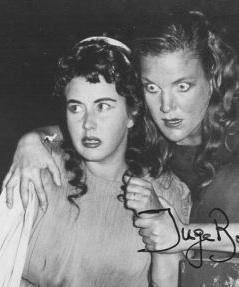
IM IN UR OPERA SINGIN UR NOTEZ


Georges Thill loved cats, it seems. This is only one reason to adore him.

Hat tips to Greg, who finds these things in places you and I would not be likely to look.

Thursday, May 24, 2007

Aw, man!

The Manprano blog has left the building. Bloghalla giveth, and bloghalla taketh away.

Thursday, May 17, 2007

I wonder...

Pleased as I am to hear that the Met movie-casts are a success, I find myself wondering if the immediate expansion of the program isn't jumping the gun a little. You have to factor in the novelty of it, I think, and give it some time to settle, no? I'm wary of what happens if turnout next season is disappointing--do they can the whole thing, as it's evidently quite expensive? Hopefully I am dead wrong and what is in fact happening is some kind of opera youthquake and soon all the kids' MySpace pages will have pictures of Jarmila Novotna and Richard Crooks on them (unless in fact MySpace is very ten minutes ago already and I am as usual genus: Fuddy, species: Duddy.)

Monday, May 14, 2007

A better way to end the season

It wouldn't have done to have the season sputter out with two acts of Turandot or a a misbegotten Orfeo, though everyone's sincere love for the latter is beginning to make me wonder if I'm guilty of excessive fuddy-duddery. Be that as it may, the season should end on a note of mad opera-lust, or what's to get us through the summer, other than the sincere desire to stay home for a few evenings in a row or occasionally breathe the air of the outdoors?

Anyway, the question is now an academic one, as I did in fact leave the auditorium for the last time this season with that unique sensation of having been pounded with a meat tenderizer then doused in Listerine that comes so rare. And who do you think was weilding said kitchen implement? I'll give you a hint: I've expressed ambivalence about her before, in particular when she was trussed up in regal garb and making out with Johan Botha.

That's right, it's Patricia Racette. We've had a long journey, she and I, not that she is aware of this fact. We are now pals. She's not aware of that either. Nay, not pals, rather I bow my head in the presence of she who may no longer be regarded as only a singer. Patricia Racette is an artist, which lots of you apparently already knew. Jenufa is something she's sung a lot, and familiarity in this case has bred foremost an absolute dramatic commitment to the role.

Now, there is no reason to compare Racette's Jenufa to Mattila's, at least not in that scorecard way. I will say, though, that Racette's is in no way a lesser achievement, and as you can probably guess from my having heard Mattila sing it five times, that's a compliment. Much as I've loved on the Met production, Racette had the advantage of singing her Jenufa surrounded by a more character-driven one, that of David Alden for ENO. It's bleak and shrill and nearly perfect, though I remain agnostic about the staging of the "Let's Get Jenufa!" scene in the last act with everyone breaking in the windows.

Hey, guess what happened. Nah, I'll tell you. I sort of forgot the rest of what I was going to say because first we had to drive back and then I got the most vicious flu and then suddenly it was today (no more suddenly than usual, I guess) and who can remember anything they were going to say for more than a day or so? It doubtless had something to do with Malfitano and my high level of satisfaction therewith. In a different way than Silja, she ate up the stage, and was in good voice besides. I'm beginning to think the Regina from Lyric a few years ago, where I thought she'd reached the end of the line, was just an off night.

Oh, you're probably used to me doing this, this bit where I imagine what some idiotic directorial idea would look like, but just for sport, what if Kostelnicka forewent (is that a word?) her stern black wardrobe in some production and instead was a sort of hot older gal, a FILF if you will (Fostermother I'd Like to...you know the rest)? I'm not saying anyone should do it, just it popped into my head, and generally when that happens, you're subjected to it. Besides which someone probably has done it.

So that's my season. If there were a weepy film montage right here, it would probably feature the love duet from Minghella's Butterfly (um, with audio from some other production), Florez singing "Cessa di piu resistere," the Tristan Project with me standing outside looking sad, one of each Jenufa, Podlektra, DV's "Zweite Brautnacht," Dmitri telling Renee thanks but no thanks, and doubtless a couple of things I loved but can't think of just now. I think the end of the season also merits a tip of the hat to La Juntwait, whose intermission interviews were done in just the right way.

There will be things to write about over the summer, I assume.

Saturday, May 12, 2007

I screen, you screen...

The good word on National Opera's Macbeth, which opened this evening, is that it's not the kind of pallid, 98-pound Verdi some of us have come to dread. (I remember once in a PhD program in a kingdom far away, a t.a. with bad boundaries suggested to me "you might want to try using your whole ass next time." That's what a lot of Verdi productions have made me feel like saying in the last few seasons.) The conducting is full-blooded and Italianate, and the singing, whose glories and belly-flops I'll get around to in a sec, is never less than balls-out.

The bad word is, unless you poke your eyes out, you have to watch it, too. The designer of the thing, whose name I resolutely decline to look up in the program, has a vocabulary whose richness is matched only by the Smurfs. Now, if we've talked at all, you and I, you probably know that high on the list of things I think should reassign someone's profession from director/designer to perhaps lead usher is the overuse of scrims. Through a haze of scantly diminished fury, I recall a Chicago Dutchman which took place I believe 100% behind scrims, and they didn't do a thing to contain the sound of Malfitano's voice*, so really I never figured out what they were there for.

If I thought long and hard, I could come up with isolated uses of a scrim that worked out well. But you don't want to wait while I do that, so let's just say generally I find them to be a lazy lunge at an effect that automatically diminishes my enjoyment of what I'm watching. Now, just as Mrs. Parker was able to think of something that could write worse than a Theodore Dreiser**, I have just been helped to come up with what I like less than an entire opera behind scrims.

That would be an entire opera behind scrims onto which inscrutable, frequently unintentionally funny images are projected, almost throughout. Absolutely headache-inducing. Subtle, also--I may be wrong, but my feminine intuition tells me the incessant use of red might bear some kind of semiotically complex relation to blood. I don't know. Don't quote me. The program makes mention of "new media," which is a scream, since the media implicated would seem to be 1) computer design, which ain't that new, 2) projection, whose newness would be a shock to Alban Berg among others, and 3) thoughtless, schematic story-telling. Maybe that last one is the innovation. Stupid is the new smart, isn't it?

I'm dwelling on this because it stinks, and because it at times diminished my enjoyment of Verdi's most richly characterized score. (Really do think so. Can't back it up.) What saved it was a lot of good music-making of different kinds. It wasn't, vocally, the strongest cast you could come up with, in fact. Other than Vitaly Kowaljow, whose Banquo was beyond reproach, a mixed bag.

Paoletta Marrocu is banking on a number of things, I think. She has a pretty powerful voice, she's a good actress in a way that's low-key but not afraid of a few campy gestures, and she's willing to put it on the line. A good example of all of this was her sleepwalking scene, nuanced throughout and physically well played, vocally ragged here and there, worst of all a shout of a c#, the note you should probably just leave out if you don't really have it, but never tentative and overall convincing. Vocally, La Luce Language worked out better--it ends at B and doesn't ask you to dip into chest as much. But it was the sleepwalking scene that affected my heart-rate. Her technique sounds a little crazy and I'm not sure she won't blow it out, but if she doesn't, I look forward to hearing more of her.

Lado Ataneli feels like someone I go back a long way with, if only because I heard him before his Met career began, in Cincinnati singing Nabucco to Flanigan's off-the-hook Abby (at the time I termed it "extravagantly dykey," which I kind of still like.) There's no way around it: he's a singer of uneven quality. Some things work, and some don't. There was a bit of an ugly crack tonight that he caught quickly, and a lot of over-taxed sounding singing in "Pieta, Rispetto, Amore, and other abstract Italian nouns," though it warranted the most noise this fairly quiet audience made in response to anything.

You know why nobody does Macbeth much, don't you? It's not because it's bad luck. It's because the tenor part is so negligible. John Matz sounded nervous but stylistically dead-on as MacDuff. So but the overall deal is that everyone had some flaws, and the big picture was an exciting, worthy reading of let me tell you again how much I love Macbeth, which I love. Really there was nothing wrong with the whole evening that a long ladder and an exacto knife couldn't cut down to size. All eyes (well, all of mine) are on the Met next season, wondering what the new production will be like, whether Zeljko Lucic who made a decent impression in Gioconda wil shine, and what the hell Gruber is going to do with the part of the role that lies in the curdly part of her voice. Time will tell.

Believe it or not, at 2 tomorrow, I will duck into Kennedy Center again, for Jenny, Jenny, I got your number (867-5309)...

*Customary snark mitigation: her Kundry? Loved it, with no reservations. She was my first Lady Macbeth as well, and was riveting. Oh and tomorrow I'm hearing her Kostelnicka, and look forward to it. Senta was just the wrong idea.

**Two Theodore Dreisers

Thursday, May 10, 2007

See? See?

Well at least I'm not completely alone in my distaste for this production.

Tuesday, May 08, 2007

Not exactly a bang, but not quite a wimper, either

Well, it's a little sad. With the end of the riddle scene this evening, the season drew to a close for me (that's right, notably the season I left after more second acts than ever before...sometimes I think my love for opera is tightening in some way. It's harder to sit through something I never felt even a little bit giddy anticipating.)

Yes, I love the Met's Turandot. Shit like that is why Zefirelli will coast to the grave on rehashings, because once he dazzled us. The big "Holy Fuck!" set on which the opera's best music is delivered remains, I'm sorry, the biggest visual wallop I've ever been on the business end of; not just an overload but a real thrill.

I'd love it even more if the singing more often really matched the wallpaper. Tonight was actually fine. I was pleasantly surprised in a number of ways, the biggest of which was that Margison, who over the radio sounds like what you'd scrape into the sink, has a lot left in-house. The act II interpolated C, it is true, absolutely must go. I'm neither joking nor exaggerating when I say it sounds for all the world like a 1983 Chrysler on a January morn in Chicago, and you should really only pull that note out of your holster if you're planning on killing with it. Up to that point, though, the guy just sounds remarkably solid. It's what I remember about his Bacchus: the sweet relief of no worries.

Hey I'm going to write a version of Turandot from the point of view of Ping, Pang and Pong. It'll be just like Wicked, only with a higher suicide rate among the audience I guess. Don't Ping, Pang, and Pong kind of make you want to end it? Anyway it'll be called Pwng, and nobody will know how to pronounce it.

Actually, know what the other nice surprise was? It was an unsurprising surprise, because basically any time someone starts singing these days in a small role and you think to yourself "why isn't he in a much bigger role?" it's Patrick Carfizzi. I'm giving him his own paragraph, that's how much I like him, and it was a bit of a blind tasting because I didn't look at the program to see who was going to be singing the Mandarin. (Who does?) For once I'm not playing "Let's Pretend We're Agents" and don't have roles in mind. I just think he's underused.

Liping "Lizards" Zhang didn't make a huge impression on me but I've never gotten as weepy about Liu as a lot of folks. If you can float a b flat, you do it, and everyone puts a checkmark in the blank. The rest is about trying to make us believe that pathetic devotion to a guy who's really no prize is a romantic virtue. It might make sense for some not particularly sentimental director some day to stage Turandot with the corpse of Liu left onstage for the remainder of the opera for everyone to step over since for Pete's sake, she killed herself ten minutes ago and you, Calaf, you big brute, are already halfway through the love duet, such as it is. Anyway she sounded pretty, despite an "almost" at the beginning of said b-flat, and that's all I have prepared on that topic.

And so, with that...oh, the Turandot, you say? That would be Erika Sunnegardh, she of the healthy top and almost nothing else, I'm genuinely sorry to say. Still, it's a pleasure to hear someone not struggle with the riddles, albeit a limited pleasure.

I hate to end on that note, so I'll probably review the weekend's DC excursion and pretend it happened here. So,

Next Up: Macbeth

Wednesday, May 02, 2007

Dispiriting, to say the least

Can't bring myself to write a typical M.D' 90-page gab about the Met's...well-intentioned Orfeo. It just felt like bad decision after bad decision, to the extent that the overwhelming wrongness drowned out a couple of moments of bright, shiny joy, notably in the dance at the end of the opera. Yes, I think we all enjoyed seeing dance with a pulse on the old stage, but as for the rest, I will be lazy and borrow from Twain on Fenimore-Cooper: out of a possible 115 musico-theatrical offenses, it committed 114.

Chief among these was the decision to put Levine at the helm for music he is very, very, very ill-suited to. Repeating an intensifier--that's lousy writing. That's all I can muster. Orfeo can go in a couple of directions: bloodless early music/HIP approach, happy medium of pathos with some lightness, or Brahmsian dirge, which is what Levine served up. Gluck, and we may as well face it, runs the risk of being dull, and as if driven by a lacklustre sort of sadism, Levine underlined this in almost every phrase. Long pauses between scenes and immediately after the orchestral prelude were awkward. Please bear in mind my general esteem for this dedicated and accomplished conductor when I tell you how hard he sucks ass in Gluck.

Next in line was probably the casting of the very fine artist who is David Daniels. I get the feeling a countertenor in the Met has to spend all his energy being heard, and on top of that, as has been pointed out here and there, the role is low for him. And yes, I know I've been conditioned to a contralto sound in the role by my blithering Podles idolatry, but there just does have to be some chest there and Daniels is sparing with it these days. I was playfully chided by someone who knows a hell of a lot more about music than I do, for wanting a very narrow thing from my protagonist. "You're a Wagnerian!" she said, and indeed, I want my Orfeo to weep and wail. Despite my objection to Levine's heavy reading, in the singing I want something on a grand scale. It may well go over the top, but it has to aspire to the mythic and the Greek.* I don't think these needs are necessarily contradictory; think of Maureen Forrester with Mackerras: there is restraint and there is grief. Daniels' approach was one of eloquent simplicity that I suspect I could live with in a different production in a different house. Here it was a cypher. "Che faro?" was just a question.

Anyway, the rest...Kovalevska was fine. I hear she's pretty from those in the care. I wished like hell they were doing the Berlioz with its lovely scene for Eurydice, not to speak of the sparklers and batons aria for the big O. Heidi Grant Murphy sounded really very lovely--I liked her better in this than in anything I've heard her in, despite some wacky stylistic choices toward the end of Amore's aria that seemed maybe to spring from Levine's death march through the score. But (he said in a high pitched, testy voice) she sounded really very lovely in a pink Izod shirt with plushie angel wings. I hear Mark Morris is a warm and thoughtful human being, so I'd feel awful knowing that if I ran into him and had to slug him. [Okay, that sounds like I've turned into one of those humorless opera queens. Substitute "and had to be politely ironic and raise my eyebrows at him."] If you don't get why this kind of cutesy ootsy humor makes me livid, I'm not going to be able to explain. Pretend you really love this opera and take it a little bit seriously for a minute, and you might get there.

What else...uh...chorus of dead famous people (no, seriously. keep an eye out for Abe Lincoln. He's the one with the hat, the beard, and the vanished dignity), ostentatious and pointless use of Met's stage resources, overuse of murky lighting. Folks, I'm sorry. I hated this.

ETA: Everyone else appears to have loved it. Ah well, a stick in the mud I remain.

*Ok, for the hell of it, Orpheus was perhaps Bulgarian. I think it's stated somewhere that he was from the Rhodope mountains in Trakia aka Thrace.

Monday, April 30, 2007

Exciting Week in Opera

This week is the Orfeo premiere, about which I assume we're all a little giddy. The Straussmonster has hilariously pointed out that the poster on the plaza makes David Daniels look a bit like Johnny Cash, of all people, and also that Gluck would probably approve of the Man in Black's directness of expression. It's hard to understand why they scheduled so few performances--I realize it's not the world's most popular opera, but they had to know that the opera plus Mark Morris plus Isaac Mizrahi combo was going to pull in basically anyone above a Kinsey 1.5 in New York.

All levity aside, I think we'll all enjoy it through a certain sadness for what are now historical reasons. I have no doubt Mr. Daniels will do honor to the memory of the intended protagonist.

Also this week, the Tristan Project. I find "Project" to be a hilarious title, since anything they have the balls to charge that much for had damn well better be a finished product. I'd go but I'm staying home and rolling around in hundred dollar bills shouting "money! I have so much money!" instead.

Tuesday, April 24, 2007

Il Hittico!

Oh god, that's even worse.

People do seem to love it, though, and not without reason.

Last night was, for me, a few things. It was the first time I heard ACB at the Met (um, yes, her debut was last Friday and I was AWOL) and that by itself was a thrill, especially in that she sounded de-lovely. It was a fascinating lesson in casting to the strengths of singers who at times don't seem to have any, about which more in a minute. It was also, and this isn't necessarily of interest to anyone who doesn't live in my head, where I discovered which Puccini opera is my favorite and which is my least.

The least, I'll just end the suspense here, is Suor Angelica. For me, a painfully treacly exercise, this one. Makes my teeth hurt. I once read in liner notes somewhere the opinion that the first act of Samson et Dalila is like watching asparagus grow. Same goes for the first half hour of Angelica, as far as I'm concerned, and in this production actually...well I decided to watch without reading my Met titles and can tell you now: it's about nuns gardening. Maybe they're growing asparagus. No, of course not. It's actually about how religion inherently ruins people's lives, but then I think a lot of things are about that. The cast was without a weak link, though I felt like I might enjoy a slightly heftier voice in the title role, and the set was the best kind of purely representational stagecraft: realistic but not kitchen-sinky, though the mule could go, cute as it was. Say did you ever stop and wonder, when she's signing over her fortune to la Zia Principessa (a villain of dumbfounding banality) what name she's signing? Because, like, it must be her real name. Her whole name. I like to think it was Rivka Rosenblatt, because it makes the whole story just a leetle more complicated. Maybe just more comic. My friend Michelle in high school insisted that certain works--I think her example was Jane Eyre--became tolerable only when you thought of them as comedies. Certainly a Vera Galupe-Borzkh Angelica would be good fun; is there one?

But yeah, my new fave Puccini, the one that gets to go around wearing a sash that says "Maury's Favorite Puccini Opera," is Il Tabarro, just for being so very lean and unsentimental both lyrically and libretto-wise. This one was the miracle of casting. Guleghina, whose Norma I'm dreading like everyone else, sounded like a dream, and of course her dramatic commitment has never been in question, so she was fun to watch. Juan Pons who has given me some great nights (Pagliacci years ago) and some headaches (can't remember, blocked it out), well, Michele fit into his voice just as whatsername, Murgatroid?, did for Guleghina. Flaws erased, strengths underlined. Above all, Salvatore Licitra was like a completely different singer than I remember pissing all over various Verdi scores. Virile is a good word, and "in tune"--that's two very good words.

I know I should be saying more about Stephanie Blythe. There is absolutely no question she is a top notch singer. I bet, if you think about it, you have a singer everybody really loves that you think is just fine. That's pretty much Stephanie Blythe for me. I have absolutely no idea why she doesn't set off fireworks for me. There's really nothing missing. I guess I liked her most as Zita in Gianni Schicchi because I think she's a fun comedienne, and the whimsical spirit of Jack O'Brien's very updated Schicchi made nice use of that. Yeah, the hijinks are a bit senior playish in a way the libretto makes unavoidable, but it's gentle and the sets (plural, yep, well hello Mr. Stage Elevator! How've you been since Aida?) are, at risk of damning with pastel praise, really pretty, and it's hard not to like. Good ensemble cast with some soloists I feel I didn't get to size up properly.

Up next: Cesare on Friday, but you've already heard all about that, and besides, I'm dealing with a minor case of blog burnout.

Monday, April 23, 2007

Context

I think my original attempt at posting about Elektra was devoured by my laptop. So here's take II.

Context: I am not right in the head about Elektra. In Houston, with Behrens and the grand ruins of Rysanek, it was the first time music made my heart beat as if I'd just run a block. (Mm hm, that's my version of "run a marathon." Hi, I'm Maury, and I'm a sedentary blob of out-of-shapeness.) It was before I'd found my bravo, if you happen to have read that entry, so at the end, after Eschenbach pulled the final bars out so long you thought you'd scream or at least have a birthday waiting for the resolution, I was all pent-up excitement. That was a Serban production, and I remember it as not overly inventive but very tuned in to the exuberant rage that is Elektra. Barstow, it was rumored, had shown up not knowing the role and was told, "learn it or hit the road." I wouldn't be completely surprised if this were true, given the deliriously nervous character of her reading.

Since then, I have seen it at the Met where Voigt was the lone beacon of delight, saddled with a combo I remember through a haze of blah as Schnaut and maybe Hannah Schwarz; and in concert at Tanglewood with the generally excellent Lisa Gasteen and Hurricane Palmer as her moms, about which I have spil't ink already. It's an opera I had to take a break from because I had listened the juice out of it, usually in one of the many Borkh outings. It is a work that produces in me that gratifying feeling of "this is a thing I could never, with any amount of training, have thought up myself," like standing at the base of the pyramids, I'd imagine--and at the same time it's so deeply familiar to my soul it feels, I might say, were I a mad Greek on the verge of collapse instead of a nebbishy opera blogger, as if the music came from me.

So what the hell can I tell you that's going to be at all objective? You already know how I feel about Podles, unless you are illiterate, in which case what are you doing reading this? Go back to watching Wife Swap and voting republican. Actually that may be a point of entry, though, my nigh autistic worship of perhaps the animating obsession of these pages: Podles in most things one sees her in is a little like Voigt up in the previous paragraph, surrounded by capable, even good singers whose highest notes but taste the glory of EP's lowest. The Wizard of Oz metaphor is tired but, for me, inescapable: she puts everyone else in black and white.

I'm pleased to report, maybe surprisingly, that Ewa Podles in the Canadian Opera Company's Elektra is in context. I didn't come away feeling like I had heard her and some other incidentals. In a negligible way, it felt sad not to be uniquely blown away by her, but the payoff was a consistently taut and heart-rending sing from basically everyone. Not on purely Stimm-based merits, you understand, but in roundly gesamstkunstwerklich terms.

Susan Bullock I know previously only from a Houston Butterfly whose sonic form has vanished utterly from my mental files. I was not expecting much. It is a voice that has had a kind of greatness beaten into it, on evidence of the prima. The top spreads and will never be pretty, but the middle has lingering warmth that lends itself better to the recognition scene than most who can soldier through the role. Ok, it's not a terrific instrument, but (after a tentative first few minutes) it is deployed with a ragged dementia I have not recently seen on an opera stage, something that takes me back to Behrens in fact. Much rocking and uncontrollable weeping, stuff along those lines that we live for. Elektra, you know, is not where you want a whole lot of restraint and good taste.

Which brings us naturally enough to Madame Podles. In an interview before the opening our hero says to a reporter for the Toronto Star, ""Ah, Strauss. It's like a good piece of steak. There's blood inside." [Interstingly, in this interview, she goes on to totally harsh on her stepdaughter/accompanist, and it's sliiightly hard to tell if she's kidding.] If you've heard her sing anything, you know she always ends up with blood on her teeth, and this was no exception. The staging of her entrance was ingenious (I was fond of the production as a whole, despite a few touches like the-past-as-pantomime that can go horribly wrong) and from there, she just pretty much did her thing, chesting what needs to be chested, pulling faces that could be seen in Kansas, but with that aesthetic grounding and consistency that makes for catharsis rather than parody. From "ich habe keine gute Nachter" on, she evinced an understanding of what makes Klytamnestra a compelling villain, the grandeur under the decay; her singing embodied both. It was the exact midpoint between the unhinged harpy school of Klytamnestren, cf.: Fassbaender, and the dignified, well sung version put forth by such as Blanche Thebom.

Alwyn Mellor, unfortunately costumed, refused us the howl of a wild animal that's supposed to come just before "Orest ist tod!" but otherwise was as ready for a romp through the carnage as the rest of them. Funny voice, hers...it's pretty round and well-behaved throughout until you get to the top few notes which are, how to say, wiry or something, but large and clear. They do their own thing. I guess a wild top never did Ms. Rysanek any harm, I'm just sayin' is all. I wish the director had let her laufen an die Tür des Hauses, as the libretto states, and schlagen daran. For some reason I've never seen that happen, and it seems like it would be so satisfying, I mean really schlagen the hell out of the Tür, because the very end of Elektra is even less the time for restraint than the rest. I bet Mattila schlagte the damn thing schwarz and blau.

My only quibble was the conducting, I guess, and it's half a quibble, more of a quiblet--it's a very good orchestra, and I suppose I could see how the score came out as a deliberate thing: every jagged edge was sanded down to an interesting smoothness: come see the softer side of Strauss! A little slowness here and there, some narrowing of dynamic ranges, the whole thing comes off as deco and diaphanous, maybe as Mendelsohnnian "fairy music," as Strauss is said to have requested. Only he can't have been serious, cuz honey, this is Elektra. It is about steak and blood, as certain people know. It kind of ruined the monologue for me, to be honest, and pissed me off in a couple of other places, though as you have gathered, the whole product was immensely exciting. Kudos to the conductor, whose name I don't have right here, for opening up at least one large traditional cut, y'know, the whole "hot girl-on-(related)-girl action" bit a little while after the CD break.

Wait, can I talk about the production again for a sec? Because I just read Ken Winters' review in The Globe and Mail and it reminded me of some stuff. I have to agree with Mr. Winters, by the way, that there was something about Ms. Bullock's costume and affect that called to mind Judi Dench's similarly crazy-and-then-some turn in this year's Notes on a Scandal. Anyway what I started to say is I think the reason I'm so content with the odd convention of portraying the House of Atreus (here I mean the actual physical dwelling, as in "open no doors in this house!") as little white monopoly house in the middle of the stage is that attempts to make it represent all the misery that have made Elektra what she is overlook the fact that it's probably nothing all that grand. The libretto doesn't say much about it, but let's not forget it's the people who should be draped in expressionist gloom, if anyone. A blank, white house suggests that the House of Atreus (now the family) is only interesting and distinct from, let's say, the families on Wife Swap in that they're the primal fucked up family, one we can project everything onto. Am I full of shit? I didn't get all that much sleep last night. Don't you kind of hate how that's always my excuse? Oh well, the proper response is to become my blogpatron, then I'll quit my day job and be well rested and coherent always.

Incidentally, the company's new house is a wonderful space. I hope to return there next time I feel recharged and equal to the creepy once-over you get crossing the border back. Try telling a butch number with a handgun and a lot of arbitrary authority you left the country for 24 hours to see an opera sometime and see what he makes of it.

Next up: Il Trittico. Not to ruin anything but if I hate it I may refer to it as "Il Shittico." Oh, my rapier wit!

p.s. Wife Swap is a really good show.

Thursday, April 19, 2007

In bocca al lupo...

and toi toi toi to fellow blogsterino ACB, debuting at the Metropolitan tomorrow night. By a stroke of stupid timing, I will be out of town and have to catch something other than the prima. Y'all go hear her, though, k?

God wants you to listen to Finnish art songs, Gaius.

I finally realized what it is I find torturous about piano+voice recitals, and not by going to a bad one, quite the opposite. Though also not out of sheer amusement at Karita Mattila telling her hairdresser, apparently, "Make me look as much like the blond Cylon that's not Xena, Warrior Princess as possible." That was just a bit of lagniappe.

I'll have to let someone else tell you how she does with Barber or Hugo Wolff, not that I didn't enjoy them, but lieder feel faintly like a lecture to me. What I can tell you about is the riveting thing she did with the Turina songs on the program, which basically involved a bodily connection with the songs you sometimes see in opera but almost never in recital--the most recent example of this I could ponit you to off the operatic stage was Bjork in the Meredith Monkathon at Zankel, doing the little playful/intense maybe self-indulgent yoga-meets-charades she does as she sang "Gotham Lullaby." That's right, I just compared Karita Mattila to Bjork, and there's nothing you or Matthew Barney can do about it.

Mattila danced. Not a stationary swaying, either, the deliberate marker of "oh yeah, I'm feelin' it." Not KM. She lifted her arms and moved around and threw her midsection into it. It was unexpected, a little bit insane, and enthralling.

Among her encores, "The Man I Love" which though you may not have known it, is subtitled, "Dear Renee Fleming, This is How you Sing a Standard."

Tuesday, April 17, 2007

Itunes Bargains, sorta

I feel like I should post about things that feel like a steal on itunes--this one time (at band camp) someone, maybe Chalkers, posted that they had put up the entire Italian-language studio William Tell for $9.99, and though I've never listened to it, it felt great buying it. It's a four disc-er.

So, there are two complete Zerbinetta scenes you can get for a buck even though the scene is usually 11+ minutes and so "see album." And they're both old and scritchy, which means good, right?

#1: Lea Piltti, a Finn, I think. Pretty average, weak and vibratoless at the very top, better trill than most Zerbinetten. Charm factor: more the tweety-bird Zerb than the, yeah, some proponents are alluring and even complex. Dessay, it is said, gave meaning to each little trill and roulade, though I missed her in the role--the run I showed up for, she did not, and we got the perfectly ok and, the heterosexuals tell me, way cute Lubov Petrova, who does a lot of utility duty at the Met these does, doesn't she? Piltti is rhythmically pert, but not memorable. The list of her conquests is delivered more like casual 6th grade gossip than the self-amused confession of a world-class coquette. Still, hey, a dollar. What costs a dollar these days, other than [mean, mean, mean. deleted.]

#2: Joanna Kern. Wait, that's the mom on Growing Pains. Adele Kern. That's better. Well above average. Fuller tone, more variety of expression. It's a little effortful in the acuti, and the voice catches a bit here and there, trill is maybe fakey, but this is unquestionably a better sing. There are notes she leans into like an Italian lyric, and they're much appreciated. The highest arpeggio, just before "als ein Gott" is the only place she truly shows her hand, effort-wise. The D in the rondo is sort of crappy, then she rescues it for the second syllable, so to speak, and it's brilliant. The C then fails to spin, but "stumm, stumm" is sung with a curtsey and a shrug, as it ought to be always.

Now when will coat-pocket live recordings start popping up on itunes? Probably never. It's just I really want bits of the Mesple-Troyanos-(Crespin).* My god, have you heard Mesple in the role? Put aside the fact that she sounds like she could sing it up an octave and you are left with the dumbfounding fact that une francaise feels this role of an Italian character singing in German as librettified by an Austrian better than anyone, including the Slovak and the African-American. See, Zerbinetta is yet another character who can be sung as just a minx, but it's far better when she's not. As embodied by Mady, she's smart and laughs at herself a little. Combined with Troyanos' transparently high strung Komponist, and it's just about ideal. I'm pretty sure you can see it on youtube, actually. Flickery, but divine.

*Sorry NYC Opera Fanatic, if you're reading. She's just falling-apart bad on this one.

Friday, April 13, 2007

Flotsam (I hardly know 'em!)

Item: Has the Gelb lovefest ended so quickly? The peanut gallery at Parterre is already filled with talk of how his policy of hiring flashy young singers is (in the most hysterical instances) going to be the end of opera. Hey remember that time everybody was happy PG was shaking things up? O idyllic, innocent, bygone era of last September!

Overheard: NYCOQ on Netrebko in selfsame gallery of peanuts--"Time will tell if she is the Neely O'Hara of opera." Most amusing. Let's try to picture her all pilled up, moaning into a mirror, "Anna Netrebko!!! Anna Netrebko!!!" If we're thinking about possible candidates for Helen Lawson (and I can't speak for you, but I as a homosexual am required by law to do so) Ruth Ann Swenson seems to have gone and nominated herself in a stunning blow to Aprile Millo.*

Plain old heard: Have y'all been listening to Sirius much? Because there's been some good stuff. JSU tipped me off to the Price/Bergonzi Ernani and now I am 1) much more excited than I was that they're putting it on with Sondra R. next seez 2) adding two stars to the Constellation of Luv and Sycophancy that is any opera blog's inner organizing principle. Those would be Madame Price who I've always adored but am beginning to think of in the same half-crazed way I think about Gencer et al., and Giorgio Tozzi.

Tozzi I have admired since being indoctrinated into adoration of Vanessa, but then last weekend I heard his Orest in a Borkh Elektra from Carnegie. Well. The words that come to mind are Virginia Woolf's, from "Slater's Pins Have no Points." "Out of the night [he] burnt like a dead white star."

Don't you think of these blogs a little bit in terms of their animating diva? Parterre sprung from the screaming mouth of Callas (as many of us did to some extent, but Parterre has the tattoo to prove it); AUV has a Della-Casian reserve and refinement of expression; actually I have no idea what I'm talking about since there's nothing particularly Borkhig or Gencerific, not to speak of Podlesian--pronounced pod-LEE-zhun--about this here blerg. I have written myself into a corner. I think I was just feeling self-conscious about not having posted in a while and so had to clear my throat and sing a verse of "I'm Still Here."

Anyway now I'm listening to a Bumbry Orfeo and remembering that great singers in the wrong role can be sort of not all that appealing.

ETA: Okay this is actually fascinating...I'm sort of glancing around Opera-L which is all I can do before my eyes start to cross, and it appears there is lengthy debate about whether or not Villazon cracked during the Big Netrebazonko Whoop-de-do a few weeks back. This is just...nuts. I mean, there appears to be some interesting discussion of the comparative authenticity (scare quotes? eh.) of in-house vs. broadcast hearings. But I'm just truly shocked to read that there's any discussion of whether or not he cracked. I'm a big, big fan of RV, and just the same at intermission fired off a text message to a friend that said, more or less, I just heard the most spectacular vocal misfire I've ever heard live. Or, apparently, I maybe didn't...!

Next up: it's possible I'm not going to anything until Podles-Klytamenstra, and god only knows if I'll post anything after that since life will have no meaning once it's over.


*take this in the spirit of slightly indifferent ribbing. I was very taken with Swenson's Marguerite, on the one hand, and nearly fell asleep during her Lucia in 1998ish, on the other.** I don't have that much of an opinion on the article except it was somehow like watching a ship crash slowly into a glacier, if you had basically positive feelings about both the ship and the glacier.

**which led to me unknowingly dissing her to someone she's related to. Awkward! Actually it wasn't that big a deal, but I mention it because two people who were there occasionally read and might get a laugh out of the reference.

Saturday, April 07, 2007

Home of the Brave

I'm no more a connoisseur of kitsch than the next guy, but something about the cover of the Leontyne Price Sings Kitsch cd beaming up at me out of the bin at Academy said, "buy me," and that something was the $1.99 price tag. See the other CD I was buying was a 1937 Met Tales of Hoffman with Tibbett and Rene Maison and some gal named Bovy, and the smart folks at Academy know people like me will fork over for old Met stuff, even of operas we don't particularly like. And it's important to buy a cheap CD after that to average things out. (..and now you know why I have no money.)

Thing is, I'm wondering if parts of the kitsch album might turn out to be wonderful. It's not impossible. She sings O Shenandoah, and if you'll bear with me for a minute while I seemingly digress, the whole reason Madame Price's recording of Barber's Knoxville is so much more loveable than Steber's, even though the piece was written for Steber, is that LP is able to sound guileless and sweet where Eleanor maintains the diction and vocal bearing of a school teacher throughout. Now, don't be hatin'. I love Steber lots and lots. But I think in sweet simple songs, Leontyne may be just the woman for the job.

I started reading the liner notes at dinner. They're kitschy, too. Sweet, in a way, though, kind of patriotic-naive.
The Star-Spangled Banner was sung at the inauguration of Mississippi's Governor William Winter, who in his acceptance speech said, "We are proud to welcome home Miss Leontyne Price." The Chamber was filled to overflowing with past governors,senators, and citizens of all races and religions who stood enraptured as this magnificent woman sang our national anthem, which resounded in the Capitol building and out into the streets.

And then racism ended, yay!!!

Ok, I'm going to put it on and see if it's awful or cute. Tracks to be sampled: America the Beautiful, Shenandoah, and (not kidding) Blowin' in the Wind. Oh and what the hell, When Johnny Comes Marching Home.

***

It's awful.

Well, I suppose I can always hold out hope that "Right as Rain" where, I believe, she sings "Sunrise, Sunset" pops up in the bargain bin one day. That just could not be anything but wonderful.

Wednesday, April 04, 2007

Everyone Loves a Gala

Funny, but I was just telling the story this afternoon about how, in grad school, I was in a choir that performed shouty Siberian folk music, and our director (who, among many other qualities that made me want to kill him, made us dress up in Siberian peasant costumes) would do this spiel between songs about how the minor second is a a consonance in this kind of music, and I don't know, I just kind of thought of it when Rolando Villazon was up there experimenting with intervals nobody else has ever tried in the end of Act I of Boheme.

I can joke about this comfortably because Villazon reminded us all of something kind of reassuring: if you're a certain kind of wonderful, you can fuck up repeatedly and still run off with everyone bravoing themselves hoarse. And yeah, part of the frenzy of braying was because everyone paid rather a lot to hear Opera's Best Marketed Platonic Couple and were there for the event as much as anything. Nothing wrong with that, though it can be annoying. But there was a lot of worthwhile noise, too.

As you've read or heard, they did a chunk of Boheme, a chunk of Manon, and a chunk of L'elisir d'Amore. Early on, it was apparent something was going wrong, wrong, wrong for Villazon. Not all-over-the-place apparent but like, on an early high note, or maybe the climactic note he cut off early with that noise Michael Bolton made at the end of "Pourqoi me reveiller" on his opera album, My Secret Passion. (Not secret enough.) This noise I think exists as well in Arabic. One textbook describes it as "the sound of incipient retching." Then there was some tentative singing, and some other minor bits of Arabic, and in fact the note one comes down to from the biggie on "Che gelida" also kind of caught in his throat. And at the end of the act, as many of us were wondering if he'd take the gentleman's option and not howl a C or whatever they'd transposed to with the soprano, it became evident that he intended to take said option, but wasn't sure how to do it.

Let me think about solfege for a minute. I guess the non-chivalrous version goes:

sol miiiiiii, do laaaaaaa, laaaaaaa [portamento hook please] doooooooo.

and the chivalrous:

sol miiiiiii, do faaaaaaa, faaaaaaa miiiiiiiii.

and the Rolando experiment:

sol miiiiiii, do faaaaaaa, faaaaaaaaaaaaaaaaaaa[ruh roh]aaaaa.

So what's fa on do? I guess it's a nice normal fifth, but in context it could only be described as jazzy.

Anyway he did his usual high quality thing throughout in terms of perfectly charming acting that almost wiles away the torment of one more slog through the Benoit scene, and relentlessly musical and intelligent phrasing. And Netrebko did the same, without the vocal mishaps, because this is her best rep, and in it, she is worthy of the hype.

Manon was the same, taken to extremes. The vocal-cord shredding at the top of "Ah, Fuyez!" was absolutely harrowing. And he just kept right at what he was doing, which was a stylish, impassioned reading of the scene that could scarcely be bettered except for yeah, the hideous noises he made here and there. I'm pretty sure I got aesthetic whiplash. Trebbers in this sounded lush and comfortable, but there was a question of whether she was going for laughs with the acting, which seemed to have been coached with Miss Piggy. I don't mean to sign on with the hardcore Fleming-bashers, but I'm going to go ahead and say AN's take on the music was quite refreshing. And of course she looked like sin waiting to happen. (I think they disposed with some of the insane costume business where she does what amounts to a laborious striptease--either La Cieca or Dawn Fatale once quipped she looked like Super-Manon.)

L'elisir was when it all came together. Villazon's vocal troubles apparently vanished, and Netrebko sounded about the best I've ever heard her. I'm no singer (as my shower curtain would attest, if it could talk, after it had stopped crying) but I am sort of shocked to think that the vocal demands of Bellini are so very different from those of Donizetti. What else, though, could explain how Trebs is so amateurish in Puritani (minority opinion here, obviously, but seriously...) and so deft in this stuff. It almost made me like Elisir. "Una Furtiva Lagrima" was most noted, this evening, for its solidity at the end of a bumpy night, but here again the elegant line and emotional transparency were the real selling points.

Admirable assistance came from the likes of the venerable Mr. Ramey, Monica Yunus, the excellent Patrick Carfizzi, and audience fave Marius Kwiecien.

Next up: possibly Cesare, for my sins.

Monday, April 02, 2007

Credit where it's due

Ok. I have to admit something a little bit dorky: getting quoted in the New Yorker would be pretty easily the most exciting thing to happen to me in, oh, wait, nevermind: ever. But I have to give credit where due: as cited in my Helena write-up, the clever line came from Jonathan von Wellsung. Here's the whole review.

Sunday, April 01, 2007

Like Christmas morning for the heathen opera queen

Seriously, I look forward to the Finals concert for months. It's just...exciting. You never know, one year may be a bunch of perfectly talented kids and a lovely afternoon of aural bon-bons but nothing that makes you want to get in a time machine and hear the singer in question five years hence after indenture of the "cena e pronta" variety.

And then another year you might hear Amber L. Wagner sing Vanessa and Tannhauser, and wet your pants just a little from excitement. Purely as a figure of speech, you understand--I'd never do that to the nice velvet seats at the Met. I'm getting ahead of myself, though, as usual.

I'm actually not feeling like a full run-down of everyone. Suffice it to say, all the young singers--Jesus Christ, they are at this point, to a one, several to many years younger than me--that got up there had stellar attributes. I'm not just being nice. They made it through a lot of cuts because They. Are. Good. Period.

The people that totally knocked me over and ran off with my wallet, though, I guess there were three. And all three were among the winners, so yay. The first, as I have stealthily already told you, was Amber L. Wagner, who I'm pretty sure won her spot after about four bars of her aria. When you're 26 and have a little bit of Helen Traubel in your voice, there really can't be too much suspense, though she looked stunned when she came out at the end. It's just a magnificent instrument, though I've begun to hate that phrase and its separation of the artist from the sound. She sang "Do not utter a word," which of course I love anyway, and "Dich teure Halle," which I don't really, and I feel pretty secure in saying she will be coming to a Halle near you, soon. JSU, who turned a more critical eye to these artists, seems to have been similarly bowled over.

Maybe even more of a surprise, Michael Fabiano, a 22-year-old from Hoboken who fucking knows how to sing verismo. I'm not drunk, and I'm not kidding. He did an aria from Le Villi (which I assume is an opera, though I always get stuck thinking it's part of your intestine) in a way I haven't heard seasoned 30- and 40-somethings willing or able to do Puccini, though I've wished they would. It's tough to evince elegance and vulgarity at the same time, but if you can't do it, you shouldn't be singing verismo, or you should attempt to get lessons in it from Michael Fabiano before you try it. Then he sang Lensky, also extraordinarily well. In terms of, pretty much, everything.

Last but not least in this partial round-up, Alek Shrader gave us a reedy, heart-rending "Il mio tesoro" with the long phrases that have come to be somewhat expected, but with no sacrificial rush through the notes and an apparent reserve of breath at the end to judge by the insouciance of the syllabe "-gar". But what brought the house down, as it will if it sounds like anything but suffering, was "Pour mon ame." I don't mean to imply that the choice of arias was the key to his success. The key to his success was the panache, well and yes also just the ease with which he sang it. And I couldn't tell for sure from where I was sitting, but he may be adorable. Sorry, buddy, you hit the big leagues and crazy old things like me get to say "and he has cute hair." It's probably not a bad thing if you're singing the same rep as certain Peruvians of oft-noted cuteness. It's also not a bad thing if you can hold a C for a really, really long time.

In brief: the three other winners were Jamie Barton, whose Hansel and Gretel aria was sung with great relish; Ryan Smith, who sang from "L'arlesiana" with pathos and great vocal assurance; and Angela Meade--the audience almost didn't let her sing the cabaletta in their enthusiasm to applaud a vocally lush "Casta diva."

Also to be lauded: Kiera Duffy imbued "Tornami a vagheggiar" wit and dynamic subtlety; Matthew Plenk graced Tom's aria from The Rake's Progress with ardor and a lovely tone; Nicholas Pallesen had high notes to burn in Figaro-Figaro-Figaro; Disella Larusdottir seemed to find easy humor in "Chacun le sait," and has a naturally very pretty voice to boot; Ryan McKinny's song to the evening star was subtle and solid; and ok that's everybody after all. Except Mark Delavan and Alexandra Deshorties, and they can fend for themselves.

Actually no, I do think it's odd that Ms. Deshorties threw herself so fully into "D'oreste" and got such a nothing reaction. I'm afraid Met audiences may still hold her, uh, inauspicious broadcast debut against her. This was good singing in a drag of a timeslot, and nobody really gave it up for her, and then they were quite vocal for Delavan's (also expert) reading of the Falstaff scene. C'mon, folks.

Next up: I have no idea.

Thursday, March 29, 2007

1/3

For reasons not much worth going into, I can only tell you about Act II of last night's Traviata in much detail. But that works out because Krasimira Stoyanova seems to be an Act II Violetta. (Yeah, it's a stupid category in a way, but also a useful shorthand.) Good in Act I as well, to judge from List Hall, and I'm betting in Act III, but things like "Dite alla giovine" do show off the wonderfully weepy quality of the voice particularly well, and the big Act I scen-o-rama was impressive, not dazzling.

Honestly, my guess about Stoyanova is she's a very high quality singer who is not going to have a major Met career. I'm not sure quite why I say that. A soprano I once knew glumly told the joke once that goes "What do you call a lyric soprano with a pager?" The distinctly non-hilarious punchline, of course: an optimist. No matter how good Stoyanova is, I guess, she's still a middle-of-the-road Italian lyric, and unfortunately she coexists with some names that are hard to dislodge from the marquee, no matter their comparative merits as judged by you or me or someone's Aunt Edith.

The rumor is out there that Kaufman is the Met's next Siegmund, right? Put me down for a seat at that. (Preferably sitting right behind him with some clippers, so I can rid him of that awful mane while I listen, but I guess that's his business.) I'd actually sort of rather hear someone like Polenzani, preferably Polenzani himself, sing Alfredo, but at the same time I'm not complaining about JK. The C in the cabaletta was strangly like last time around, but life goes on. The rest was refreshingly substantial and sung with guts. Someone who was there in the Annoying Golden Age Against Which All is Compared, can you tell me if there's some reminiscence of Corelli there, and then stop talking rather than tell me how much better Tebaldi was than everyone because that's the next track on that record? Because notes here and there reminded me of recordings of Corelli, the tenor who most makes me wish I were twenty years older. Kaufman may grow into something fantastic. For now he's just Really Good. I'm enjoying daydreaming about some breakthrough with his teacher, if he still has one, where he finds a searing D-flat. And then we all go mad with joy, and I can't blog anymore because I'm in the mad-with-joy asylum, I guess.

I don't know quite what to think about Dwayne Croft lately. Once upon a time, more specifically I'd say the late 90's, he was kind of my favorite. It's aged into an impressive sound...in places. But there's a lot of shifting of gears that goes on. I'm not even sure what I'm hearing, but most every note changes color right after it starts. I think maybe he's futzing with his vowels a lot. Anyone? Am I making this up?* Just the same, his second entrance, after Violetta leaves, reminded me that Traviata can still make me scrunch my eyes real tight, which is (believe it or not) as close to crying at the opera as I pretty much ever come.

Next up: The Auditions!

*Nick von Trrill, are you reading? You always have words for what's going on with this kind of thing...