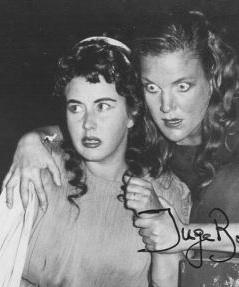
I think my original attempt at posting about Elektra was devoured by my laptop. So here's take II.
Context: I am not right in the head about Elektra. In Houston, with Behrens and the grand ruins of Rysanek, it was the first time music made my heart beat as if I'd just run a block. (Mm hm, that's my version of "run a marathon." Hi, I'm Maury, and I'm a sedentary blob of out-of-shapeness.) It was before I'd found my bravo, if you happen to have read that entry, so at the end, after Eschenbach pulled the final bars out so long you thought you'd scream or at least have a birthday waiting for the resolution, I was all pent-up excitement. That was a Serban production, and I remember it as not overly inventive but very tuned in to the exuberant rage that is Elektra. Barstow, it was rumored, had shown up not knowing the role and was told, "learn it or hit the road." I wouldn't be completely surprised if this were true, given the deliriously nervous character of her reading.
Since then, I have seen it at the Met where Voigt was the lone beacon of delight, saddled with a combo I remember through a haze of blah as Schnaut and maybe Hannah Schwarz; and in concert at Tanglewood with the generally excellent Lisa Gasteen and Hurricane Palmer as her moms, about which I have spil't ink already. It's an opera I had to take a break from because I had listened the juice out of it, usually in one of the many Borkh outings. It is a work that produces in me that gratifying feeling of "this is a thing I could never, with any amount of training, have thought up myself," like standing at the base of the pyramids, I'd imagine--and at the same time it's so deeply familiar to my soul it feels, I might say, were I a mad Greek on the verge of collapse instead of a nebbishy opera blogger, as if the music came from me.
So what the hell can I tell you that's going to be at all objective? You already know how I feel about Podles, unless you are illiterate, in which case what are you doing reading this? Go back to watching Wife Swap and voting republican. Actually that may be a point of entry, though, my nigh autistic worship of perhaps the animating obsession of these pages: Podles in most things one sees her in is a little like Voigt up in the previous paragraph, surrounded by capable, even good singers whose highest notes but taste the glory of EP's lowest. The Wizard of Oz metaphor is tired but, for me, inescapable: she puts everyone else in black and white.
I'm pleased to report, maybe surprisingly, that Ewa Podles in the Canadian Opera Company's Elektra is in context. I didn't come away feeling like I had heard her and some other incidentals. In a negligible way, it felt sad not to be uniquely blown away by her, but the payoff was a consistently taut and heart-rending sing from basically everyone. Not on purely Stimm-based merits, you understand, but in roundly gesamstkunstwerklich terms.
Susan Bullock I know previously only from a Houston Butterfly whose sonic form has vanished utterly from my mental files. I was not expecting much. It is a voice that has had a kind of greatness beaten into it, on evidence of the prima. The top spreads and will never be pretty, but the middle has lingering warmth that lends itself better to the recognition scene than most who can soldier through the role. Ok, it's not a terrific instrument, but (after a tentative first few minutes) it is deployed with a ragged dementia I have not recently seen on an opera stage, something that takes me back to Behrens in fact. Much rocking and uncontrollable weeping, stuff along those lines that we live for. Elektra, you know, is not where you want a whole lot of restraint and good taste.
Which brings us naturally enough to Madame Podles. In an interview before the opening our hero says to a reporter for the Toronto Star, ""Ah, Strauss. It's like a good piece of steak. There's blood inside." [Interstingly, in this interview, she goes on to totally harsh on her stepdaughter/accompanist, and it's sliiightly hard to tell if she's kidding.] If you've heard her sing anything, you know she always ends up with blood on her teeth, and this was no exception. The staging of her entrance was ingenious (I was fond of the production as a whole, despite a few touches like the-past-as-pantomime that can go horribly wrong) and from there, she just pretty much did her thing, chesting what needs to be chested, pulling faces that could be seen in Kansas, but with that aesthetic grounding and consistency that makes for catharsis rather than parody. From "ich habe keine gute Nachter" on, she evinced an understanding of what makes Klytamnestra a compelling villain, the grandeur under the decay; her singing embodied both. It was the exact midpoint between the unhinged harpy school of Klytamnestren, cf.: Fassbaender, and the dignified, well sung version put forth by such as Blanche Thebom.
Alwyn Mellor, unfortunately costumed, refused us the howl of a wild animal that's supposed to come just before "Orest ist tod!" but otherwise was as ready for a romp through the carnage as the rest of them. Funny voice, hers...it's pretty round and well-behaved throughout until you get to the top few notes which are, how to say, wiry or something, but large and clear. They do their own thing. I guess a wild top never did Ms. Rysanek any harm, I'm just sayin' is all. I wish the director had let her laufen an die Tür des Hauses, as the libretto states, and schlagen daran. For some reason I've never seen that happen, and it seems like it would be so satisfying, I mean really schlagen the hell out of the Tür, because the very end of Elektra is even less the time for restraint than the rest. I bet Mattila schlagte the damn thing schwarz and blau.
My only quibble was the conducting, I guess, and it's half a quibble, more of a quiblet--it's a very good orchestra, and I suppose I could see how the score came out as a deliberate thing: every jagged edge was sanded down to an interesting smoothness: come see the softer side of Strauss! A little slowness here and there, some narrowing of dynamic ranges, the whole thing comes off as deco and diaphanous, maybe as Mendelsohnnian "fairy music," as Strauss is said to have requested. Only he can't have been serious, cuz honey, this is Elektra. It is about steak and blood, as certain people know. It kind of ruined the monologue for me, to be honest, and pissed me off in a couple of other places, though as you have gathered, the whole product was immensely exciting. Kudos to the conductor, whose name I don't have right here, for opening up at least one large traditional cut, y'know, the whole "hot girl-on-(related)-girl action" bit a little while after the CD break.
Wait, can I talk about the production again for a sec? Because I just read Ken Winters' review in The Globe and Mail and it reminded me of some stuff. I have to agree with Mr. Winters, by the way, that there was something about Ms. Bullock's costume and affect that called to mind Judi Dench's similarly crazy-and-then-some turn in this year's Notes on a Scandal. Anyway what I started to say is I think the reason I'm so content with the odd convention of portraying the House of Atreus (here I mean the actual physical dwelling, as in "open no doors in this house!") as little white monopoly house in the middle of the stage is that attempts to make it represent all the misery that have made Elektra what she is overlook the fact that it's probably nothing all that grand. The libretto doesn't say much about it, but let's not forget it's the people who should be draped in expressionist gloom, if anyone. A blank, white house suggests that the House of Atreus (now the family) is only interesting and distinct from, let's say, the families on Wife Swap in that they're the primal fucked up family, one we can project everything onto. Am I full of shit? I didn't get all that much sleep last night. Don't you kind of hate how that's always my excuse? Oh well, the proper response is to become my blogpatron, then I'll quit my day job and be well rested and coherent always.
Incidentally, the company's new house is a wonderful space. I hope to return there next time I feel recharged and equal to the creepy once-over you get crossing the border back. Try telling a butch number with a handgun and a lot of arbitrary authority you left the country for 24 hours to see an opera sometime and see what he makes of it.
Next up: Il Trittico. Not to ruin anything but if I hate it I may refer to it as "Il Shittico." Oh, my rapier wit!
p.s. Wife Swap is a really good show.
Monday, April 23, 2007


Thursday, April 19, 2007
In bocca al lupo...
and toi toi toi to fellow blogsterino ACB, debuting at the Metropolitan tomorrow night. By a stroke of stupid timing, I will be out of town and have to catch something other than the prima. Y'all go hear her, though, k?
God wants you to listen to Finnish art songs, Gaius.
I finally realized what it is I find torturous about piano+voice recitals, and not by going to a bad one, quite the opposite. Though also not out of sheer amusement at Karita Mattila telling her hairdresser, apparently, "Make me look as much like the blond Cylon that's not Xena, Warrior Princess as possible." That was just a bit of lagniappe.
I'll have to let someone else tell you how she does with Barber or Hugo Wolff, not that I didn't enjoy them, but lieder feel faintly like a lecture to me. What I can tell you about is the riveting thing she did with the Turina songs on the program, which basically involved a bodily connection with the songs you sometimes see in opera but almost never in recital--the most recent example of this I could ponit you to off the operatic stage was Bjork in the Meredith Monkathon at Zankel, doing the little playful/intense maybe self-indulgent yoga-meets-charades she does as she sang "Gotham Lullaby." That's right, I just compared Karita Mattila to Bjork, and there's nothing you or Matthew Barney can do about it.
Mattila danced. Not a stationary swaying, either, the deliberate marker of "oh yeah, I'm feelin' it." Not KM. She lifted her arms and moved around and threw her midsection into it. It was unexpected, a little bit insane, and enthralling.
Among her encores, "The Man I Love" which though you may not have known it, is subtitled, "Dear Renee Fleming, This is How you Sing a Standard."
I'll have to let someone else tell you how she does with Barber or Hugo Wolff, not that I didn't enjoy them, but lieder feel faintly like a lecture to me. What I can tell you about is the riveting thing she did with the Turina songs on the program, which basically involved a bodily connection with the songs you sometimes see in opera but almost never in recital--the most recent example of this I could ponit you to off the operatic stage was Bjork in the Meredith Monkathon at Zankel, doing the little playful/intense maybe self-indulgent yoga-meets-charades she does as she sang "Gotham Lullaby." That's right, I just compared Karita Mattila to Bjork, and there's nothing you or Matthew Barney can do about it.
Mattila danced. Not a stationary swaying, either, the deliberate marker of "oh yeah, I'm feelin' it." Not KM. She lifted her arms and moved around and threw her midsection into it. It was unexpected, a little bit insane, and enthralling.
Among her encores, "The Man I Love" which though you may not have known it, is subtitled, "Dear Renee Fleming, This is How you Sing a Standard."
Tuesday, April 17, 2007
Itunes Bargains, sorta
I feel like I should post about things that feel like a steal on itunes--this one time (at band camp) someone, maybe Chalkers, posted that they had put up the entire Italian-language studio William Tell for $9.99, and though I've never listened to it, it felt great buying it. It's a four disc-er.
So, there are two complete Zerbinetta scenes you can get for a buck even though the scene is usually 11+ minutes and so "see album." And they're both old and scritchy, which means good, right?
#1: Lea Piltti, a Finn, I think. Pretty average, weak and vibratoless at the very top, better trill than most Zerbinetten. Charm factor: more the tweety-bird Zerb than the, yeah, some proponents are alluring and even complex. Dessay, it is said, gave meaning to each little trill and roulade, though I missed her in the role--the run I showed up for, she did not, and we got the perfectly ok and, the heterosexuals tell me, way cute Lubov Petrova, who does a lot of utility duty at the Met these does, doesn't she? Piltti is rhythmically pert, but not memorable. The list of her conquests is delivered more like casual 6th grade gossip than the self-amused confession of a world-class coquette. Still, hey, a dollar. What costs a dollar these days, other than [mean, mean, mean. deleted.]
#2: Joanna Kern. Wait, that's the mom on Growing Pains. Adele Kern. That's better. Well above average. Fuller tone, more variety of expression. It's a little effortful in the acuti, and the voice catches a bit here and there, trill is maybe fakey, but this is unquestionably a better sing. There are notes she leans into like an Italian lyric, and they're much appreciated. The highest arpeggio, just before "als ein Gott" is the only place she truly shows her hand, effort-wise. The D in the rondo is sort of crappy, then she rescues it for the second syllable, so to speak, and it's brilliant. The C then fails to spin, but "stumm, stumm" is sung with a curtsey and a shrug, as it ought to be always.
Now when will coat-pocket live recordings start popping up on itunes? Probably never. It's just I really want bits of the Mesple-Troyanos-(Crespin).* My god, have you heard Mesple in the role? Put aside the fact that she sounds like she could sing it up an octave and you are left with the dumbfounding fact that une francaise feels this role of an Italian character singing in German as librettified by an Austrian better than anyone, including the Slovak and the African-American. See, Zerbinetta is yet another character who can be sung as just a minx, but it's far better when she's not. As embodied by Mady, she's smart and laughs at herself a little. Combined with Troyanos' transparently high strung Komponist, and it's just about ideal. I'm pretty sure you can see it on youtube, actually. Flickery, but divine.
*Sorry NYC Opera Fanatic, if you're reading. She's just falling-apart bad on this one.
So, there are two complete Zerbinetta scenes you can get for a buck even though the scene is usually 11+ minutes and so "see album." And they're both old and scritchy, which means good, right?
#1: Lea Piltti, a Finn, I think. Pretty average, weak and vibratoless at the very top, better trill than most Zerbinetten. Charm factor: more the tweety-bird Zerb than the, yeah, some proponents are alluring and even complex. Dessay, it is said, gave meaning to each little trill and roulade, though I missed her in the role--the run I showed up for, she did not, and we got the perfectly ok and, the heterosexuals tell me, way cute Lubov Petrova, who does a lot of utility duty at the Met these does, doesn't she? Piltti is rhythmically pert, but not memorable. The list of her conquests is delivered more like casual 6th grade gossip than the self-amused confession of a world-class coquette. Still, hey, a dollar. What costs a dollar these days, other than [mean, mean, mean. deleted.]
#2: Joanna Kern. Wait, that's the mom on Growing Pains. Adele Kern. That's better. Well above average. Fuller tone, more variety of expression. It's a little effortful in the acuti, and the voice catches a bit here and there, trill is maybe fakey, but this is unquestionably a better sing. There are notes she leans into like an Italian lyric, and they're much appreciated. The highest arpeggio, just before "als ein Gott" is the only place she truly shows her hand, effort-wise. The D in the rondo is sort of crappy, then she rescues it for the second syllable, so to speak, and it's brilliant. The C then fails to spin, but "stumm, stumm" is sung with a curtsey and a shrug, as it ought to be always.
Now when will coat-pocket live recordings start popping up on itunes? Probably never. It's just I really want bits of the Mesple-Troyanos-(Crespin).* My god, have you heard Mesple in the role? Put aside the fact that she sounds like she could sing it up an octave and you are left with the dumbfounding fact that une francaise feels this role of an Italian character singing in German as librettified by an Austrian better than anyone, including the Slovak and the African-American. See, Zerbinetta is yet another character who can be sung as just a minx, but it's far better when she's not. As embodied by Mady, she's smart and laughs at herself a little. Combined with Troyanos' transparently high strung Komponist, and it's just about ideal. I'm pretty sure you can see it on youtube, actually. Flickery, but divine.
*Sorry NYC Opera Fanatic, if you're reading. She's just falling-apart bad on this one.
Friday, April 13, 2007
Flotsam (I hardly know 'em!)
Item: Has the Gelb lovefest ended so quickly? The peanut gallery at Parterre is already filled with talk of how his policy of hiring flashy young singers is (in the most hysterical instances) going to be the end of opera. Hey remember that time everybody was happy PG was shaking things up? O idyllic, innocent, bygone era of last September!
Overheard: NYCOQ on Netrebko in selfsame gallery of peanuts--"Time will tell if she is the Neely O'Hara of opera." Most amusing. Let's try to picture her all pilled up, moaning into a mirror, "Anna Netrebko!!! Anna Netrebko!!!" If we're thinking about possible candidates for Helen Lawson (and I can't speak for you, but I as a homosexual am required by law to do so) Ruth Ann Swenson seems to have gone and nominated herself in a stunning blow to Aprile Millo.*
Plain old heard: Have y'all been listening to Sirius much? Because there's been some good stuff. JSU tipped me off to the Price/Bergonzi Ernani and now I am 1) much more excited than I was that they're putting it on with Sondra R. next seez 2) adding two stars to the Constellation of Luv and Sycophancy that is any opera blog's inner organizing principle. Those would be Madame Price who I've always adored but am beginning to think of in the same half-crazed way I think about Gencer et al., and Giorgio Tozzi.
Tozzi I have admired since being indoctrinated into adoration of Vanessa, but then last weekend I heard his Orest in a Borkh Elektra from Carnegie. Well. The words that come to mind are Virginia Woolf's, from "Slater's Pins Have no Points." "Out of the night [he] burnt like a dead white star."
Don't you think of these blogs a little bit in terms of their animating diva? Parterre sprung from the screaming mouth of Callas (as many of us did to some extent, but Parterre has the tattoo to prove it); AUV has a Della-Casian reserve and refinement of expression; actually I have no idea what I'm talking about since there's nothing particularly Borkhig or Gencerific, not to speak of Podlesian--pronounced pod-LEE-zhun--about this here blerg. I have written myself into a corner. I think I was just feeling self-conscious about not having posted in a while and so had to clear my throat and sing a verse of "I'm Still Here."
Anyway now I'm listening to a Bumbry Orfeo and remembering that great singers in the wrong role can be sort of not all that appealing.
ETA: Okay this is actually fascinating...I'm sort of glancing around Opera-L which is all I can do before my eyes start to cross, and it appears there is lengthy debate about whether or not Villazon cracked during the Big Netrebazonko Whoop-de-do a few weeks back. This is just...nuts. I mean, there appears to be some interesting discussion of the comparative authenticity (scare quotes? eh.) of in-house vs. broadcast hearings. But I'm just truly shocked to read that there's any discussion of whether or not he cracked. I'm a big, big fan of RV, and just the same at intermission fired off a text message to a friend that said, more or less, I just heard the most spectacular vocal misfire I've ever heard live. Or, apparently, I maybe didn't...!
Next up: it's possible I'm not going to anything until Podles-Klytamenstra, and god only knows if I'll post anything after that since life will have no meaning once it's over.
*take this in the spirit of slightly indifferent ribbing. I was very taken with Swenson's Marguerite, on the one hand, and nearly fell asleep during her Lucia in 1998ish, on the other.** I don't have that much of an opinion on the article except it was somehow like watching a ship crash slowly into a glacier, if you had basically positive feelings about both the ship and the glacier.
**which led to me unknowingly dissing her to someone she's related to. Awkward! Actually it wasn't that big a deal, but I mention it because two people who were there occasionally read and might get a laugh out of the reference.
Overheard: NYCOQ on Netrebko in selfsame gallery of peanuts--"Time will tell if she is the Neely O'Hara of opera." Most amusing. Let's try to picture her all pilled up, moaning into a mirror, "Anna Netrebko!!! Anna Netrebko!!!" If we're thinking about possible candidates for Helen Lawson (and I can't speak for you, but I as a homosexual am required by law to do so) Ruth Ann Swenson seems to have gone and nominated herself in a stunning blow to Aprile Millo.*
Plain old heard: Have y'all been listening to Sirius much? Because there's been some good stuff. JSU tipped me off to the Price/Bergonzi Ernani and now I am 1) much more excited than I was that they're putting it on with Sondra R. next seez 2) adding two stars to the Constellation of Luv and Sycophancy that is any opera blog's inner organizing principle. Those would be Madame Price who I've always adored but am beginning to think of in the same half-crazed way I think about Gencer et al., and Giorgio Tozzi.
Tozzi I have admired since being indoctrinated into adoration of Vanessa, but then last weekend I heard his Orest in a Borkh Elektra from Carnegie. Well. The words that come to mind are Virginia Woolf's, from "Slater's Pins Have no Points." "Out of the night [he] burnt like a dead white star."
Don't you think of these blogs a little bit in terms of their animating diva? Parterre sprung from the screaming mouth of Callas (as many of us did to some extent, but Parterre has the tattoo to prove it); AUV has a Della-Casian reserve and refinement of expression; actually I have no idea what I'm talking about since there's nothing particularly Borkhig or Gencerific, not to speak of Podlesian--pronounced pod-LEE-zhun--about this here blerg. I have written myself into a corner. I think I was just feeling self-conscious about not having posted in a while and so had to clear my throat and sing a verse of "I'm Still Here."
Anyway now I'm listening to a Bumbry Orfeo and remembering that great singers in the wrong role can be sort of not all that appealing.
ETA: Okay this is actually fascinating...I'm sort of glancing around Opera-L which is all I can do before my eyes start to cross, and it appears there is lengthy debate about whether or not Villazon cracked during the Big Netrebazonko Whoop-de-do a few weeks back. This is just...nuts. I mean, there appears to be some interesting discussion of the comparative authenticity (scare quotes? eh.) of in-house vs. broadcast hearings. But I'm just truly shocked to read that there's any discussion of whether or not he cracked. I'm a big, big fan of RV, and just the same at intermission fired off a text message to a friend that said, more or less, I just heard the most spectacular vocal misfire I've ever heard live. Or, apparently, I maybe didn't...!
Next up: it's possible I'm not going to anything until Podles-Klytamenstra, and god only knows if I'll post anything after that since life will have no meaning once it's over.
*take this in the spirit of slightly indifferent ribbing. I was very taken with Swenson's Marguerite, on the one hand, and nearly fell asleep during her Lucia in 1998ish, on the other.** I don't have that much of an opinion on the article except it was somehow like watching a ship crash slowly into a glacier, if you had basically positive feelings about both the ship and the glacier.
**which led to me unknowingly dissing her to someone she's related to. Awkward! Actually it wasn't that big a deal, but I mention it because two people who were there occasionally read and might get a laugh out of the reference.
Saturday, April 07, 2007
Home of the Brave
I'm no more a connoisseur of kitsch than the next guy, but something about the cover of the Leontyne Price Sings Kitsch cd beaming up at me out of the bin at Academy said, "buy me," and that something was the $1.99 price tag. See the other CD I was buying was a 1937 Met Tales of Hoffman with Tibbett and Rene Maison and some gal named Bovy, and the smart folks at Academy know people like me will fork over for old Met stuff, even of operas we don't particularly like. And it's important to buy a cheap CD after that to average things out. (..and now you know why I have no money.)
Thing is, I'm wondering if parts of the kitsch album might turn out to be wonderful. It's not impossible. She sings O Shenandoah, and if you'll bear with me for a minute while I seemingly digress, the whole reason Madame Price's recording of Barber's Knoxville is so much more loveable than Steber's, even though the piece was written for Steber, is that LP is able to sound guileless and sweet where Eleanor maintains the diction and vocal bearing of a school teacher throughout. Now, don't be hatin'. I love Steber lots and lots. But I think in sweet simple songs, Leontyne may be just the woman for the job.
I started reading the liner notes at dinner. They're kitschy, too. Sweet, in a way, though, kind of patriotic-naive.
And then racism ended, yay!!!
Ok, I'm going to put it on and see if it's awful or cute. Tracks to be sampled: America the Beautiful, Shenandoah, and (not kidding) Blowin' in the Wind. Oh and what the hell, When Johnny Comes Marching Home.
***
It's awful.
Well, I suppose I can always hold out hope that "Right as Rain" where, I believe, she sings "Sunrise, Sunset" pops up in the bargain bin one day. That just could not be anything but wonderful.
Thing is, I'm wondering if parts of the kitsch album might turn out to be wonderful. It's not impossible. She sings O Shenandoah, and if you'll bear with me for a minute while I seemingly digress, the whole reason Madame Price's recording of Barber's Knoxville is so much more loveable than Steber's, even though the piece was written for Steber, is that LP is able to sound guileless and sweet where Eleanor maintains the diction and vocal bearing of a school teacher throughout. Now, don't be hatin'. I love Steber lots and lots. But I think in sweet simple songs, Leontyne may be just the woman for the job.
I started reading the liner notes at dinner. They're kitschy, too. Sweet, in a way, though, kind of patriotic-naive.
The Star-Spangled Banner was sung at the inauguration of Mississippi's Governor William Winter, who in his acceptance speech said, "We are proud to welcome home Miss Leontyne Price." The Chamber was filled to overflowing with past governors,senators, and citizens of all races and religions who stood enraptured as this magnificent woman sang our national anthem, which resounded in the Capitol building and out into the streets.
And then racism ended, yay!!!
Ok, I'm going to put it on and see if it's awful or cute. Tracks to be sampled: America the Beautiful, Shenandoah, and (not kidding) Blowin' in the Wind. Oh and what the hell, When Johnny Comes Marching Home.
***
It's awful.
Well, I suppose I can always hold out hope that "Right as Rain" where, I believe, she sings "Sunrise, Sunset" pops up in the bargain bin one day. That just could not be anything but wonderful.
Wednesday, April 04, 2007
Everyone Loves a Gala
Funny, but I was just telling the story this afternoon about how, in grad school, I was in a choir that performed shouty Siberian folk music, and our director (who, among many other qualities that made me want to kill him, made us dress up in Siberian peasant costumes) would do this spiel between songs about how the minor second is a a consonance in this kind of music, and I don't know, I just kind of thought of it when Rolando Villazon was up there experimenting with intervals nobody else has ever tried in the end of Act I of Boheme.
I can joke about this comfortably because Villazon reminded us all of something kind of reassuring: if you're a certain kind of wonderful, you can fuck up repeatedly and still run off with everyone bravoing themselves hoarse. And yeah, part of the frenzy of braying was because everyone paid rather a lot to hear Opera's Best Marketed Platonic Couple and were there for the event as much as anything. Nothing wrong with that, though it can be annoying. But there was a lot of worthwhile noise, too.
As you've read or heard, they did a chunk of Boheme, a chunk of Manon, and a chunk of L'elisir d'Amore. Early on, it was apparent something was going wrong, wrong, wrong for Villazon. Not all-over-the-place apparent but like, on an early high note, or maybe the climactic note he cut off early with that noise Michael Bolton made at the end of "Pourqoi me reveiller" on his opera album, My Secret Passion. (Not secret enough.) This noise I think exists as well in Arabic. One textbook describes it as "the sound of incipient retching." Then there was some tentative singing, and some other minor bits of Arabic, and in fact the note one comes down to from the biggie on "Che gelida" also kind of caught in his throat. And at the end of the act, as many of us were wondering if he'd take the gentleman's option and not howl a C or whatever they'd transposed to with the soprano, it became evident that he intended to take said option, but wasn't sure how to do it.
Let me think about solfege for a minute. I guess the non-chivalrous version goes:
sol miiiiiii, do laaaaaaa, laaaaaaa [portamento hook please] doooooooo.
and the chivalrous:
sol miiiiiii, do faaaaaaa, faaaaaaa miiiiiiiii.
and the Rolando experiment:
sol miiiiiii, do faaaaaaa, faaaaaaaaaaaaaaaaaaa[ruh roh]aaaaa.
So what's fa on do? I guess it's a nice normal fifth, but in context it could only be described as jazzy.
Anyway he did his usual high quality thing throughout in terms of perfectly charming acting that almost wiles away the torment of one more slog through the Benoit scene, and relentlessly musical and intelligent phrasing. And Netrebko did the same, without the vocal mishaps, because this is her best rep, and in it, she is worthy of the hype.
Manon was the same, taken to extremes. The vocal-cord shredding at the top of "Ah, Fuyez!" was absolutely harrowing. And he just kept right at what he was doing, which was a stylish, impassioned reading of the scene that could scarcely be bettered except for yeah, the hideous noises he made here and there. I'm pretty sure I got aesthetic whiplash. Trebbers in this sounded lush and comfortable, but there was a question of whether she was going for laughs with the acting, which seemed to have been coached with Miss Piggy. I don't mean to sign on with the hardcore Fleming-bashers, but I'm going to go ahead and say AN's take on the music was quite refreshing. And of course she looked like sin waiting to happen. (I think they disposed with some of the insane costume business where she does what amounts to a laborious striptease--either La Cieca or Dawn Fatale once quipped she looked like Super-Manon.)
L'elisir was when it all came together. Villazon's vocal troubles apparently vanished, and Netrebko sounded about the best I've ever heard her. I'm no singer (as my shower curtain would attest, if it could talk, after it had stopped crying) but I am sort of shocked to think that the vocal demands of Bellini are so very different from those of Donizetti. What else, though, could explain how Trebs is so amateurish in Puritani (minority opinion here, obviously, but seriously...) and so deft in this stuff. It almost made me like Elisir. "Una Furtiva Lagrima" was most noted, this evening, for its solidity at the end of a bumpy night, but here again the elegant line and emotional transparency were the real selling points.
Admirable assistance came from the likes of the venerable Mr. Ramey, Monica Yunus, the excellent Patrick Carfizzi, and audience fave Marius Kwiecien.
Next up: possibly Cesare, for my sins.
I can joke about this comfortably because Villazon reminded us all of something kind of reassuring: if you're a certain kind of wonderful, you can fuck up repeatedly and still run off with everyone bravoing themselves hoarse. And yeah, part of the frenzy of braying was because everyone paid rather a lot to hear Opera's Best Marketed Platonic Couple and were there for the event as much as anything. Nothing wrong with that, though it can be annoying. But there was a lot of worthwhile noise, too.
As you've read or heard, they did a chunk of Boheme, a chunk of Manon, and a chunk of L'elisir d'Amore. Early on, it was apparent something was going wrong, wrong, wrong for Villazon. Not all-over-the-place apparent but like, on an early high note, or maybe the climactic note he cut off early with that noise Michael Bolton made at the end of "Pourqoi me reveiller" on his opera album, My Secret Passion. (Not secret enough.) This noise I think exists as well in Arabic. One textbook describes it as "the sound of incipient retching." Then there was some tentative singing, and some other minor bits of Arabic, and in fact the note one comes down to from the biggie on "Che gelida" also kind of caught in his throat. And at the end of the act, as many of us were wondering if he'd take the gentleman's option and not howl a C or whatever they'd transposed to with the soprano, it became evident that he intended to take said option, but wasn't sure how to do it.
Let me think about solfege for a minute. I guess the non-chivalrous version goes:
sol miiiiiii, do laaaaaaa, laaaaaaa [portamento hook please] doooooooo.
and the chivalrous:
sol miiiiiii, do faaaaaaa, faaaaaaa miiiiiiiii.
and the Rolando experiment:
sol miiiiiii, do faaaaaaa, faaaaaaaaaaaaaaaaaaa[ruh roh]aaaaa.
So what's fa on do? I guess it's a nice normal fifth, but in context it could only be described as jazzy.
Anyway he did his usual high quality thing throughout in terms of perfectly charming acting that almost wiles away the torment of one more slog through the Benoit scene, and relentlessly musical and intelligent phrasing. And Netrebko did the same, without the vocal mishaps, because this is her best rep, and in it, she is worthy of the hype.
Manon was the same, taken to extremes. The vocal-cord shredding at the top of "Ah, Fuyez!" was absolutely harrowing. And he just kept right at what he was doing, which was a stylish, impassioned reading of the scene that could scarcely be bettered except for yeah, the hideous noises he made here and there. I'm pretty sure I got aesthetic whiplash. Trebbers in this sounded lush and comfortable, but there was a question of whether she was going for laughs with the acting, which seemed to have been coached with Miss Piggy. I don't mean to sign on with the hardcore Fleming-bashers, but I'm going to go ahead and say AN's take on the music was quite refreshing. And of course she looked like sin waiting to happen. (I think they disposed with some of the insane costume business where she does what amounts to a laborious striptease--either La Cieca or Dawn Fatale once quipped she looked like Super-Manon.)
L'elisir was when it all came together. Villazon's vocal troubles apparently vanished, and Netrebko sounded about the best I've ever heard her. I'm no singer (as my shower curtain would attest, if it could talk, after it had stopped crying) but I am sort of shocked to think that the vocal demands of Bellini are so very different from those of Donizetti. What else, though, could explain how Trebs is so amateurish in Puritani (minority opinion here, obviously, but seriously...) and so deft in this stuff. It almost made me like Elisir. "Una Furtiva Lagrima" was most noted, this evening, for its solidity at the end of a bumpy night, but here again the elegant line and emotional transparency were the real selling points.
Admirable assistance came from the likes of the venerable Mr. Ramey, Monica Yunus, the excellent Patrick Carfizzi, and audience fave Marius Kwiecien.
Next up: possibly Cesare, for my sins.
Monday, April 02, 2007
Credit where it's due
Ok. I have to admit something a little bit dorky: getting quoted in the New Yorker would be pretty easily the most exciting thing to happen to me in, oh, wait, nevermind: ever. But I have to give credit where due: as cited in my Helena write-up, the clever line came from Jonathan von Wellsung. Here's the whole review.
Sunday, April 01, 2007
Like Christmas morning for the heathen opera queen
Seriously, I look forward to the Finals concert for months. It's just...exciting. You never know, one year may be a bunch of perfectly talented kids and a lovely afternoon of aural bon-bons but nothing that makes you want to get in a time machine and hear the singer in question five years hence after indenture of the "cena e pronta" variety.
And then another year you might hear Amber L. Wagner sing Vanessa and Tannhauser, and wet your pants just a little from excitement. Purely as a figure of speech, you understand--I'd never do that to the nice velvet seats at the Met. I'm getting ahead of myself, though, as usual.
I'm actually not feeling like a full run-down of everyone. Suffice it to say, all the young singers--Jesus Christ, they are at this point, to a one, several to many years younger than me--that got up there had stellar attributes. I'm not just being nice. They made it through a lot of cuts because They. Are. Good. Period.
The people that totally knocked me over and ran off with my wallet, though, I guess there were three. And all three were among the winners, so yay. The first, as I have stealthily already told you, was Amber L. Wagner, who I'm pretty sure won her spot after about four bars of her aria. When you're 26 and have a little bit of Helen Traubel in your voice, there really can't be too much suspense, though she looked stunned when she came out at the end. It's just a magnificent instrument, though I've begun to hate that phrase and its separation of the artist from the sound. She sang "Do not utter a word," which of course I love anyway, and "Dich teure Halle," which I don't really, and I feel pretty secure in saying she will be coming to a Halle near you, soon. JSU, who turned a more critical eye to these artists, seems to have been similarly bowled over.
Maybe even more of a surprise, Michael Fabiano, a 22-year-old from Hoboken who fucking knows how to sing verismo. I'm not drunk, and I'm not kidding. He did an aria from Le Villi (which I assume is an opera, though I always get stuck thinking it's part of your intestine) in a way I haven't heard seasoned 30- and 40-somethings willing or able to do Puccini, though I've wished they would. It's tough to evince elegance and vulgarity at the same time, but if you can't do it, you shouldn't be singing verismo, or you should attempt to get lessons in it from Michael Fabiano before you try it. Then he sang Lensky, also extraordinarily well. In terms of, pretty much, everything.
Last but not least in this partial round-up, Alek Shrader gave us a reedy, heart-rending "Il mio tesoro" with the long phrases that have come to be somewhat expected, but with no sacrificial rush through the notes and an apparent reserve of breath at the end to judge by the insouciance of the syllabe "-gar". But what brought the house down, as it will if it sounds like anything but suffering, was "Pour mon ame." I don't mean to imply that the choice of arias was the key to his success. The key to his success was the panache, well and yes also just the ease with which he sang it. And I couldn't tell for sure from where I was sitting, but he may be adorable. Sorry, buddy, you hit the big leagues and crazy old things like me get to say "and he has cute hair." It's probably not a bad thing if you're singing the same rep as certain Peruvians of oft-noted cuteness. It's also not a bad thing if you can hold a C for a really, really long time.
In brief: the three other winners were Jamie Barton, whose Hansel and Gretel aria was sung with great relish; Ryan Smith, who sang from "L'arlesiana" with pathos and great vocal assurance; and Angela Meade--the audience almost didn't let her sing the cabaletta in their enthusiasm to applaud a vocally lush "Casta diva."
Also to be lauded: Kiera Duffy imbued "Tornami a vagheggiar" wit and dynamic subtlety; Matthew Plenk graced Tom's aria from The Rake's Progress with ardor and a lovely tone; Nicholas Pallesen had high notes to burn in Figaro-Figaro-Figaro; Disella Larusdottir seemed to find easy humor in "Chacun le sait," and has a naturally very pretty voice to boot; Ryan McKinny's song to the evening star was subtle and solid; and ok that's everybody after all. Except Mark Delavan and Alexandra Deshorties, and they can fend for themselves.
Actually no, I do think it's odd that Ms. Deshorties threw herself so fully into "D'oreste" and got such a nothing reaction. I'm afraid Met audiences may still hold her, uh, inauspicious broadcast debut against her. This was good singing in a drag of a timeslot, and nobody really gave it up for her, and then they were quite vocal for Delavan's (also expert) reading of the Falstaff scene. C'mon, folks.
Next up: I have no idea.
And then another year you might hear Amber L. Wagner sing Vanessa and Tannhauser, and wet your pants just a little from excitement. Purely as a figure of speech, you understand--I'd never do that to the nice velvet seats at the Met. I'm getting ahead of myself, though, as usual.
I'm actually not feeling like a full run-down of everyone. Suffice it to say, all the young singers--Jesus Christ, they are at this point, to a one, several to many years younger than me--that got up there had stellar attributes. I'm not just being nice. They made it through a lot of cuts because They. Are. Good. Period.
The people that totally knocked me over and ran off with my wallet, though, I guess there were three. And all three were among the winners, so yay. The first, as I have stealthily already told you, was Amber L. Wagner, who I'm pretty sure won her spot after about four bars of her aria. When you're 26 and have a little bit of Helen Traubel in your voice, there really can't be too much suspense, though she looked stunned when she came out at the end. It's just a magnificent instrument, though I've begun to hate that phrase and its separation of the artist from the sound. She sang "Do not utter a word," which of course I love anyway, and "Dich teure Halle," which I don't really, and I feel pretty secure in saying she will be coming to a Halle near you, soon. JSU, who turned a more critical eye to these artists, seems to have been similarly bowled over.
Maybe even more of a surprise, Michael Fabiano, a 22-year-old from Hoboken who fucking knows how to sing verismo. I'm not drunk, and I'm not kidding. He did an aria from Le Villi (which I assume is an opera, though I always get stuck thinking it's part of your intestine) in a way I haven't heard seasoned 30- and 40-somethings willing or able to do Puccini, though I've wished they would. It's tough to evince elegance and vulgarity at the same time, but if you can't do it, you shouldn't be singing verismo, or you should attempt to get lessons in it from Michael Fabiano before you try it. Then he sang Lensky, also extraordinarily well. In terms of, pretty much, everything.
Last but not least in this partial round-up, Alek Shrader gave us a reedy, heart-rending "Il mio tesoro" with the long phrases that have come to be somewhat expected, but with no sacrificial rush through the notes and an apparent reserve of breath at the end to judge by the insouciance of the syllabe "-gar". But what brought the house down, as it will if it sounds like anything but suffering, was "Pour mon ame." I don't mean to imply that the choice of arias was the key to his success. The key to his success was the panache, well and yes also just the ease with which he sang it. And I couldn't tell for sure from where I was sitting, but he may be adorable. Sorry, buddy, you hit the big leagues and crazy old things like me get to say "and he has cute hair." It's probably not a bad thing if you're singing the same rep as certain Peruvians of oft-noted cuteness. It's also not a bad thing if you can hold a C for a really, really long time.
In brief: the three other winners were Jamie Barton, whose Hansel and Gretel aria was sung with great relish; Ryan Smith, who sang from "L'arlesiana" with pathos and great vocal assurance; and Angela Meade--the audience almost didn't let her sing the cabaletta in their enthusiasm to applaud a vocally lush "Casta diva."
Also to be lauded: Kiera Duffy imbued "Tornami a vagheggiar" wit and dynamic subtlety; Matthew Plenk graced Tom's aria from The Rake's Progress with ardor and a lovely tone; Nicholas Pallesen had high notes to burn in Figaro-Figaro-Figaro; Disella Larusdottir seemed to find easy humor in "Chacun le sait," and has a naturally very pretty voice to boot; Ryan McKinny's song to the evening star was subtle and solid; and ok that's everybody after all. Except Mark Delavan and Alexandra Deshorties, and they can fend for themselves.
Actually no, I do think it's odd that Ms. Deshorties threw herself so fully into "D'oreste" and got such a nothing reaction. I'm afraid Met audiences may still hold her, uh, inauspicious broadcast debut against her. This was good singing in a drag of a timeslot, and nobody really gave it up for her, and then they were quite vocal for Delavan's (also expert) reading of the Falstaff scene. C'mon, folks.
Next up: I have no idea.
Thursday, March 29, 2007
1/3
For reasons not much worth going into, I can only tell you about Act II of last night's Traviata in much detail. But that works out because Krasimira Stoyanova seems to be an Act II Violetta. (Yeah, it's a stupid category in a way, but also a useful shorthand.) Good in Act I as well, to judge from List Hall, and I'm betting in Act III, but things like "Dite alla giovine" do show off the wonderfully weepy quality of the voice particularly well, and the big Act I scen-o-rama was impressive, not dazzling.
Honestly, my guess about Stoyanova is she's a very high quality singer who is not going to have a major Met career. I'm not sure quite why I say that. A soprano I once knew glumly told the joke once that goes "What do you call a lyric soprano with a pager?" The distinctly non-hilarious punchline, of course: an optimist. No matter how good Stoyanova is, I guess, she's still a middle-of-the-road Italian lyric, and unfortunately she coexists with some names that are hard to dislodge from the marquee, no matter their comparative merits as judged by you or me or someone's Aunt Edith.
The rumor is out there that Kaufman is the Met's next Siegmund, right? Put me down for a seat at that. (Preferably sitting right behind him with some clippers, so I can rid him of that awful mane while I listen, but I guess that's his business.) I'd actually sort of rather hear someone like Polenzani, preferably Polenzani himself, sing Alfredo, but at the same time I'm not complaining about JK. The C in the cabaletta was strangly like last time around, but life goes on. The rest was refreshingly substantial and sung with guts. Someone who was there in the Annoying Golden Age Against Which All is Compared, can you tell me if there's some reminiscence of Corelli there, and then stop talking rather than tell me how much better Tebaldi was than everyone because that's the next track on that record? Because notes here and there reminded me of recordings of Corelli, the tenor who most makes me wish I were twenty years older. Kaufman may grow into something fantastic. For now he's just Really Good. I'm enjoying daydreaming about some breakthrough with his teacher, if he still has one, where he finds a searing D-flat. And then we all go mad with joy, and I can't blog anymore because I'm in the mad-with-joy asylum, I guess.
I don't know quite what to think about Dwayne Croft lately. Once upon a time, more specifically I'd say the late 90's, he was kind of my favorite. It's aged into an impressive sound...in places. But there's a lot of shifting of gears that goes on. I'm not even sure what I'm hearing, but most every note changes color right after it starts. I think maybe he's futzing with his vowels a lot. Anyone? Am I making this up?* Just the same, his second entrance, after Violetta leaves, reminded me that Traviata can still make me scrunch my eyes real tight, which is (believe it or not) as close to crying at the opera as I pretty much ever come.
Next up: The Auditions!
*Nick von Trrill, are you reading? You always have words for what's going on with this kind of thing...
Honestly, my guess about Stoyanova is she's a very high quality singer who is not going to have a major Met career. I'm not sure quite why I say that. A soprano I once knew glumly told the joke once that goes "What do you call a lyric soprano with a pager?" The distinctly non-hilarious punchline, of course: an optimist. No matter how good Stoyanova is, I guess, she's still a middle-of-the-road Italian lyric, and unfortunately she coexists with some names that are hard to dislodge from the marquee, no matter their comparative merits as judged by you or me or someone's Aunt Edith.
The rumor is out there that Kaufman is the Met's next Siegmund, right? Put me down for a seat at that. (Preferably sitting right behind him with some clippers, so I can rid him of that awful mane while I listen, but I guess that's his business.) I'd actually sort of rather hear someone like Polenzani, preferably Polenzani himself, sing Alfredo, but at the same time I'm not complaining about JK. The C in the cabaletta was strangly like last time around, but life goes on. The rest was refreshingly substantial and sung with guts. Someone who was there in the Annoying Golden Age Against Which All is Compared, can you tell me if there's some reminiscence of Corelli there, and then stop talking rather than tell me how much better Tebaldi was than everyone because that's the next track on that record? Because notes here and there reminded me of recordings of Corelli, the tenor who most makes me wish I were twenty years older. Kaufman may grow into something fantastic. For now he's just Really Good. I'm enjoying daydreaming about some breakthrough with his teacher, if he still has one, where he finds a searing D-flat. And then we all go mad with joy, and I can't blog anymore because I'm in the mad-with-joy asylum, I guess.
I don't know quite what to think about Dwayne Croft lately. Once upon a time, more specifically I'd say the late 90's, he was kind of my favorite. It's aged into an impressive sound...in places. But there's a lot of shifting of gears that goes on. I'm not even sure what I'm hearing, but most every note changes color right after it starts. I think maybe he's futzing with his vowels a lot. Anyone? Am I making this up?* Just the same, his second entrance, after Violetta leaves, reminded me that Traviata can still make me scrunch my eyes real tight, which is (believe it or not) as close to crying at the opera as I pretty much ever come.
Next up: The Auditions!
*Nick von Trrill, are you reading? You always have words for what's going on with this kind of thing...
Wednesday, March 28, 2007
By popular demand...
I have the pleasure of presenting The Straussmonster. I mean, who better to blog Helena? She knows more about Strauss than you or I do, but she'd never point that out. And here's what she has to say:
***
So, let me start this with a disclaimer. As one can probably tell from my nom de guerre, I'm not an impartial observer when it comes to Strauss operas. I remember the announcement a few years ago that the Met would be doing Helena, and how excited I was to finally get to see this rare, peculiar, and undeniably problematic beast.
Also, unlike many readers out there in the opera blogosphere, I don't get to go to the opera nearly so often (I envy those of you with four Helenas, you bastards), since it's a long commute and a late, late night, but this has its advantages. The most important of these is that I'm not jaded, probably even naive, and I set out to enjoy anything and everything. I'm an ecumenical opera lover--I'll go see anything at least once.
Up in the upper deck, one row from the top, last night. It does have its advantages--there's a seekrit ladies' room at the very top of the Met. And the regulars up at the top have long memories; they were chuckling over the Zambello Lucia last night. (Make a failure like that and *everyone* will remember it, and poor June Anderson refusing to climb down the stairs in rehearsal.) This Helena is hardly a failure, but hardly a top-shelf production either.
It does have its good points. Some aspects of the bright color scheme were very appealing, especially the slinky bright blue dress for Helena. And I have no major problems with stripping down the excesses of the libretto (it's the Met, kids: we only get horses for Aida) and going with something more spare. But so much of it didn't work because it just made no sense. I suppose the black of the first act and white of the second are meant to evoke the retread of the issues (Menelas is still crazy), but it just...ugh. The red arrows for the battle scene were ridiculous. All scenes handling the chorus were done badly. [ed.: oh, my god, the arrows.]
The elves reminded me of Jem. That is not a good thing.
Voigt looked good in that dress. This was the first time I'd seen her post-operation, and she does look great. Even more than that, she obviously loves this role and throws herself into it. I'd seen her a few times before (Sieglinde in Chicago, long ago; Met Ariadne, Met Kaiserin, which I remember being somewhat disappointed in), and memory is a fickle beast but I do think her voice has changed. Less creamy and smooth, a certain sharp edge to it in places, but something about those high notes...mmm.
Menelas. Oh, Menelas. As Maury said, it's unsingable, and as such I'm willing to give a lot of leeway in this role. It doesn't need the sheer beauty of voice that der Kaiser suffers without, although it would be nice. Where Kerl was lacking most to my ears, besides sheer audibility in places, was in those places where the role snaps a hard right over into the full-blown lyric and the lines become long and elegant. Those are, I might add, some of the most musically amazing patches in the score--check out near the end of Act II, such as that cruel high entrance on "Helena!" (A side musical note: the ending trio is the musical culmination of the opera, the rest is just epilogue; it weaves together music from all other places and finally expands and completes earlier musical ideas. It's also in the Straussian key of the sublime, D-flat major.)
Diana Damrau, who was an entertaining Zerbinetta last year but there subscribed to a 'more is more' philosophy about the role, toned it down a bit and brought the comedy to the forefront. Comedy? Helena is a generic mess, which is one of the major problems with staging the work. You have an Omniscient Seashell, elves, murder, shell shock, tragedy, bickering, all thrown together. Many times last night I sincerely felt for the audience who may have read the synopsis, but hadn't sat down with the libretto beforehand. To be kind, it's dense. But it's also marvelous German and incredibly literary--all you have to do is read the libretto of one of the later Strauss/Gregor operas to weep for what could have been.
Most opera fans have a list of things that they never want to see done again, conceptually. Among mine are: anything involving Nazis, insane asylums, or operas being staged as if a dream of one of the characters. But that last might actually work here, since despite the title, the opera is really about Menelas, not Helen. She gets the bulk of the musical glamor, but it's all about his psyche. I can imagine a production which plays up that interpretation of the work and then uses aspects like lighting to mirror his states of mind and how he perceives the world around him. Any further ideas on that?
Fielding's decision that the opera was really about Aithra just...doesn't work. Damrau is a sport for sleeping through the first half of Act II, but it makes her entrance a little more huh-inducing than usual. Likewise with the decision to bring Poseidon on stage at the end, looking, as one person I talked to said, "like a teenager in a zoot suit". Aithra is the agent of the Baroque deus ex machina at the end of the opera, but the essence of the internal drama is when Helen sucks it up and tells her "No more forgetting, no more fake attempts at bliss--I'll make him remember." Come to think of it, that's really the most proactive thing that Helen does in the entire opera, and isn't it very like Hofmannsthal to load so much onto one little action?
The directorial dumbshow/stage drama/whatever did remarkably little to illuminate any of that, despite his best heavy-handed efforts. The bald and red-painted Ghost of Paris reminded me of nothing so much as Steve, the bouncer from the Jerry Springer Show. Ooh, look! It's a big sword on stage! But why are people carrying it around?
Although it's a concept that has come in for its fair share of scorn (one that comes to mind is Pierre Boulez talking about the Chereau production of Lulu), fundamental to Strauss and Hofmannsthal's operatic aesthetic is the unity of music, text, and stage action. Boulez was scornful of the idea that music and stage action match together, referring to it as redundant. Hofmannsthal and Strauss, much wiser (I think), realizes that although they might be 'saying the same thing', action and music work in different ways and form a whole greater than the part. This is what the pantomimes failed to achieve. They just didn't mean anything in and of themselves, and they didn't help illuminate the musical structure.
And while I 'get' the idea of the man with the briefcase and the sword (ancient and modern archetypes mixed together, which was Hofmannsthal's idea with the libretto), it didn't work. I didn't know what the hell was going on with the Seashell and her male partner at almost any time, but especially in the whiteface of Act II. I feel for the singers/actors who had to have that much makeup put on. Would totally wear the black tux for a Halloween outfit, unless someone can get me a good Valkyrie costume.
I loved Fabio Luisi's conducting of Boccanegra and he did a steady job with this deceptively thick score. If you go and look at it, it's massive--but it's in many ways closer to a chamber opera in actual texture. There were a few places (I'd have to go back and pick them up on a broadcast, but I could) where tempi seemed a little fast, to the point that the line and cohesion with the singers suffered, but I'm nitpicking against my mental image of this score. I'd also have to check, but I think Voigt fell into the trap almost everyone else does, and screwed up the phrasing for that crazy last phrase of Zweite Brautnacht. It's marked in the score, people--but it's also written so as to encourage trainwrecks. The C# was there, I'm not complaining.
So despite all the nitpicking here, go and see the opera. I found it very moving, especially near the end, where the direction recedes for a moment (before the ridiculous ending) and the performances and music and emotions manage to conquer. I've been singing Menelas' music all day.
...and the less said about the cruise ship ending or the TEMPLE IN SPAAAAACE! drop curtains, the better.
***
What could I possibly add?
Next up on my agenda: Traviata Bulgariana, unless I decide instead to opt for the novelty of a full night's sleep.
***
So, let me start this with a disclaimer. As one can probably tell from my nom de guerre, I'm not an impartial observer when it comes to Strauss operas. I remember the announcement a few years ago that the Met would be doing Helena, and how excited I was to finally get to see this rare, peculiar, and undeniably problematic beast.
Also, unlike many readers out there in the opera blogosphere, I don't get to go to the opera nearly so often (I envy those of you with four Helenas, you bastards), since it's a long commute and a late, late night, but this has its advantages. The most important of these is that I'm not jaded, probably even naive, and I set out to enjoy anything and everything. I'm an ecumenical opera lover--I'll go see anything at least once.
Up in the upper deck, one row from the top, last night. It does have its advantages--there's a seekrit ladies' room at the very top of the Met. And the regulars up at the top have long memories; they were chuckling over the Zambello Lucia last night. (Make a failure like that and *everyone* will remember it, and poor June Anderson refusing to climb down the stairs in rehearsal.) This Helena is hardly a failure, but hardly a top-shelf production either.
It does have its good points. Some aspects of the bright color scheme were very appealing, especially the slinky bright blue dress for Helena. And I have no major problems with stripping down the excesses of the libretto (it's the Met, kids: we only get horses for Aida) and going with something more spare. But so much of it didn't work because it just made no sense. I suppose the black of the first act and white of the second are meant to evoke the retread of the issues (Menelas is still crazy), but it just...ugh. The red arrows for the battle scene were ridiculous. All scenes handling the chorus were done badly. [ed.: oh, my god, the arrows.]
The elves reminded me of Jem. That is not a good thing.
Voigt looked good in that dress. This was the first time I'd seen her post-operation, and she does look great. Even more than that, she obviously loves this role and throws herself into it. I'd seen her a few times before (Sieglinde in Chicago, long ago; Met Ariadne, Met Kaiserin, which I remember being somewhat disappointed in), and memory is a fickle beast but I do think her voice has changed. Less creamy and smooth, a certain sharp edge to it in places, but something about those high notes...mmm.
Menelas. Oh, Menelas. As Maury said, it's unsingable, and as such I'm willing to give a lot of leeway in this role. It doesn't need the sheer beauty of voice that der Kaiser suffers without, although it would be nice. Where Kerl was lacking most to my ears, besides sheer audibility in places, was in those places where the role snaps a hard right over into the full-blown lyric and the lines become long and elegant. Those are, I might add, some of the most musically amazing patches in the score--check out near the end of Act II, such as that cruel high entrance on "Helena!" (A side musical note: the ending trio is the musical culmination of the opera, the rest is just epilogue; it weaves together music from all other places and finally expands and completes earlier musical ideas. It's also in the Straussian key of the sublime, D-flat major.)
Diana Damrau, who was an entertaining Zerbinetta last year but there subscribed to a 'more is more' philosophy about the role, toned it down a bit and brought the comedy to the forefront. Comedy? Helena is a generic mess, which is one of the major problems with staging the work. You have an Omniscient Seashell, elves, murder, shell shock, tragedy, bickering, all thrown together. Many times last night I sincerely felt for the audience who may have read the synopsis, but hadn't sat down with the libretto beforehand. To be kind, it's dense. But it's also marvelous German and incredibly literary--all you have to do is read the libretto of one of the later Strauss/Gregor operas to weep for what could have been.
Most opera fans have a list of things that they never want to see done again, conceptually. Among mine are: anything involving Nazis, insane asylums, or operas being staged as if a dream of one of the characters. But that last might actually work here, since despite the title, the opera is really about Menelas, not Helen. She gets the bulk of the musical glamor, but it's all about his psyche. I can imagine a production which plays up that interpretation of the work and then uses aspects like lighting to mirror his states of mind and how he perceives the world around him. Any further ideas on that?
Fielding's decision that the opera was really about Aithra just...doesn't work. Damrau is a sport for sleeping through the first half of Act II, but it makes her entrance a little more huh-inducing than usual. Likewise with the decision to bring Poseidon on stage at the end, looking, as one person I talked to said, "like a teenager in a zoot suit". Aithra is the agent of the Baroque deus ex machina at the end of the opera, but the essence of the internal drama is when Helen sucks it up and tells her "No more forgetting, no more fake attempts at bliss--I'll make him remember." Come to think of it, that's really the most proactive thing that Helen does in the entire opera, and isn't it very like Hofmannsthal to load so much onto one little action?
The directorial dumbshow/stage drama/whatever did remarkably little to illuminate any of that, despite his best heavy-handed efforts. The bald and red-painted Ghost of Paris reminded me of nothing so much as Steve, the bouncer from the Jerry Springer Show. Ooh, look! It's a big sword on stage! But why are people carrying it around?
Although it's a concept that has come in for its fair share of scorn (one that comes to mind is Pierre Boulez talking about the Chereau production of Lulu), fundamental to Strauss and Hofmannsthal's operatic aesthetic is the unity of music, text, and stage action. Boulez was scornful of the idea that music and stage action match together, referring to it as redundant. Hofmannsthal and Strauss, much wiser (I think), realizes that although they might be 'saying the same thing', action and music work in different ways and form a whole greater than the part. This is what the pantomimes failed to achieve. They just didn't mean anything in and of themselves, and they didn't help illuminate the musical structure.
And while I 'get' the idea of the man with the briefcase and the sword (ancient and modern archetypes mixed together, which was Hofmannsthal's idea with the libretto), it didn't work. I didn't know what the hell was going on with the Seashell and her male partner at almost any time, but especially in the whiteface of Act II. I feel for the singers/actors who had to have that much makeup put on. Would totally wear the black tux for a Halloween outfit, unless someone can get me a good Valkyrie costume.
I loved Fabio Luisi's conducting of Boccanegra and he did a steady job with this deceptively thick score. If you go and look at it, it's massive--but it's in many ways closer to a chamber opera in actual texture. There were a few places (I'd have to go back and pick them up on a broadcast, but I could) where tempi seemed a little fast, to the point that the line and cohesion with the singers suffered, but I'm nitpicking against my mental image of this score. I'd also have to check, but I think Voigt fell into the trap almost everyone else does, and screwed up the phrasing for that crazy last phrase of Zweite Brautnacht. It's marked in the score, people--but it's also written so as to encourage trainwrecks. The C# was there, I'm not complaining.
So despite all the nitpicking here, go and see the opera. I found it very moving, especially near the end, where the direction recedes for a moment (before the ridiculous ending) and the performances and music and emotions manage to conquer. I've been singing Menelas' music all day.
...and the less said about the cruise ship ending or the TEMPLE IN SPAAAAACE! drop curtains, the better.
***
What could I possibly add?
Next up on my agenda: Traviata Bulgariana, unless I decide instead to opt for the novelty of a full night's sleep.
Tuesday, March 27, 2007
Second Chances
I get the feeling Hugo von Hoffmansthal was encouraged by his successes to try a good thing twice. And fuck it up irredeemably. This notion comes not from any in depth knowledge of his oeuvre, but just a conversation at intermission: could anything be a more disappointing rehash of the presentation of the Silver Rose than the presentation of the, uh, beverage in Arabella? (Let's do a production set in Kindergarten with everyone dressed in pajamas where she hands him a sippy cup of grape juice. That would be more disappointing.) And in revisiting the crazy Love & Death metaphysics of Ariadne, could he have possibly gotten it more bewilderingly wrong than Die Agyptische Helena?
Yeah, I went back for seconds at the seafood buffet. And though I noticed each infuriatingly ostentatious eccentricity of the production just as much as last time, or more, I enjoyed the whole package more, I think. Sometimes, and I hate to shatter your sterling conception of critics and bloggers and such here as warriors for truth, some great degree of one's reaction to a night of singing or anything else is mostly just about the day you had, isn't it?
Like what was I slagging so hard on the role of Menelaus for? It's not genius like Bacchus, but it's not without its share of opportunities for vocal glory. Torsen Kerl met them admirably, especially in the second act. There's one cry of "Helena" that starts in some cruel octave, unaccompanied, and at first it sounded like he might totally blow it, but it came out clarion and terrifically long-breathed.
Also how did I not notice last time that Aithra is really a pretty great role? I recall well my irritation at discovering her lilting first utterance translates to "Dinner's ready!" And there's lots more where that came from (lilting utterances, not dinner) and Damrau is objectively wonderful and I'm not sure why I'm having a hard time committing to unreserved enthusiasm in her direction. I think JSU has categorized her, with Trebolina, as proficient but in some way heartless. I'll look it up. Yep, he praises her acting but says her singing in Ariadne "lack[ed] even a drop of tenderness." To some extent I see his point. There's something missing, maybe vulnerability. But there's plenty of recompense. Next time, I will love her. It seems like the right thing to do.
Voigt was announced as indisposed, and indeed act I was tentative, the big exposed high note dodged, and I wondered if she would cancel at halftime rather than face "Zweite Brautnacht." She didn't, and she nailed it. Nailed it, nailed it, nailed it. Better, in fact, than opening night. Didn't elide the little drop before the C#. The top is now just very bright instead of (forgive me a food metaphor. You know I hate them) buttery like the middle, and like the top used to be, but it will be of service in some of her new roles, I think. I went back and listened to the disc of Wagner duets with Domingo to make sure I'm not painting the past rosy, and yeah, it's nostalgic to hear how the richness used to go all the way up. What is there to say? Things change. She's still a star.
I didn't mean to give this a full second gab, but there it is. Next up: Violetta Bulgariana
Yeah, I went back for seconds at the seafood buffet. And though I noticed each infuriatingly ostentatious eccentricity of the production just as much as last time, or more, I enjoyed the whole package more, I think. Sometimes, and I hate to shatter your sterling conception of critics and bloggers and such here as warriors for truth, some great degree of one's reaction to a night of singing or anything else is mostly just about the day you had, isn't it?
Like what was I slagging so hard on the role of Menelaus for? It's not genius like Bacchus, but it's not without its share of opportunities for vocal glory. Torsen Kerl met them admirably, especially in the second act. There's one cry of "Helena" that starts in some cruel octave, unaccompanied, and at first it sounded like he might totally blow it, but it came out clarion and terrifically long-breathed.
Also how did I not notice last time that Aithra is really a pretty great role? I recall well my irritation at discovering her lilting first utterance translates to "Dinner's ready!" And there's lots more where that came from (lilting utterances, not dinner) and Damrau is objectively wonderful and I'm not sure why I'm having a hard time committing to unreserved enthusiasm in her direction. I think JSU has categorized her, with Trebolina, as proficient but in some way heartless. I'll look it up. Yep, he praises her acting but says her singing in Ariadne "lack[ed] even a drop of tenderness." To some extent I see his point. There's something missing, maybe vulnerability. But there's plenty of recompense. Next time, I will love her. It seems like the right thing to do.
Voigt was announced as indisposed, and indeed act I was tentative, the big exposed high note dodged, and I wondered if she would cancel at halftime rather than face "Zweite Brautnacht." She didn't, and she nailed it. Nailed it, nailed it, nailed it. Better, in fact, than opening night. Didn't elide the little drop before the C#. The top is now just very bright instead of (forgive me a food metaphor. You know I hate them) buttery like the middle, and like the top used to be, but it will be of service in some of her new roles, I think. I went back and listened to the disc of Wagner duets with Domingo to make sure I'm not painting the past rosy, and yeah, it's nostalgic to hear how the richness used to go all the way up. What is there to say? Things change. She's still a star.
I didn't mean to give this a full second gab, but there it is. Next up: Violetta Bulgariana
Friday, March 23, 2007
The Lady in What Lake?
I'm sort of wondering, having cut and pasted that headline from the review I'm about to quote you, whether the production in Minnesota with La Podles had some kind of "Land of 1000 Lakes" tie-in. That would be funny, but not very, which is how midwestern humor goes.
You know, gentle reader, once in a while I post a review that feels completely uninformative and maybe without much of a point of view. But the great thing here at My Favorite Intermissions is that even if I don't have anything to say, sometimes I know someone who does. A local correspondent has this to say about last night's NYCO prima. Put on your sunscreen--it's blistering.
***
I can't remember when I last saw such an UGLY production. Boy, was it ugly. Not even the Met's gloomy Vespri can top this monstrosity.
And it was confusing as hell. I know we saw Barry Banks before we saw that new (?) tenor McPherson, whose voice was seriously strange, and I thought for the rest of Act One that McPherson was Banks, and I couldn't for the life of me understand what had happened to his voice. Their attires were so similar that they could easily be exchanged, and if one doesn't know the opera (who does?), confusion easily reigns. I was relieved, at intermission, to see in the program that there were actually two guys, not one, though I can't say Banks did himself a service in this production.
Back to the ugly. I know NYCO is on a right budget, but usually they have splendid costumes, even with very minimal and cheap looking sets. [Note from Maury: Dolly always said "It costs a lot to look this cheap."]
Now, this production came from Minnesota, so perhaps one should excuse NYCO, but did anyone, ANYONE, at NYCO ever actually LOOK at this production in Minnesota and LIKE it? Hard to believe. It was the dreariest, ugliest, and stupidest set I can remember seeing. Ever. And do you really think that the Scottish warrior would stand three rifles up to make them look like the skeletons of teepees? Yes, the production
came from Minnesota, but I'm sure there are people there who know that Scots and Native Americans aren't the same ;-)
Dining room chairs in the middle of a battle field? Or did the chorus just happen to forget to remove the last three?
Back to the costumes. The men's boots were widefooted, diligently shined black leather. Sure, that's what they wore in old Scotland, right? And Elena's confidante was stalking around in the battle field in high heels!
And those golden yellow dresses on the courtier ladies were singularly unattractive, badly tailored, seriously bad looking on most of those ladies. And does Elena really know them all --- she goes around at the end shaking the hands of every one of them as if they were old friends. How many years had it been since her dad was ousted? Does she really still know all those court people? I suppose it's to give her something to do while she's not singing?
Of course, one has to consider what the performers are given to do. That starts with a silly and at times laughable plot. At the showdown, well, almost, between the two suitors, I was sitting there rooting for Malcolm to join them. Having three suitors battle it out would have made it more fun than with two, right? And why not? It's dumb enough already. Actually, there were many titters among the audience near me, and a bit of head shaking.
Generally speaking, the acting was hammy and "blocky" --- sheesh.
Well, yes, there was some good singing, particularly from "Malcolm" --- who looked very much like Maria Zifchak, but of course wasn't her.
Oh, and I'm being kind ;-)
Aren't we glad we went? Well, I always go to things I don't know. Sometimes one gets lucky. This wasn't one of them.
***
Thanks, Local Correspondent!
You know, gentle reader, once in a while I post a review that feels completely uninformative and maybe without much of a point of view. But the great thing here at My Favorite Intermissions is that even if I don't have anything to say, sometimes I know someone who does. A local correspondent has this to say about last night's NYCO prima. Put on your sunscreen--it's blistering.
***
I can't remember when I last saw such an UGLY production. Boy, was it ugly. Not even the Met's gloomy Vespri can top this monstrosity.
And it was confusing as hell. I know we saw Barry Banks before we saw that new (?) tenor McPherson, whose voice was seriously strange, and I thought for the rest of Act One that McPherson was Banks, and I couldn't for the life of me understand what had happened to his voice. Their attires were so similar that they could easily be exchanged, and if one doesn't know the opera (who does?), confusion easily reigns. I was relieved, at intermission, to see in the program that there were actually two guys, not one, though I can't say Banks did himself a service in this production.
Back to the ugly. I know NYCO is on a right budget, but usually they have splendid costumes, even with very minimal and cheap looking sets. [Note from Maury: Dolly always said "It costs a lot to look this cheap."]
Now, this production came from Minnesota, so perhaps one should excuse NYCO, but did anyone, ANYONE, at NYCO ever actually LOOK at this production in Minnesota and LIKE it? Hard to believe. It was the dreariest, ugliest, and stupidest set I can remember seeing. Ever. And do you really think that the Scottish warrior would stand three rifles up to make them look like the skeletons of teepees? Yes, the production
came from Minnesota, but I'm sure there are people there who know that Scots and Native Americans aren't the same ;-)
Dining room chairs in the middle of a battle field? Or did the chorus just happen to forget to remove the last three?
Back to the costumes. The men's boots were widefooted, diligently shined black leather. Sure, that's what they wore in old Scotland, right? And Elena's confidante was stalking around in the battle field in high heels!
And those golden yellow dresses on the courtier ladies were singularly unattractive, badly tailored, seriously bad looking on most of those ladies. And does Elena really know them all --- she goes around at the end shaking the hands of every one of them as if they were old friends. How many years had it been since her dad was ousted? Does she really still know all those court people? I suppose it's to give her something to do while she's not singing?
Of course, one has to consider what the performers are given to do. That starts with a silly and at times laughable plot. At the showdown, well, almost, between the two suitors, I was sitting there rooting for Malcolm to join them. Having three suitors battle it out would have made it more fun than with two, right? And why not? It's dumb enough already. Actually, there were many titters among the audience near me, and a bit of head shaking.
Generally speaking, the acting was hammy and "blocky" --- sheesh.
Well, yes, there was some good singing, particularly from "Malcolm" --- who looked very much like Maria Zifchak, but of course wasn't her.
Oh, and I'm being kind ;-)
Aren't we glad we went? Well, I always go to things I don't know. Sometimes one gets lucky. This wasn't one of them.
***
Thanks, Local Correspondent!
Thursday, March 22, 2007
La Donna del Lager
The title of this post doesn't mean anything. I just couldn't come up with anything witty, because my brain is just a little bit still in the clutches of boredom.
Yessiree Bob, La Donna del Lago is a snoozefest. No way around that one. You could lop off the whole first act except for "Mura felici" and nobody would care except Phillip Gossett, and you might be able to distract him by waving around a telephone book and claiming it was a recently discovered manuscript of Il Signor Bruschino. (This paragraph is dedicated to the Straussmonster.)
Still, you'd have to leave Mura felici or...I'm not going to finish that thought just yet.
You know what, I have this perverse notion about things that I'd nine times rather hear a good soprano than a good mezzo, because we're drowning in mezzos, or we were for a while. I can't think of any mezzo or contralto roles that I sit around dreaming I could hear sung as I imagine they should be sung. This is clearly not so for soprano roles. I despair of hearing a truly great Elektra or Brunnhilde or even Butterfly. I mean, not really despair, I just like that usage "despair of." I'm more like skeptical, if you want to know.
Anyway I'm making an exception to this jaded pose of opera-queen weariness, because Laura Vlasak Nolen is, I shit you not, exciting. She's not a booming contralto and I don't know if she'd be a good, like, Rosina, but she is a top notch mezzo, no two ways about it. Florid technique: check. Solidity: check. Basic luxury of tone: check. Ability to sink into the role: check. If she'd pay my rent, she'd be everything I'm looking for. I engaged in that useless habit of trying to think whose voice her reminded me of, and I'm not going to tell you because you'll think I'm on crack, but it made me wonder if she'd be good in Mahler.
The rest was good but less fully satisfying. Alexandrina Pendatchanska, whose singing I have admired in these pages, was epicly, unconscionably miscast as Elena, whose two settings are Worried and Jubilant. I can still hear in my head the clips La Cieca posted once upon a time of her blazing Ermione and I just don't understand how this happened. It wasn't bad, per se, but it was certainly disappointing. Still, she's got a voice on her, and her fioratura is clean and not stingy with the little notes. She's also really interesting looking, like a cross between Helena Bonham Carter and Ellen from first grade, who you don't know. Actually if you do, tell her hi; I'm totally curious what happened to her.
Barry Banks deserves a better role than Uberto or Rodrigo or whoever the hell he sang (spoiler alert: he turns out to be the king, too!) because, while he can pack in every little turn and run, it's not all that fun to listen to, nor would it be with anyone else singing, including the guy singing Rossini across the plaza.
The production team received a baffled reception, it seemed to me, and I can't argue. I actually get a little nervous lately with the occasional link from places like Parterre that someone other than my mom might read this, and it gives me an iffy feeling about slagging on stuff, but suffice it to say I have no idea what they were going for beyond that generalized City Opera aesthetic where you put brick walls in the countryside and then bathe the last scene in yellow light and put everyone in ball gowns. I mean, that's actually what they did, but if you thought really hard, couldn't you name about seven other NCYO productions where they do pretty much that? My only really emphatic complaint is, guys, can't you find quieter snow? That there Scottish snowfall is, like, deafening.
Up next: Chenier, maybe? Or a Stoyanova Traviata.
Yessiree Bob, La Donna del Lago is a snoozefest. No way around that one. You could lop off the whole first act except for "Mura felici" and nobody would care except Phillip Gossett, and you might be able to distract him by waving around a telephone book and claiming it was a recently discovered manuscript of Il Signor Bruschino. (This paragraph is dedicated to the Straussmonster.)
Still, you'd have to leave Mura felici or...I'm not going to finish that thought just yet.
You know what, I have this perverse notion about things that I'd nine times rather hear a good soprano than a good mezzo, because we're drowning in mezzos, or we were for a while. I can't think of any mezzo or contralto roles that I sit around dreaming I could hear sung as I imagine they should be sung. This is clearly not so for soprano roles. I despair of hearing a truly great Elektra or Brunnhilde or even Butterfly. I mean, not really despair, I just like that usage "despair of." I'm more like skeptical, if you want to know.
Anyway I'm making an exception to this jaded pose of opera-queen weariness, because Laura Vlasak Nolen is, I shit you not, exciting. She's not a booming contralto and I don't know if she'd be a good, like, Rosina, but she is a top notch mezzo, no two ways about it. Florid technique: check. Solidity: check. Basic luxury of tone: check. Ability to sink into the role: check. If she'd pay my rent, she'd be everything I'm looking for. I engaged in that useless habit of trying to think whose voice her reminded me of, and I'm not going to tell you because you'll think I'm on crack, but it made me wonder if she'd be good in Mahler.
The rest was good but less fully satisfying. Alexandrina Pendatchanska, whose singing I have admired in these pages, was epicly, unconscionably miscast as Elena, whose two settings are Worried and Jubilant. I can still hear in my head the clips La Cieca posted once upon a time of her blazing Ermione and I just don't understand how this happened. It wasn't bad, per se, but it was certainly disappointing. Still, she's got a voice on her, and her fioratura is clean and not stingy with the little notes. She's also really interesting looking, like a cross between Helena Bonham Carter and Ellen from first grade, who you don't know. Actually if you do, tell her hi; I'm totally curious what happened to her.
Barry Banks deserves a better role than Uberto or Rodrigo or whoever the hell he sang (spoiler alert: he turns out to be the king, too!) because, while he can pack in every little turn and run, it's not all that fun to listen to, nor would it be with anyone else singing, including the guy singing Rossini across the plaza.
The production team received a baffled reception, it seemed to me, and I can't argue. I actually get a little nervous lately with the occasional link from places like Parterre that someone other than my mom might read this, and it gives me an iffy feeling about slagging on stuff, but suffice it to say I have no idea what they were going for beyond that generalized City Opera aesthetic where you put brick walls in the countryside and then bathe the last scene in yellow light and put everyone in ball gowns. I mean, that's actually what they did, but if you thought really hard, couldn't you name about seven other NCYO productions where they do pretty much that? My only really emphatic complaint is, guys, can't you find quieter snow? That there Scottish snowfall is, like, deafening.
Up next: Chenier, maybe? Or a Stoyanova Traviata.
Monday, March 19, 2007
Is anyone recording this?
I haven't mastered the art of recording off Sirius without instantly filling my entire hard drive. Is anyone recording Helena tonight? Because to compare this to Jones/Kastu makes the brain break. As one of my vast network of spies typed over email:
Umsoyeah. I want a CD of this.
p.s. it turns out what's next is La Donna del Lago. La Donna Martin del Lago, starring Tori Spelling. I jest.
I listened to the broadcast on Thursday and it really didn't occur to me that Torston Kerl was having difficulties, and I guess that's what learning music from Matti Kastu's performance of it will do to your ears.
Umsoyeah. I want a CD of this.
p.s. it turns out what's next is La Donna del Lago. La Donna Martin del Lago, starring Tori Spelling. I jest.
Thursday, March 15, 2007
1 Down; 999 to Go
Aright, next time I tell you I'm going to walk through Penn Station to avoid a block of rain, remind me that on Thursday nights, it is a portal that transports drunk people back to New Jersey.
Well so there we all were at an opera the Met hadn't done in some seventy years and if someone was sitting next to you and sitting on his hands in a most non-metaphorical manner when the production team came out, that was me. I don't boo, as you may know, not audibly anyway, and so while it was fun to listen to everyone else do it, all I could do was pause from my rapturous applause for the musicians to observe a moment of dour silence at the folks who brought you the Met's first bona fide disaster of the season, production-wise. Well, hang on though, let me spare the lighting designer, to some extent. Three words of praise: pretty color palate.
I should save that shit for the end where you can skip it, though, right? You don't want to hear about the piteous, dinner theater of the damned cheapness or the idea-less flailing about that made visual von Hoffmansthal's most wretched
moment of excess, I think. Or the Julie-Taymor-reject elves? If you saw the mock-ups in the lobby, add some stupid, multiply the whole thing by forty, and don't forget the commutative property that means it's not only bigger but stupider. (Commutative? Been a while. As evidenced by my original subject line, which seemed to imply that a thousand minus one is 9,999.)
I trust we'd all rather talk about...well say, there's a nice line here and there in the libretto, and one of them is where Mothra tells Helen, "I have only restored your splendour." And after hearing Voigt take perfectly acceptable stabs at Italian rep for the last year, it was a fine thing that someone restored her splendor. I mean, she did. No, the top is not the same shiny thing it used to be, but neither is the statue of liberty and we still like her.* I think this was a promise of a great Isolde we heard tonight, maybe. The aria was pure, poised grandeur. And for what it's worth, her profile has taken on a 40's film star glamor of late, and seafoam green does her plenty of favors. Dear Peter Gelb, please give half the Salomes to Mattila and the other half to the girl who done launched them boats.
Which is hard work, by the way, launching is, and you need a strong and shouty partner. Enter Torsten Kerl. Exit Torsten Kerl. Pursued by door hitting him on the way out. Oh, I don't mean to be a jerk. He had a serious case of indisposed, and its friend inaudible. I'm told he was cracking as well but I honestly couldn't hear. Maybe it's a good thing when your indisposition is practically on mute. The role, as we all know, is unsingable, and so unsing it he did. It's possible he's ordinarily really good. It's also possible he's not even close to as good as [Someone help me out with a name here...o trusty allewissende backstage source, speak in my aid through text message!] Michael Hendrick, his cover, who came on halfway through after a well-received curtainside announcement and bought the joint, put his name above the door. I would very enthusiastically hear more of him, preferably in something less headache-inducing. The thing is, all those Strauss tenor roles are fucking mean, but in this one there's no real compensation...the character also makes no sense and doesn't have especially beautiful lines like say Bacchus. It's just loud loud loud and then the last ten minutes, I take it back, are nice. But Mr. Hendrick sang securely and without the buzz-saw tone tenors must sometimes resort to in order to be heard over the din. I'm very curious to hear other reactions to him. I was impressed, not less by the apparent calm with which he stepped into the role.
Diana Damrau was in an interesting position in that she gets some of the nicest vocal lines, but they're kind of tossed around the score like tinsel. She continues to produce the most startlingly sure-corded noise, especially up top. I have an idea that her acting may be a little bit more-is-more, but she's game and awfully purdy and the singing is beyond reproach. Well come on now, you know when I use a phrase like beyond reproach I'm setting up for some picky-picky, which is in this case I wonder a little about her talent for legato (no, really, at the end of Act I there are these pretty little phrases that, while I'm mostly happy to banish the recording from my cranial victrola, Barbara Hendricks pours out like maple syrup.)
Jill Grove as the savvy seafood (gods how we were hoping the society matrons would continue the tradition from opening night of themed wardrobing, trading in their kimonos this time to dress as their favorite fruits de mer. Hey, isn't that Mercedes Bass over there got up as a giant lobster roll?) didn't knock me off my block the way she did as Erda in Chicago back when, but then it must be acknowledged that The Super Smart Scampi is just Not a Very Good Role. Only a certain Polish plate of lox could save it, I fear.
Garrett Sorenson piqued my ear as, what, Da-ud? I'm thinking he was in the auditions one of the last two years, is that right? Speaking of which, those are coming up, hurrah!
I don't know that I have that much more to say about the, what do you call something like this, the mise-pres-de-la-scene, but I will quote something hilarious that Jonathan von Wellsung was overheard to say at intermission, and then if he blogs it I'll look kind of silly: certain elements of the production do indeed appear to be borrowed from the Topeka planetarium. I guess for my money the libretto is already so Beyond the Valley of Frau Ohne Schatten incomprehensible that it doesn't need another layer of WTF. And for god's sake, if you're going to float La Voigt onstage for a grand entrance on an Ikea bed (the $99 model, no less), don't make her invisible to half the house when the music announces her. That's not a questionable choice; it's a plain old mistake. Big red X.
Listen, I meant to write about Die Meistersinger, to which I was so kindly taken by one of my very favorite opera mavens, but it was (shameful to admit) my first time hearing almost all 73 hours of that music, and I'd be blogging in the dark. In twenty five words or less, Botha must sing only German music, but lots of it, and Polenzani must sing only on nights when I can go hear him. I want a season-Polenzani pass.
Next up: well, the auditions, but surely there's something before that.
*though hopefully not in that creepy, fetishy, freedom-isn't-free way I used to hear people slathering on their grandchildren on the subway at Smith/9th where you get a momentary viewing
Well so there we all were at an opera the Met hadn't done in some seventy years and if someone was sitting next to you and sitting on his hands in a most non-metaphorical manner when the production team came out, that was me. I don't boo, as you may know, not audibly anyway, and so while it was fun to listen to everyone else do it, all I could do was pause from my rapturous applause for the musicians to observe a moment of dour silence at the folks who brought you the Met's first bona fide disaster of the season, production-wise. Well, hang on though, let me spare the lighting designer, to some extent. Three words of praise: pretty color palate.
I should save that shit for the end where you can skip it, though, right? You don't want to hear about the piteous, dinner theater of the damned cheapness or the idea-less flailing about that made visual von Hoffmansthal's most wretched
moment of excess, I think. Or the Julie-Taymor-reject elves? If you saw the mock-ups in the lobby, add some stupid, multiply the whole thing by forty, and don't forget the commutative property that means it's not only bigger but stupider. (Commutative? Been a while. As evidenced by my original subject line, which seemed to imply that a thousand minus one is 9,999.)
I trust we'd all rather talk about...well say, there's a nice line here and there in the libretto, and one of them is where Mothra tells Helen, "I have only restored your splendour." And after hearing Voigt take perfectly acceptable stabs at Italian rep for the last year, it was a fine thing that someone restored her splendor. I mean, she did. No, the top is not the same shiny thing it used to be, but neither is the statue of liberty and we still like her.* I think this was a promise of a great Isolde we heard tonight, maybe. The aria was pure, poised grandeur. And for what it's worth, her profile has taken on a 40's film star glamor of late, and seafoam green does her plenty of favors. Dear Peter Gelb, please give half the Salomes to Mattila and the other half to the girl who done launched them boats.
Which is hard work, by the way, launching is, and you need a strong and shouty partner. Enter Torsten Kerl. Exit Torsten Kerl. Pursued by door hitting him on the way out. Oh, I don't mean to be a jerk. He had a serious case of indisposed, and its friend inaudible. I'm told he was cracking as well but I honestly couldn't hear. Maybe it's a good thing when your indisposition is practically on mute. The role, as we all know, is unsingable, and so unsing it he did. It's possible he's ordinarily really good. It's also possible he's not even close to as good as [Someone help me out with a name here...o trusty allewissende backstage source, speak in my aid through text message!] Michael Hendrick, his cover, who came on halfway through after a well-received curtainside announcement and bought the joint, put his name above the door. I would very enthusiastically hear more of him, preferably in something less headache-inducing. The thing is, all those Strauss tenor roles are fucking mean, but in this one there's no real compensation...the character also makes no sense and doesn't have especially beautiful lines like say Bacchus. It's just loud loud loud and then the last ten minutes, I take it back, are nice. But Mr. Hendrick sang securely and without the buzz-saw tone tenors must sometimes resort to in order to be heard over the din. I'm very curious to hear other reactions to him. I was impressed, not less by the apparent calm with which he stepped into the role.
Diana Damrau was in an interesting position in that she gets some of the nicest vocal lines, but they're kind of tossed around the score like tinsel. She continues to produce the most startlingly sure-corded noise, especially up top. I have an idea that her acting may be a little bit more-is-more, but she's game and awfully purdy and the singing is beyond reproach. Well come on now, you know when I use a phrase like beyond reproach I'm setting up for some picky-picky, which is in this case I wonder a little about her talent for legato (no, really, at the end of Act I there are these pretty little phrases that, while I'm mostly happy to banish the recording from my cranial victrola, Barbara Hendricks pours out like maple syrup.)
Jill Grove as the savvy seafood (gods how we were hoping the society matrons would continue the tradition from opening night of themed wardrobing, trading in their kimonos this time to dress as their favorite fruits de mer. Hey, isn't that Mercedes Bass over there got up as a giant lobster roll?) didn't knock me off my block the way she did as Erda in Chicago back when, but then it must be acknowledged that The Super Smart Scampi is just Not a Very Good Role. Only a certain Polish plate of lox could save it, I fear.
Garrett Sorenson piqued my ear as, what, Da-ud? I'm thinking he was in the auditions one of the last two years, is that right? Speaking of which, those are coming up, hurrah!
I don't know that I have that much more to say about the, what do you call something like this, the mise-pres-de-la-scene, but I will quote something hilarious that Jonathan von Wellsung was overheard to say at intermission, and then if he blogs it I'll look kind of silly: certain elements of the production do indeed appear to be borrowed from the Topeka planetarium. I guess for my money the libretto is already so Beyond the Valley of Frau Ohne Schatten incomprehensible that it doesn't need another layer of WTF. And for god's sake, if you're going to float La Voigt onstage for a grand entrance on an Ikea bed (the $99 model, no less), don't make her invisible to half the house when the music announces her. That's not a questionable choice; it's a plain old mistake. Big red X.
Listen, I meant to write about Die Meistersinger, to which I was so kindly taken by one of my very favorite opera mavens, but it was (shameful to admit) my first time hearing almost all 73 hours of that music, and I'd be blogging in the dark. In twenty five words or less, Botha must sing only German music, but lots of it, and Polenzani must sing only on nights when I can go hear him. I want a season-Polenzani pass.
Next up: well, the auditions, but surely there's something before that.
*though hopefully not in that creepy, fetishy, freedom-isn't-free way I used to hear people slathering on their grandchildren on the subway at Smith/9th where you get a momentary viewing
Sunday, March 04, 2007
Stream of Consciousness
Things I learned about Cathy Berberian just now, all of which may be false because the internet is, um, the internet:
1) She recorded not just the three Beatles arrangements available on cd's (Yesterday, Michele, and my favorite, Ticket to Ride done as a sort of 24 Italian Art Songs number) but in fact 12 Beatles songs. I'm dying to know which others. Back to teh intarwebz with me.
2) She has an official website even though she's been dead for over twenty years. It has a "news" section.
3) Best of all: the day she died, she was scheduled to sing The Internationale on Italian tv for some kind of Karl Marx centennial. She planned to sing it in the style of Marilyn Monroe.
I think she popped into my head because I ran across her cd while trying to find Patti/Melba (I always confuse them and always forget which it is) singing Home, Sweet Home to play upon moving into a new apartment, as one does. I could find neither Patti nor Melba, and so played Madame Ponselle. A lovely rendition also, though without quite that deep nostalgia of the almost lost sonic past that the version I usually play has.
Continuing in this vein of loose association, Madame Ponselle also sings a song I believe is entitled "Little Alabama Coon." I'm guessing that one's not on as many compilations these days. It's fun to imagine what the lyrics might be, and then to imagine her singing them. In blackface.
Oh dear. I just looked up the lyrics. Blackface would rank about fifth among the offensive things going on in that rendition. I wonder maybe if Cathy Berberian could have made something exquisitely sarcastic and hilarious of the whole thing. She could have done a whole program of now mortifying Stephen Foster songs or something. (The state song where I grew up is by Stephen Foster and has at least two lines that have been changed so fourth graders forced to sing it won't immediately become hysterical with laughter and there will be no race riots.) It's really a shame she's dead for so many reasons.
On the topic of the fallibility (???) of the internet, by the way, there was a horrible temptation, upon discovering that Ewa Podles has a rather sparse Wikipedia page, to update said page with perfectly factual information along the lines of:
Kids, you can't democratize knowledge. It's just not a good idea.
1) She recorded not just the three Beatles arrangements available on cd's (Yesterday, Michele, and my favorite, Ticket to Ride done as a sort of 24 Italian Art Songs number) but in fact 12 Beatles songs. I'm dying to know which others. Back to teh intarwebz with me.
2) She has an official website even though she's been dead for over twenty years. It has a "news" section.
3) Best of all: the day she died, she was scheduled to sing The Internationale on Italian tv for some kind of Karl Marx centennial. She planned to sing it in the style of Marilyn Monroe.
I think she popped into my head because I ran across her cd while trying to find Patti/Melba (I always confuse them and always forget which it is) singing Home, Sweet Home to play upon moving into a new apartment, as one does. I could find neither Patti nor Melba, and so played Madame Ponselle. A lovely rendition also, though without quite that deep nostalgia of the almost lost sonic past that the version I usually play has.
Continuing in this vein of loose association, Madame Ponselle also sings a song I believe is entitled "Little Alabama Coon." I'm guessing that one's not on as many compilations these days. It's fun to imagine what the lyrics might be, and then to imagine her singing them. In blackface.
Oh dear. I just looked up the lyrics. Blackface would rank about fifth among the offensive things going on in that rendition. I wonder maybe if Cathy Berberian could have made something exquisitely sarcastic and hilarious of the whole thing. She could have done a whole program of now mortifying Stephen Foster songs or something. (The state song where I grew up is by Stephen Foster and has at least two lines that have been changed so fourth graders forced to sing it won't immediately become hysterical with laughter and there will be no race riots.) It's really a shame she's dead for so many reasons.
On the topic of the fallibility (???) of the internet, by the way, there was a horrible temptation, upon discovering that Ewa Podles has a rather sparse Wikipedia page, to update said page with perfectly factual information along the lines of:
Madame Podles is universally acknowledged to be the greatest singer in the history of sound.
Kids, you can't democratize knowledge. It's just not a good idea.
Friday, March 02, 2007
I liked it so much I fixed the line breaks
Look what a treat you're in for: a guest blogger who doesn't share my basic ignorance of almost everything!
He Who Blogs from the Left Coast has saved me from blogging about...I don't even know at this point, blogging about the guy down the other end of the office singing a Sinatra tune as he filled his bottle at the water cooler. (He was fine. Which is to say: I wasn't really listening but he's kind of handsome.)
HWBFTLC has this to say:
Okay, Mr. D'Annato, I don't have to tell you how much I respect John Adams as a composer. I mean, who else writing operas right now has such a recognizable voice, such a combination of sonic complexity and emotional directness? Such a marriage of grand gesture and tiny detail? And the music of A Flowering Tree is filled with both sublime gestures and beautiful, intricate detail. Like the tree itself, depicted by a maze of sparkling string harmonics. Or a passage in which the three percussionists all played shakers or maracas of various sizes, layering their rhythms on top of one another like a dance heard from a distance. Or the contrabassoon, bass clarinet, and trombones playing closely interlocking parts like the calls of enormous bullfrogs. Or the end of the second act, simultaneously overwhelming in it sheer force, and disarmingly understated in its refusal to dwell on the climax achieved.
So that's the good news. The bad news is that the libretto is so wretchedly awful that almost every time I started to pay attention to the works, I wasn't able to think about the music at all. The problem begin at a fundamental level: maybe you've notices that one of the things that opera does really well is let characters express their internal emotions in periods of song-like reflection. We call these arias. They tend to be parts we go back to listen to. On the othe hand opera is really bad at prose narration (unless maybe if it's Wagner and probably not even then). Those are the parts we tend to skip over. So surely, at some point in the process of conceiving, writing, composing and revising this opera, someone could have said: maybe it's not the brightest idea to write an opera that is two and a half hours of almost uninterrupted parlando recitative narration...
And then there's the words themselves. Again someone must have noticed that some of the lines were... odd? Cliché? Hoaky? Unsingable? "My arms had the grace of the bamboo..." "[He was] like an elephant, after eating certain leaves..." "She massaged her chest with the stump where her arm had been..." STUMP?! I wanted to reach out to the supertitles with gigantic red pen and edit. More specifically, the libretto needed to find a tone and then stick to it. One moment we hear, "Was this the bliss I wed you for?" and the next minute, "She tried, but she couldn't, she couldn't..." (And in addition to the jarring tone, the would "couldn't" sounds really dumb when sung operatically/.)
Here's a more elaborate example: in one of the very few actual aria-type moment, when the two lovers express their sadness at being apart, the Prince sings
How many different ways is this bad libretto writing? First, I have no idea what it means. Four parts... out of four? Out of twelve? What? Second, you may be surprised to find that when sung, the line sound a lot like, "For parts of the day I grieve..." Which is amusingly insulting. Thirdly, it's telling, not showing. My fifth-grade creating writing teacher told me that was a bad idea, for some reason. AND, grieving and madness aren't exactly the day/night opposition the lines seem to require. AND it's just plain hackneyed.
Hey! I wonder if I could write some better lines?
I just came up with that off the top of my head just now. It's not even very good, and still sort of cliché. But it is better, right?
Have you already guessed that Peter Sellars wrote the libretto? Well, technically the libretto is credited to Peter Sellars and John Adams. Why is Adams so devoted to that horrible little man? What does Adams think that Sellars can provide? Has he not noticed that for the past two decades all of the worse aspects of his pieces are Sellars's fault? Okay that's a bit of an overstatement, but still... Mr Adams, get some new collaborators! HIRE A FUCKING POET.
Sigh. There was some singing too... You know how Framtracker.com sometimes plays a game called "Who you wanted, who you got," where they guess who filmmakers originally had in mind for a particular role? ("Harrison Ford isn't available? How about Dennis Quaid?") Well... Did you want Dawn Upshaw? Perhaps we can interest you in Jessica Rivera? This sounds like an insult, and it shouldn't. She's a good singer. She has a piercing top, and interesting diction. She just sounds a lot like Dawn Upshaw, is all I'm saying. The bass Eric Owens sang and sang and sang his wordy talky chatty narration, giving me nothing I feel like I can actually judge his voice with. Russell Thomas was fine. Good, even.
Oh I give up. There was a great big standing O at the end, which just made me sadder. Did I mention that the orchestral music was terrific?
Fucking Peter Sellars...
He Who Blogs from the Left Coast has saved me from blogging about...I don't even know at this point, blogging about the guy down the other end of the office singing a Sinatra tune as he filled his bottle at the water cooler. (He was fine. Which is to say: I wasn't really listening but he's kind of handsome.)
HWBFTLC has this to say:
Okay, Mr. D'Annato, I don't have to tell you how much I respect John Adams as a composer. I mean, who else writing operas right now has such a recognizable voice, such a combination of sonic complexity and emotional directness? Such a marriage of grand gesture and tiny detail? And the music of A Flowering Tree is filled with both sublime gestures and beautiful, intricate detail. Like the tree itself, depicted by a maze of sparkling string harmonics. Or a passage in which the three percussionists all played shakers or maracas of various sizes, layering their rhythms on top of one another like a dance heard from a distance. Or the contrabassoon, bass clarinet, and trombones playing closely interlocking parts like the calls of enormous bullfrogs. Or the end of the second act, simultaneously overwhelming in it sheer force, and disarmingly understated in its refusal to dwell on the climax achieved.
So that's the good news. The bad news is that the libretto is so wretchedly awful that almost every time I started to pay attention to the works, I wasn't able to think about the music at all. The problem begin at a fundamental level: maybe you've notices that one of the things that opera does really well is let characters express their internal emotions in periods of song-like reflection. We call these arias. They tend to be parts we go back to listen to. On the othe hand opera is really bad at prose narration (unless maybe if it's Wagner and probably not even then). Those are the parts we tend to skip over. So surely, at some point in the process of conceiving, writing, composing and revising this opera, someone could have said: maybe it's not the brightest idea to write an opera that is two and a half hours of almost uninterrupted parlando recitative narration...
And then there's the words themselves. Again someone must have noticed that some of the lines were... odd? Cliché? Hoaky? Unsingable? "My arms had the grace of the bamboo..." "[He was] like an elephant, after eating certain leaves..." "She massaged her chest with the stump where her arm had been..." STUMP?! I wanted to reach out to the supertitles with gigantic red pen and edit. More specifically, the libretto needed to find a tone and then stick to it. One moment we hear, "Was this the bliss I wed you for?" and the next minute, "She tried, but she couldn't, she couldn't..." (And in addition to the jarring tone, the would "couldn't" sounds really dumb when sung operatically/.)
Here's a more elaborate example: in one of the very few actual aria-type moment, when the two lovers express their sadness at being apart, the Prince sings
Four parts of the day I grieve for you
Four parts of the night I'm mad for you
How many different ways is this bad libretto writing? First, I have no idea what it means. Four parts... out of four? Out of twelve? What? Second, you may be surprised to find that when sung, the line sound a lot like, "For parts of the day I grieve..." Which is amusingly insulting. Thirdly, it's telling, not showing. My fifth-grade creating writing teacher told me that was a bad idea, for some reason. AND, grieving and madness aren't exactly the day/night opposition the lines seem to require. AND it's just plain hackneyed.
Hey! I wonder if I could write some better lines?
From dusk to dawn my eyes are red with weeping;
From dawn to dusk my hoarse throat cries your name.
I just came up with that off the top of my head just now. It's not even very good, and still sort of cliché. But it is better, right?
Have you already guessed that Peter Sellars wrote the libretto? Well, technically the libretto is credited to Peter Sellars and John Adams. Why is Adams so devoted to that horrible little man? What does Adams think that Sellars can provide? Has he not noticed that for the past two decades all of the worse aspects of his pieces are Sellars's fault? Okay that's a bit of an overstatement, but still... Mr Adams, get some new collaborators! HIRE A FUCKING POET.
Sigh. There was some singing too... You know how Framtracker.com sometimes plays a game called "Who you wanted, who you got," where they guess who filmmakers originally had in mind for a particular role? ("Harrison Ford isn't available? How about Dennis Quaid?") Well... Did you want Dawn Upshaw? Perhaps we can interest you in Jessica Rivera? This sounds like an insult, and it shouldn't. She's a good singer. She has a piercing top, and interesting diction. She just sounds a lot like Dawn Upshaw, is all I'm saying. The bass Eric Owens sang and sang and sang his wordy talky chatty narration, giving me nothing I feel like I can actually judge his voice with. Russell Thomas was fine. Good, even.
Oh I give up. There was a great big standing O at the end, which just made me sadder. Did I mention that the orchestral music was terrific?
Fucking Peter Sellars...
Wednesday, February 28, 2007
Triff noch einmal!
Oh life in New York. Listen, some of you out there must be terrible drama queens (well it's an opera blog, after all) and must want to help me come up with a way to wreak Medea-like havoc upon a broker. I hardly need say more than that: brokers, well...come the revolution, they should be shoved up the ass of whoever's first against the wall. If brokers were an opera character, they'd be...instant opera-quiz question in a box: who's the lowest of the low? (Psychoanalyze as you will, my mind raced first to Germont.) Anyway mine has lied to me like it's going out of style and caused me unbelievable stress, so if anyone has excellent ideas involving fire ants and honey--nevermind, Texas reference I think--or knows where to pick up a poisoned diadem of an at-this-point-very-aged Princess of Colchis (now Mingrelia, in Georgia. It all comes back to Georgia.) drop me a line. Or if you're a real estate attorney looking for your pro-bono hours, drop me a line too.
Monday, February 26, 2007
Onegin Afterthoughts
It has been noted that Dimitri Hvorostovsky professes being bored with the role of Onegin. Which is exactly why he is the perfect Onegin.
I snagged his aria on the broadcast the other day with some intention, if I can figure out how and it's not illegal, of posting it and Lisitsian's reading.
Rumor has it the next run will include Mattila and Hampson, which means Very Mixed Feelings here at MFI. Although...
I watched a DVD of Macbeth, possibly my favorite Italian opera, this weekend with Thomas Hampson. He actually sounded pretty good and his fussy acting seemed to have found a good use. Plus it was overshadowed by the very fun over-the-topping of Paoletta Marrccu, who's singing it in DC this Spring (the reason I 'flixed it.) Maroccu doesn't have the world's easiest time with the role, but she doesn't sing it like she's saving herself for a matinee of Boheme the next afternoon, and that's the #1 qualification for singing Lady Gruach. #2 is not sounding like she sang a matinee of Macbeth earlier in the day, and she doesn't, particularly, though she doesn't reach the early Dimitrova standard of a 1:1 ratio of florid and mean. Anyone who's heard her in-house should feel free to tell me exactly how excited I should be. Measured in, um, International Excitement Units. 0=how excited I am about coming to work tomorrow; 10=end of Bush administration or Podles/Klytemnestra.
This didn't end up being very much about Onegin but I'm sure you've figured out by now not to put much stock in my subject lines, or what's beneath them.
Oh wait, I'll add this to bring us back to Onegin: earlier in the week I was asked to recommend a translation of Pushkin's novel in verse. It's a subject I have a hard time not talking to strangers in the street about. In googling around for the spelling of Falen (not Phalen) I found Wikipedia's Onegin page, which has many useful links, including this article by Douglas Hoffstadter in the New York Review of Books (yeah, I'm ordinarily not smart enough to read the NYRB) that talks about the various translations. Naturally enough I am very rah rah Hoffstadter because his predlictions are mine pretty much. Short version: read Falen, avoid Johnston, and don't even dream of going with Nabokov, whose translation is an exercise in snarkyness, or more accurately a novel-length rhetorical gesture on themes of "poetry can't be translated." (Well, it probably can't. But if you don't think so, go stick pins in moths or something and don't waste our time with your unreadable drivel. You might as well have translated it into binary while you were at it.) It's said the accompanying volumes of commentary are extraordinarily enlightening, but I'm sure they'd sit happily next to Falen on the shelf.
I snagged his aria on the broadcast the other day with some intention, if I can figure out how and it's not illegal, of posting it and Lisitsian's reading.
Rumor has it the next run will include Mattila and Hampson, which means Very Mixed Feelings here at MFI. Although...
I watched a DVD of Macbeth, possibly my favorite Italian opera, this weekend with Thomas Hampson. He actually sounded pretty good and his fussy acting seemed to have found a good use. Plus it was overshadowed by the very fun over-the-topping of Paoletta Marrccu, who's singing it in DC this Spring (the reason I 'flixed it.) Maroccu doesn't have the world's easiest time with the role, but she doesn't sing it like she's saving herself for a matinee of Boheme the next afternoon, and that's the #1 qualification for singing Lady Gruach. #2 is not sounding like she sang a matinee of Macbeth earlier in the day, and she doesn't, particularly, though she doesn't reach the early Dimitrova standard of a 1:1 ratio of florid and mean. Anyone who's heard her in-house should feel free to tell me exactly how excited I should be. Measured in, um, International Excitement Units. 0=how excited I am about coming to work tomorrow; 10=end of Bush administration or Podles/Klytemnestra.
This didn't end up being very much about Onegin but I'm sure you've figured out by now not to put much stock in my subject lines, or what's beneath them.
Oh wait, I'll add this to bring us back to Onegin: earlier in the week I was asked to recommend a translation of Pushkin's novel in verse. It's a subject I have a hard time not talking to strangers in the street about. In googling around for the spelling of Falen (not Phalen) I found Wikipedia's Onegin page, which has many useful links, including this article by Douglas Hoffstadter in the New York Review of Books (yeah, I'm ordinarily not smart enough to read the NYRB) that talks about the various translations. Naturally enough I am very rah rah Hoffstadter because his predlictions are mine pretty much. Short version: read Falen, avoid Johnston, and don't even dream of going with Nabokov, whose translation is an exercise in snarkyness, or more accurately a novel-length rhetorical gesture on themes of "poetry can't be translated." (Well, it probably can't. But if you don't think so, go stick pins in moths or something and don't waste our time with your unreadable drivel. You might as well have translated it into binary while you were at it.) It's said the accompanying volumes of commentary are extraordinarily enlightening, but I'm sure they'd sit happily next to Falen on the shelf.
Friday, February 23, 2007
Notes in passing
My lovely lad got me a copy of Popp's recording of Daphne, long out of print ("Out of print?" you cry! This fact proves two things: 1) there is a god, and 2) he's an asshole.) The only small trouble here is the first time I listened to the closing scene, on LP, I finished the record, took it off, and semi-promised myself I would never listen to it again, or at least not for twenty five years, or maybe on my death bed. It's been something like twelve years and it seems like a promise worth breaking. Thanks, Boris.*
In other news, someone got tapped as one of the Best Gay Blogs and then gave gracious a nod to some of us other gals! His blog is just a wee bit Not-Safe-For-Work right now, if you're thinking of clicking over and your boss is hovering behind you looking for the Penske file.
Here's good tidings: a bunch of the Lebendige Vergangenheit series is on itunes. I just bought Supervia's oddball Presentazione della Rosa, if that's what you'd call it. I may be guilty of excess extrapolation here, flinging oregano at English words if you will.
*name obviously fictional
In other news, someone got tapped as one of the Best Gay Blogs and then gave gracious a nod to some of us other gals! His blog is just a wee bit Not-Safe-For-Work right now, if you're thinking of clicking over and your boss is hovering behind you looking for the Penske file.
Here's good tidings: a bunch of the Lebendige Vergangenheit series is on itunes. I just bought Supervia's oddball Presentazione della Rosa, if that's what you'd call it. I may be guilty of excess extrapolation here, flinging oregano at English words if you will.
*name obviously fictional
Wednesday, February 21, 2007
A Dumb Idea
I'm not actually sure it's a dumb idea. The title of the post was more a reaction to how every time anyone writes something they think is a little bit edgy they call it "A Modest Proposal" and every time they do, I shoot myself a little.
So I was thinking on the subway...City Opera always seems to be scheming to leave the State Theater, as they should, and real estate is cheaper in Brooklyn, as it should be, and also, too (they say that in the Midwest. "Also, too." Not kidding. I lived there. You can even start a sentence with it. Most of those sentences end with "and what-not.") one of the target audiences involved in the project of opera not dying in twenty years is getting the young 'uns into it. Are you seeing where I'm going with this?
Brooklyn! It's filling up with Young People With Money! First it was Park Slope, then Fort Greene, then Red Hook (p.s. we're not counting Williamsburg-now-Bushwick because those kids would only go if they staged an ironic singspiel on the works of Devo) and really I think if you plunked down an opera company somewhere in downtown Brookers, the crowd that goes to BAM might go. And what-not.
p.s. Happy Schmutz Wednesday! It's the holiday where Maury wants to walk up to random people in the street and say, "Eh, you got some...some schmutz on your forehead!"
So I was thinking on the subway...City Opera always seems to be scheming to leave the State Theater, as they should, and real estate is cheaper in Brooklyn, as it should be, and also, too (they say that in the Midwest. "Also, too." Not kidding. I lived there. You can even start a sentence with it. Most of those sentences end with "and what-not.") one of the target audiences involved in the project of opera not dying in twenty years is getting the young 'uns into it. Are you seeing where I'm going with this?
Brooklyn! It's filling up with Young People With Money! First it was Park Slope, then Fort Greene, then Red Hook (p.s. we're not counting Williamsburg-now-Bushwick because those kids would only go if they staged an ironic singspiel on the works of Devo) and really I think if you plunked down an opera company somewhere in downtown Brookers, the crowd that goes to BAM might go. And what-not.
p.s. Happy Schmutz Wednesday! It's the holiday where Maury wants to walk up to random people in the street and say, "Eh, you got some...some schmutz on your forehead!"
Tuesday, February 20, 2007
Casting Rumors of the Damned, Part II
JSU has hinted at further Norma horrors over at Met Futures. I'm afraid to look.
He's also mentioned, however, that we're (Jesus, finally!) getting Radvanovsky in Trovatore. It seems to me at this point a house seems a little provincial if it hasn't showcased her Leonora, so I'm glad to hear it. [ETA: hey was anyone getting nostalgic about my glaring factual errors? No need, I'm back in the game! Giorgio gently points out my mistake: R has already sung the role here. I just didn't hear it, because the acoustics aren't that good when my head is up my ass.]
You're not going to believe this, but I sat here for ten full minutes trying to make up a casting joke about Thomas Hampson but they were tending toward the mean and unfunny, and the policy here at My Favorite Intermissions is generally: if you don't like it so much, just don't go, so I'm leaving it alone.
He's also mentioned, however, that we're (Jesus, finally!) getting Radvanovsky in Trovatore. It seems to me at this point a house seems a little provincial if it hasn't showcased her Leonora, so I'm glad to hear it. [ETA: hey was anyone getting nostalgic about my glaring factual errors? No need, I'm back in the game! Giorgio gently points out my mistake: R has already sung the role here. I just didn't hear it, because the acoustics aren't that good when my head is up my ass.]
You're not going to believe this, but I sat here for ten full minutes trying to make up a casting joke about Thomas Hampson but they were tending toward the mean and unfunny, and the policy here at My Favorite Intermissions is generally: if you don't like it so much, just don't go, so I'm leaving it alone.
Monday, February 19, 2007
False Advertising
I was going to, but we only ended up staying for half.
Wrong mood, wrong night of the week, wrong production, wrong baritone, kinda.
Positive comment: Gheorghiu projected better than in Traviata.
Negative comment: Hampson crooned the end of the big duet, embarrassingly so.
Sorry!
Wrong mood, wrong night of the week, wrong production, wrong baritone, kinda.
Positive comment: Gheorghiu projected better than in Traviata.
Negative comment: Hampson crooned the end of the big duet, embarrassingly so.
Sorry!
Wednesday, February 14, 2007
Encores, etc.
Lucas Rhonn has elbowed me gently in the side to prompt a wee review, y'see. I meant to write one anyway but if you can imagine a steamroller going over a tube of tootpaste, ok see and now the steamroller is my job and the toothpaste, naturally enough, is the human spirit...
Yeah, just woke up, the metaphor center is still operating on a skeleton crew.
Actually first things first. Exhibit #17,923 in the Opera=Mental Illness file is that I was very graciously invited to Onegin last night, demurred on account of I've gone so much lately that opera is just part of the weather...and then everyone said the word "Jenufa" a little too much on Saturday morning, and I realized I'd miss her when she's gone, and I surreptitiously slunk up to standing room after all.
It's impossible to stack the performances up against one another at this point...I feel like I may be making it up if I say Mattila was extra-intense and Silvasti extra-pretty, but of the, um, four I went to, it was certainly one of the four best. Well, fuck me, but they were all great.
This one did have Jay Hunter Morris in for Raymond Very as Steva, and if I had to hand out little soccer trophies, yeah, he'd probably get best Steva. Voice has a bit more presence and probably "face" than Very.
Also we did this thing I haven't done in nearly a decade: we went to the stage door. One has mixed feelings, of course. Getting closer to your beloved star is purely illusory, and except in certain rare instances, is a little disappointing once you do it. You don't want to be one of the OONY sorts that thinks the person emerging from that door is dying to hear your opinions on what s/he should sing next and so forth, but it's also a little bit of a letdown to let the moment go exactly as it should: hand over the program, say "Thank you," and maybe "We came to hear you four times!" or some little compliment, and step aside, unless otherwise engaged by the star in question. (Some people, like say Voigt and Menzter, are quite gregarious. I think it's not presumptuous to chat when the person signing the autograph initiates.) I indulge myself insofar as saying thanks in the star's language if I know it, and that's as close a step as one ought to take to the daydream wherein Madame Cantatrice says, "oh, you're from Antarctica, too?" and the two of you go off and have tea and after that it's all phone calls and birthday cards.
Anyway, we did it because we had in fact gone four times and a souvenir seemed appropriate. It's idiotic to report on it because singers would be well within their rights to skip the whole thing, so a word or two will suffice. Silja, after many years no doubt of doing this, is warm and funny. Someone said how nice it was to hear her at the Met and she said grandly but with umistakeable humor, "After fifty years, they discover me!"
Silvasti was in a rush but sweet and self-effacing. "Four times? Wasn't it too much?" He was off to Zurich, he said, flight in three and a half hours. Barbara Dever was surrounded by a little entourage but made time for everyone and seemed perfectly pleased to do so. Jay Hunter Morris was charmingly Southern and stopped for a minute to tell us about the excitement of getting the call to show up. I know, it's weird: I'm reviewing people offstage. If anyone had been chilly or thrown anything at me, I would've left it out. Frankly, we were thinking it would be an honor, in a way, if Silja murdered or even just threatened us a little.
Mattila, one has heard, will not be seen until she looks perfect, and emerged last in a crazy fur hat. And announced what she's singing next season. Well, she's probably not too worried anyone's going to fire her for it, but just the same it seems like bad etiquette to blurt it out here when it was a casual answer to someone's question backstage. Check out Met Futures--it's probably on there. She has a grand manner about her, a little aloof which god knows is understandable given some of what was standing around in the cold to breathe on her. Seriously, people really get up in a singer's bidness with their video phones and such. I'm not trying to be superior here...I mean, yeah I am, a little...I think it's just bad manners and kind of icky.
...which leaves me about twelve minutes to think of what to say about Follies, because I have a luncheon appointment, I do.
Well first off, cross your fingers the Broadway-bound rumors are for real, because it was a very good time. Apparently Donna Murphy will be busy when they're talking about doing it, which is a big drag, but life goes on.
The Encores series is billed as unstaged, I think, or semi-staged. Keep in mind that I've never seen Follies before, so I may not know my ass from my elbow, but this seemed as staged as it would need to be, being (as it is) set in a somewhat imaginary space. I mean, the first part is set in a theater, but in light of the second part, which is set I suppose in the inner lives of the four protagonists, the whole thing takes on an air of unreality, not much reined in I suppose by the fact that people periodically start singing. Yes, yes, I know. That happens in all musicals. I haven't completely lost my own negligible grasp on reality. I'm just saying in this particular instance, with the semi-staging and stuff, it was extra dreamlike.
Especially when the plum role is that of a woman for whom the line between what's in her head and what's out of it is not extra-special thick. That's Sally, played here by Victoria Clark, who could not have been much better. The show's greatest number, by my reckoning, is "Losing my Mind," which she sang by an imaginary stage, curtains descended from above and a spot, as if holding a little nervous breakdown cabaret in her head. It was at once elegant and terribly sad.
Donna Murphy, as I have implied, was also terrific, and I went in with not the very highest expectations since I was the person who didn't really like her that much in Wonderful Town. I don't know her music as well, but there's a certain cred you get just for making it through the Jesse & Lucy song, sort of like "Getting Married Today" in Company. Her dancing is also spectacular.
The men were not quite on the same level. Victor Garber, who I'm afraid I'll always think of as a tight-lipped secret agent and a really lousy father, was maybe the best actor up there, but the singing is of that "extremely good for an actor" variety more than something I'd want to judge by the barroom, benzedrine standards of this voice-obsessed blog. Um, also, I know he's basically my dad's age, and I always get squicked when people (usually women, come to think of it) go on about how hot Sean Connery is, in fact I'm feeling a little nauseated just typing it, Victor Garber kind of slightly lights my fire. Michael McGrath as Buddy I simply didn't care for that much, but I also don't think it's as good a part as the others.
Christine Baranski got the number everybody loves: "I'm Still Here", complete with the couple of verses that get clipped because nobody gets the references. I'd been watching Yvonne de Carlo a bunch on youtube after she died and I discovered she was the original Carlotta, and Baranski took a different approach, one I generally liked. She didn't come out of the gate belting, let the first half of the song warm up to the balls-out Broadway stuff. This would have been a particular success had the climactic belt of "heeeeeere!" not fallen in a weak or worn part of her voice, or had she not had a dry throat, or whatever happened, but it did, and though it was no Behrens at Tanglewood moment, it let the air out a little.
Mimi Hines, from whom I don't know, was Hattie, who gets to sing "Broadway Baby!" and did so with a great sense of fun. Lucine Amara was Heidi, who sings a duet with her younger self, and it was neat to get to see her, though time and years of faithful service have not left her with a lot.
And I'm done, I think. Longest. Entry. EVAR!
Boccanegra on Monday? Oh, probably.
Yeah, just woke up, the metaphor center is still operating on a skeleton crew.
Actually first things first. Exhibit #17,923 in the Opera=Mental Illness file is that I was very graciously invited to Onegin last night, demurred on account of I've gone so much lately that opera is just part of the weather...and then everyone said the word "Jenufa" a little too much on Saturday morning, and I realized I'd miss her when she's gone, and I surreptitiously slunk up to standing room after all.
It's impossible to stack the performances up against one another at this point...I feel like I may be making it up if I say Mattila was extra-intense and Silvasti extra-pretty, but of the, um, four I went to, it was certainly one of the four best. Well, fuck me, but they were all great.
This one did have Jay Hunter Morris in for Raymond Very as Steva, and if I had to hand out little soccer trophies, yeah, he'd probably get best Steva. Voice has a bit more presence and probably "face" than Very.
Also we did this thing I haven't done in nearly a decade: we went to the stage door. One has mixed feelings, of course. Getting closer to your beloved star is purely illusory, and except in certain rare instances, is a little disappointing once you do it. You don't want to be one of the OONY sorts that thinks the person emerging from that door is dying to hear your opinions on what s/he should sing next and so forth, but it's also a little bit of a letdown to let the moment go exactly as it should: hand over the program, say "Thank you," and maybe "We came to hear you four times!" or some little compliment, and step aside, unless otherwise engaged by the star in question. (Some people, like say Voigt and Menzter, are quite gregarious. I think it's not presumptuous to chat when the person signing the autograph initiates.) I indulge myself insofar as saying thanks in the star's language if I know it, and that's as close a step as one ought to take to the daydream wherein Madame Cantatrice says, "oh, you're from Antarctica, too?" and the two of you go off and have tea and after that it's all phone calls and birthday cards.
Anyway, we did it because we had in fact gone four times and a souvenir seemed appropriate. It's idiotic to report on it because singers would be well within their rights to skip the whole thing, so a word or two will suffice. Silja, after many years no doubt of doing this, is warm and funny. Someone said how nice it was to hear her at the Met and she said grandly but with umistakeable humor, "After fifty years, they discover me!"
Silvasti was in a rush but sweet and self-effacing. "Four times? Wasn't it too much?" He was off to Zurich, he said, flight in three and a half hours. Barbara Dever was surrounded by a little entourage but made time for everyone and seemed perfectly pleased to do so. Jay Hunter Morris was charmingly Southern and stopped for a minute to tell us about the excitement of getting the call to show up. I know, it's weird: I'm reviewing people offstage. If anyone had been chilly or thrown anything at me, I would've left it out. Frankly, we were thinking it would be an honor, in a way, if Silja murdered or even just threatened us a little.
Mattila, one has heard, will not be seen until she looks perfect, and emerged last in a crazy fur hat. And announced what she's singing next season. Well, she's probably not too worried anyone's going to fire her for it, but just the same it seems like bad etiquette to blurt it out here when it was a casual answer to someone's question backstage. Check out Met Futures--it's probably on there. She has a grand manner about her, a little aloof which god knows is understandable given some of what was standing around in the cold to breathe on her. Seriously, people really get up in a singer's bidness with their video phones and such. I'm not trying to be superior here...I mean, yeah I am, a little...I think it's just bad manners and kind of icky.
...which leaves me about twelve minutes to think of what to say about Follies, because I have a luncheon appointment, I do.
Well first off, cross your fingers the Broadway-bound rumors are for real, because it was a very good time. Apparently Donna Murphy will be busy when they're talking about doing it, which is a big drag, but life goes on.
The Encores series is billed as unstaged, I think, or semi-staged. Keep in mind that I've never seen Follies before, so I may not know my ass from my elbow, but this seemed as staged as it would need to be, being (as it is) set in a somewhat imaginary space. I mean, the first part is set in a theater, but in light of the second part, which is set I suppose in the inner lives of the four protagonists, the whole thing takes on an air of unreality, not much reined in I suppose by the fact that people periodically start singing. Yes, yes, I know. That happens in all musicals. I haven't completely lost my own negligible grasp on reality. I'm just saying in this particular instance, with the semi-staging and stuff, it was extra dreamlike.
Especially when the plum role is that of a woman for whom the line between what's in her head and what's out of it is not extra-special thick. That's Sally, played here by Victoria Clark, who could not have been much better. The show's greatest number, by my reckoning, is "Losing my Mind," which she sang by an imaginary stage, curtains descended from above and a spot, as if holding a little nervous breakdown cabaret in her head. It was at once elegant and terribly sad.
Donna Murphy, as I have implied, was also terrific, and I went in with not the very highest expectations since I was the person who didn't really like her that much in Wonderful Town. I don't know her music as well, but there's a certain cred you get just for making it through the Jesse & Lucy song, sort of like "Getting Married Today" in Company. Her dancing is also spectacular.
The men were not quite on the same level. Victor Garber, who I'm afraid I'll always think of as a tight-lipped secret agent and a really lousy father, was maybe the best actor up there, but the singing is of that "extremely good for an actor" variety more than something I'd want to judge by the barroom, benzedrine standards of this voice-obsessed blog. Um, also, I know he's basically my dad's age, and I always get squicked when people (usually women, come to think of it) go on about how hot Sean Connery is, in fact I'm feeling a little nauseated just typing it, Victor Garber kind of slightly lights my fire. Michael McGrath as Buddy I simply didn't care for that much, but I also don't think it's as good a part as the others.
Christine Baranski got the number everybody loves: "I'm Still Here", complete with the couple of verses that get clipped because nobody gets the references. I'd been watching Yvonne de Carlo a bunch on youtube after she died and I discovered she was the original Carlotta, and Baranski took a different approach, one I generally liked. She didn't come out of the gate belting, let the first half of the song warm up to the balls-out Broadway stuff. This would have been a particular success had the climactic belt of "heeeeeere!" not fallen in a weak or worn part of her voice, or had she not had a dry throat, or whatever happened, but it did, and though it was no Behrens at Tanglewood moment, it let the air out a little.
Mimi Hines, from whom I don't know, was Hattie, who gets to sing "Broadway Baby!" and did so with a great sense of fun. Lucine Amara was Heidi, who sings a duet with her younger self, and it was neat to get to see her, though time and years of faithful service have not left her with a lot.
And I'm done, I think. Longest. Entry. EVAR!
Boccanegra on Monday? Oh, probably.
Tuesday, February 13, 2007
Bookmeme
Tagged by Alex, to whom my hat is still off for the phrase "pureed diction":
The game: pick up the nearest book, turn to page 123, and copy the 5th, 6th and 7th sentences. The result:
Brought to you by the florid quill of the American Psychiatric Association. Shame nobody's thought to set the DSM to music, so poetic are its lines.
I'm tagging Burns, Meretrice, and greg from the ol' comments section, which requires all of them to start blogs.
The game: pick up the nearest book, turn to page 123, and copy the 5th, 6th and 7th sentences. The result:
There are cultural variations in the degree to which it is considered desirable to tolerate separation. It is important to differentiate Separation Anxiety Disorder from the high value some cultues place on strong interdependence among family members. The manifestations of the disorder may vary with age.
Brought to you by the florid quill of the American Psychiatric Association. Shame nobody's thought to set the DSM to music, so poetic are its lines.
I'm tagging Burns, Meretrice, and greg from the ol' comments section, which requires all of them to start blogs.
Sunday, February 11, 2007
Too much to blog
Ow, my aesthetics are chafed.
It's the week of too damn many performances. Later tonight is the now very well-reviewed Follies at City Center, which depending on how much my job does or doesn't trample my spirit tomorrow, I'll write up a little then. Tuesday was the final installment of Tom Stoppard's fluffy soap opera The Coast of Utopia which was too overwhelming, in itself, to blog though the last part is certainly the least memorable.
Yesterday I took the train to New Brunswick to see a run of I am My Own Wife that's ending its run and anyway le tout New York saw it a few years ago. Tragi-comic story there, I went through the TKTS line twice intending to see it and, at the last moment, decided instead to see 1) the overrated revival of Wonderful Town, but more forehead-smack-inspiringly 2) Stephen Belber's enormously ill-advised Match, in which Frank Langella delivered a lyrical paean to cunnilingus, as I seem to recall through a haze of mortification. I mean, we're all in favor of it, but...
So that leaves Jenufa last night, about which I've already expended verbiage--add only, here, that Forst was really marvellous but both because the one-off cast change produced a less cohesive feel and because everyone's ears are (remarkably) tuned to the color and scale of Silja at this point, it felt like less than it was. Oh and Silvasti was, if possible, even more wonderful than the other two nights I heard him. He's the center of the production, for me, it turns out, despite the caliber of his collaboratrices.
And Onegin.
Onegin was a fine time and I think you should go. Which is not exactly practical advice since either you have a ticket or you're S.O.L. The big question on the minds of people I talked to was: is this going to be a winner for Fleming or a continued slide down the slope. The letter scene as delivered about a year ago at Carnegie wasn't much of an indicator. Which was actually an indicator.
Tatiana was a mixed bag for The Beautiful Voice. She was a bit underpowered, but sang with real fire in the last act, the kind we sometimes miss in her mannered, well-mannered accounts of certain roles, and recall fondly in older essays. The letter had a kind of spontanaeity, but...the energy I long for here is nervous intelligence, kind of like Dessay brings to pretty much everything, if that makes things clearer at all. That's who Tatiana is, in the novel: she's this girl who likes to read and probably gets told to cheer up a lot and goes off the deep end a bit when she meets someone totally not from her hick town. This is not Fleming's long suit, this restlessness, which is not to imply she's not smart. The very pleasant news is that she sang many notes at one fixed dynamic, adding to my theory that she doesn't have to make every note a little concerto when she's busy concentrating on things like palatalized t's and dark l's.
Not for nothing, wouldn't it be great if the Met had a soprano with native Russian who was really pretty, could look girlish or regal, and whose acting got a lot of raves, and whose voice had in recent years had gotten quite plummy to the point that her Puccini was a lot more enjoyable than her bel canto, suggesting an ability to be heard in the loudish final confrontation where Chaikovskii's Tatiana is considerably less composed than Pushkin's? That would be downright habit-forming.
Anyway they did hire a native for Onegin. Not doing so would almost be crazy--like do you remember that film of Othello some years back with Irene Jacob as Desdemona and it pretty much didn't work? Pushkin, chopped up as we may find him chez Chaikovskii, is something you want delivered by someone who is not reciting phonemes. Hvorostovky is such an obvious choice in this. He's not quite handsome but extremely interesting-looking, and his vocal suavity and the hint of coldness about him are Onegin in a nutshell. Additionally, he sings the fuckity fuck out of Onegin's splendid, introverted, better-than-the-tenor-aria aria.
Vargas is kind of a favorite of mine but Lensky, not so much my favorite role. He was at his best in the aria, and moving elsewhere I suppose. The less said about his lady love, the better, strange to say given the phalanxes of able mezzos out there. Olga isn't the brightest bulb, but if there's no mystery at all about her, the romance with Lensky plays as farce, and that's no good.
All I have to say about the conducting is: Gergiev/Obama '08.
Seriously, he really gets it.
Oh, um, I've seen Follies now, but this is getting longsome. So maybe tomorrow. My goal for this week is to avoid culture altogether. I may go so far as to read The Post on the subway tomorrow.
It's the week of too damn many performances. Later tonight is the now very well-reviewed Follies at City Center, which depending on how much my job does or doesn't trample my spirit tomorrow, I'll write up a little then. Tuesday was the final installment of Tom Stoppard's fluffy soap opera The Coast of Utopia which was too overwhelming, in itself, to blog though the last part is certainly the least memorable.
Yesterday I took the train to New Brunswick to see a run of I am My Own Wife that's ending its run and anyway le tout New York saw it a few years ago. Tragi-comic story there, I went through the TKTS line twice intending to see it and, at the last moment, decided instead to see 1) the overrated revival of Wonderful Town, but more forehead-smack-inspiringly 2) Stephen Belber's enormously ill-advised Match, in which Frank Langella delivered a lyrical paean to cunnilingus, as I seem to recall through a haze of mortification. I mean, we're all in favor of it, but...
So that leaves Jenufa last night, about which I've already expended verbiage--add only, here, that Forst was really marvellous but both because the one-off cast change produced a less cohesive feel and because everyone's ears are (remarkably) tuned to the color and scale of Silja at this point, it felt like less than it was. Oh and Silvasti was, if possible, even more wonderful than the other two nights I heard him. He's the center of the production, for me, it turns out, despite the caliber of his collaboratrices.
And Onegin.
Onegin was a fine time and I think you should go. Which is not exactly practical advice since either you have a ticket or you're S.O.L. The big question on the minds of people I talked to was: is this going to be a winner for Fleming or a continued slide down the slope. The letter scene as delivered about a year ago at Carnegie wasn't much of an indicator. Which was actually an indicator.
Tatiana was a mixed bag for The Beautiful Voice. She was a bit underpowered, but sang with real fire in the last act, the kind we sometimes miss in her mannered, well-mannered accounts of certain roles, and recall fondly in older essays. The letter had a kind of spontanaeity, but...the energy I long for here is nervous intelligence, kind of like Dessay brings to pretty much everything, if that makes things clearer at all. That's who Tatiana is, in the novel: she's this girl who likes to read and probably gets told to cheer up a lot and goes off the deep end a bit when she meets someone totally not from her hick town. This is not Fleming's long suit, this restlessness, which is not to imply she's not smart. The very pleasant news is that she sang many notes at one fixed dynamic, adding to my theory that she doesn't have to make every note a little concerto when she's busy concentrating on things like palatalized t's and dark l's.
Not for nothing, wouldn't it be great if the Met had a soprano with native Russian who was really pretty, could look girlish or regal, and whose acting got a lot of raves, and whose voice had in recent years had gotten quite plummy to the point that her Puccini was a lot more enjoyable than her bel canto, suggesting an ability to be heard in the loudish final confrontation where Chaikovskii's Tatiana is considerably less composed than Pushkin's? That would be downright habit-forming.
Anyway they did hire a native for Onegin. Not doing so would almost be crazy--like do you remember that film of Othello some years back with Irene Jacob as Desdemona and it pretty much didn't work? Pushkin, chopped up as we may find him chez Chaikovskii, is something you want delivered by someone who is not reciting phonemes. Hvorostovky is such an obvious choice in this. He's not quite handsome but extremely interesting-looking, and his vocal suavity and the hint of coldness about him are Onegin in a nutshell. Additionally, he sings the fuckity fuck out of Onegin's splendid, introverted, better-than-the-tenor-aria aria.
Vargas is kind of a favorite of mine but Lensky, not so much my favorite role. He was at his best in the aria, and moving elsewhere I suppose. The less said about his lady love, the better, strange to say given the phalanxes of able mezzos out there. Olga isn't the brightest bulb, but if there's no mystery at all about her, the romance with Lensky plays as farce, and that's no good.
All I have to say about the conducting is: Gergiev/Obama '08.
Seriously, he really gets it.
Oh, um, I've seen Follies now, but this is getting longsome. So maybe tomorrow. My goal for this week is to avoid culture altogether. I may go so far as to read The Post on the subway tomorrow.
Friday, February 09, 2007
Begone, veil of secrecy!
Fine, fine, Oberon. I'll post a picture of me.

D'oh! Not me after all. I've succumbed to the call of catblogging, like Alex Ross. Contrary to visual evidence, Dora the Cat is not available for purchase at Zabar's. She is simply doing her impression of a chocolate babka.
p.s. yeah that little program insert says what you think it does. Dora is a whore for 90's musicals.

D'oh! Not me after all. I've succumbed to the call of catblogging, like Alex Ross. Contrary to visual evidence, Dora the Cat is not available for purchase at Zabar's. She is simply doing her impression of a chocolate babka.
p.s. yeah that little program insert says what you think it does. Dora is a whore for 90's musicals.
Thursday, February 08, 2007
If You'll Pardon the Autobiography...
You've heard this one before, but you're not allowed to stop me.
The first time I had any inkling my life was about to be hijacked by a large building in the West 60's (though verily I didn't know the West 60's from the West Indies at that point) was around 1990. In the car. I was driving home from whatever effort I had made on a Saturday to stave off the suburban soul-death of high school, and the radio was on, and it was Der Rosenkavalier. I wouldn't get Strauss for a couple of years, but the crazy, pesky little chords that play as Sophie and Oktavian are singing about how goddamn much they like each other flipped some kind of switch, for better or worse. And then I proceeded to go batshit mad for opera, first La Traviata, then anything with Callas, and on and on. And sometime in the middle of college I knew with grim resignation that I was going to have to go to the Met.
I did so in 1997. This here story is feeling like it's about to get unusually autobiographical, and geographical. Maybe it will. I just got the latest issue of The Atlantic--you're bored, you can borrow it.
I think I had just quit a job, and I drove to Beaumont, Texas, as one does. Spent the night in a friend's worn but also lovely house on the Bayou, sleeping among the victrolae. And then to Montgomery where I stayed with the first person I ever...well, let's get back to opera. I drove on to Charlotte, dropped my car off with my sister, and took the train to New York. Yes, it was all out of fear of flying, but it's a hell of a way to see the country, and a hell of a way to arrive in New York. And it feels more like a pilgrimate if you're going to see one eminence of the stage do her thing, so that's worth doing, too.
Stayed with a friend who sings a fine Wotan. He was in law school at NYU and I hadn't an idea of New York so I thought: I wonder if I'm going to get mugged around here, which now is pretty funny. Mugged by Meryl Streep maybe. We walked from NYU to Lincoln Center, stopping at Carnegie Hall so he could give me a backstage tour. He didn't work there but he said if you went down this one hallway and looked like you belonged, you could look out onto the stage or even go out onto it. So we talked really loudly about James Levine and did just that.
On the walk up, another devastating addiction was initiated: Academy Records.
Oh, hm. It's not really possible to digress from something as utterly meandering and pointless as this, so I'll just quickly mention that I also saw Dixie Carter do The Master Class with surprising conviction and Stockard Channing (with a young, hot Frederick Weller) in a Little Foxes that didn't quite gel. And went backstage to have Ms. Channing, who is actually Ms. Stockard, sign a copy of Six Degrees of Separation--the only thing I've ever stolen!
I had a ticket for a non-cycle Walkuere, because this pilgrimage was largely meant to land me at the hem of Deborah Voigt's garment. Voigt and Domingo were doing their Act I show, and Janis Martin was in for Eaglen, which is probably why I was able to score a ticket, and I guess James Morris was there, the beginning of my many years of almost exhausting indifference to him. I had listened to Wotan's Farewell plenty of times and knew it was meant to put her, not us, to sleep.
I had bought my ticket on rec.music.opera from someone I met briefly at intermission who told me her favorite tenor was Bjorling, pronounced Beejerling, which kind of amused me and also let me feel superior because my Swedish is so world-renowned. I was 23 and kind of a putz. She seemed nice.
Oh wait, the point. My friend Wotan and I walked all the way up the day before, and while we were up there, we decided to see if there was standing room for whatever was playing that night, and there was, so I made an unschedued Met debut. The opera that night was Evgenii Onegin, performed by Galina Gorchakova, Vladimir Chernov, a pre-awful Franco Farina...Arkhipova was making her laughably delayed debut as a touching Filipevna and Michel Senechal pulled something off I'd never heard as Triquet, a pianissimo that reached the back row and pinged off the gold paint. Gorchakova hadn't blown it out and was pretty and convincing as Tatiana, young and grown up. Carsen's immaculate production, I believe, was premiering, and there was some consternation about the way he staged the Polonaise. I still think it's a stroke of genius.
Afterward, following instructions from rec.music.opera, I went backstage to have the singers sign my program though I didn't really know of them, to speak of. I asked someone: will Ms. Gorchakova be signing programs? Yes, they said, but she doesn't speak much English. And thus was my entire college education justified. (Well, not really. I've always maintained that reading Onegin in the original is the only real reason to go to the trouble of learning Russian.) She was friendly and pleasant, flattered me by asking, when I said "I'm a student of Russian," "Student, a ne uchitel'?" A student, not a teacher? There's a picture of me with her. I look thin.
I bring it up at all because tomorrow night is my 75th trip to the building in the West 60's, and they're so kind as to indulge my nostalgia, putting on the very same opera.
The first time I had any inkling my life was about to be hijacked by a large building in the West 60's (though verily I didn't know the West 60's from the West Indies at that point) was around 1990. In the car. I was driving home from whatever effort I had made on a Saturday to stave off the suburban soul-death of high school, and the radio was on, and it was Der Rosenkavalier. I wouldn't get Strauss for a couple of years, but the crazy, pesky little chords that play as Sophie and Oktavian are singing about how goddamn much they like each other flipped some kind of switch, for better or worse. And then I proceeded to go batshit mad for opera, first La Traviata, then anything with Callas, and on and on. And sometime in the middle of college I knew with grim resignation that I was going to have to go to the Met.
I did so in 1997. This here story is feeling like it's about to get unusually autobiographical, and geographical. Maybe it will. I just got the latest issue of The Atlantic--you're bored, you can borrow it.
I think I had just quit a job, and I drove to Beaumont, Texas, as one does. Spent the night in a friend's worn but also lovely house on the Bayou, sleeping among the victrolae. And then to Montgomery where I stayed with the first person I ever...well, let's get back to opera. I drove on to Charlotte, dropped my car off with my sister, and took the train to New York. Yes, it was all out of fear of flying, but it's a hell of a way to see the country, and a hell of a way to arrive in New York. And it feels more like a pilgrimate if you're going to see one eminence of the stage do her thing, so that's worth doing, too.
Stayed with a friend who sings a fine Wotan. He was in law school at NYU and I hadn't an idea of New York so I thought: I wonder if I'm going to get mugged around here, which now is pretty funny. Mugged by Meryl Streep maybe. We walked from NYU to Lincoln Center, stopping at Carnegie Hall so he could give me a backstage tour. He didn't work there but he said if you went down this one hallway and looked like you belonged, you could look out onto the stage or even go out onto it. So we talked really loudly about James Levine and did just that.
On the walk up, another devastating addiction was initiated: Academy Records.
Oh, hm. It's not really possible to digress from something as utterly meandering and pointless as this, so I'll just quickly mention that I also saw Dixie Carter do The Master Class with surprising conviction and Stockard Channing (with a young, hot Frederick Weller) in a Little Foxes that didn't quite gel. And went backstage to have Ms. Channing, who is actually Ms. Stockard, sign a copy of Six Degrees of Separation--the only thing I've ever stolen!
I had a ticket for a non-cycle Walkuere, because this pilgrimage was largely meant to land me at the hem of Deborah Voigt's garment. Voigt and Domingo were doing their Act I show, and Janis Martin was in for Eaglen, which is probably why I was able to score a ticket, and I guess James Morris was there, the beginning of my many years of almost exhausting indifference to him. I had listened to Wotan's Farewell plenty of times and knew it was meant to put her, not us, to sleep.
I had bought my ticket on rec.music.opera from someone I met briefly at intermission who told me her favorite tenor was Bjorling, pronounced Beejerling, which kind of amused me and also let me feel superior because my Swedish is so world-renowned. I was 23 and kind of a putz. She seemed nice.
Oh wait, the point. My friend Wotan and I walked all the way up the day before, and while we were up there, we decided to see if there was standing room for whatever was playing that night, and there was, so I made an unschedued Met debut. The opera that night was Evgenii Onegin, performed by Galina Gorchakova, Vladimir Chernov, a pre-awful Franco Farina...Arkhipova was making her laughably delayed debut as a touching Filipevna and Michel Senechal pulled something off I'd never heard as Triquet, a pianissimo that reached the back row and pinged off the gold paint. Gorchakova hadn't blown it out and was pretty and convincing as Tatiana, young and grown up. Carsen's immaculate production, I believe, was premiering, and there was some consternation about the way he staged the Polonaise. I still think it's a stroke of genius.
Afterward, following instructions from rec.music.opera, I went backstage to have the singers sign my program though I didn't really know of them, to speak of. I asked someone: will Ms. Gorchakova be signing programs? Yes, they said, but she doesn't speak much English. And thus was my entire college education justified. (Well, not really. I've always maintained that reading Onegin in the original is the only real reason to go to the trouble of learning Russian.) She was friendly and pleasant, flattered me by asking, when I said "I'm a student of Russian," "Student, a ne uchitel'?" A student, not a teacher? There's a picture of me with her. I look thin.
I bring it up at all because tomorrow night is my 75th trip to the building in the West 60's, and they're so kind as to indulge my nostalgia, putting on the very same opera.
Tuesday, February 06, 2007
A dream come, oh, about half true
As subcribers now know...
Opera fans at Lincoln Center will at long last hear Barber's Vanessa again (yay!) and with Lauran Flanigan in the title role (ZOMG TEH YAYS!), but they will have to take a left turn as they walk onto the plaza and hear it in the piss-poor acoustics and aesthetics of The Little Company that Sometimes Could (Um...yay, ok, better than nothing.) Katherine Goeldner, whose Orlofsky we did admire at the other house on the block, will sing Erika. I forgot who the others are, actually. Anne Manson conducts.
The rest of the season seemed like pretty standard fare with here and there an interest-piquing cast member like Beth Clayton (as Carmen.)
Hey it's not immoral or illegal or anything for me to pass this info on, is it? If I get a cease and desist email I will perform both verbs promptly. Which, considering that I tend to slag on the company, I could hardly kick about.
Opera fans at Lincoln Center will at long last hear Barber's Vanessa again (yay!) and with Lauran Flanigan in the title role (ZOMG TEH YAYS!), but they will have to take a left turn as they walk onto the plaza and hear it in the piss-poor acoustics and aesthetics of The Little Company that Sometimes Could (Um...yay, ok, better than nothing.) Katherine Goeldner, whose Orlofsky we did admire at the other house on the block, will sing Erika. I forgot who the others are, actually. Anne Manson conducts.
The rest of the season seemed like pretty standard fare with here and there an interest-piquing cast member like Beth Clayton (as Carmen.)
Hey it's not immoral or illegal or anything for me to pass this info on, is it? If I get a cease and desist email I will perform both verbs promptly. Which, considering that I tend to slag on the company, I could hardly kick about.
Casting Rumors of the Damned
We hear...that Anja Silja, buoyed by raves for her Kostelnicka, is having one last fling at Salome, replacing Karita Mattila in the next run. Not one to do anything halfway, she's sticking with Ms. Mattila's costuming choices for the dance.
Well, that idea fizzled out pretty quickly. I started to make up a lot of over the top fake casting rumors, but my heart wasn't really in it.
Instead, for lack of better until Onegin (which by the way will probably be my 75th opera at the 'politan. It was also my first. I love it when the universe lines up that way) I thought I'd share a meaningess anecdote entitled: How I found my Bravo. It's a coming of age story of the lowest order. Gather round the fire, young'uns.
Sometime around 1998 I was taken, by someone who otherwise did rather little to earn my love or respect, to a benefit concert given by the Opera Orchestra of New York in Alice Tully unless I mean Avery Fisher but I think I don't. This was actually the occasion upon which I realized I don't, um, like a certain kind of opera queens all that much. The fellow next to me, friend of my benefactor, sat through Alessandra Marc's In Questa Reggia exclusively so he could hiss, the moment the music stopped, that Nilsson did it better. And so I killed him, barbecued him, and served him on paper plates to all of my friends.
Anyway.
Semi-benefactor took me because Ghena Dimitrova was singing and he knew I worshipped the ground she Bulgarianly trod upon. Ghenadammerung sang, let's see, she sight-read her way through the Aida catfight with Millo. She was Amneris, in glasses. It wasn't extraordinary, though it was good fun to see them battle over who could be more frumpy in a very glamorous scene. But then she sang La Luce Langue and oh my god, I am so pissed off that she's dead. It was a pleasure if not an honor to hear, and afterward we went backstage and I gave her some incredibly cheap looking flowers and said to her in not very good Bulgarian, "that was very lovely music." She chuckled, if you can imagine that, and stroked my cheek. Like Marcia Brady, kissed by Davy Jones, I have not washed it since. Well, a couple of times, on special occasions.
Also she signed my LP of the Italian recital, not the weird Puccini one with her hilarious Mimi and O Mio Babbino. I'm afraid to look, because like an idiot I had her sign it as it was, sealed in plastic, and I'm afraid perhaps it's faded entirely. Plus I can never play the record, even if I could get my turntable working.
Rewind a little, though. Well first rewind a lot so I can establish clearly what's so great about GD, which is that her voice could wake the dead. Not just the volume, but the bandsaw edge. But it wasn't a big godzilla stomping through Tokyo voice like, say, Guleghina--it really hung together when she was in the mood to make it do so.
Notably she was not always. There are Normas from Houston where she can't be bothered with the high notes and approximates other stuff, then one from I think Rouen where she's just simply a dream. There's a story that Stratas and whoever the tenor was visibly rolled their eyes as she sang Turandot, or maybe that's a story about Gwyneth Jones, come to think of it. That was how she was I guess: sometimes she lunged half-heartedly at the monstrous roles that were thrust upon her and sometimes she casually conquered them. To hear her studio Abigaille is to understand why it wrecks singers and why they try it anyway. Somehow she was not wrecked.
But that's not where I was going, at all in fact. After her big aria was done, I clapped 'til bones were broken, but didn't do anything more. Knowing my Ghenaphilia, semi-benefactor said "aren't you going to brava?" I muttered something about not having a good voice for it and he said, and was right, that you really owe it to your diva.
I am, believe it or not, very awkward at certain things. Oh, you hush. I can't dance to save my life, I can't make that "woo" noise one makes at football games or the Letterman Show, which is fine because I don't go to either, and when I yell bravo, it doesn'ts ound convincing. Only lately I think it does, more, and I think it was a matter of having the conviction to do it.
I mention it because I was screaming like a ninny at the recent Jenufa, and it felt good, because they deserved it.
Well, that idea fizzled out pretty quickly. I started to make up a lot of over the top fake casting rumors, but my heart wasn't really in it.
Instead, for lack of better until Onegin (which by the way will probably be my 75th opera at the 'politan. It was also my first. I love it when the universe lines up that way) I thought I'd share a meaningess anecdote entitled: How I found my Bravo. It's a coming of age story of the lowest order. Gather round the fire, young'uns.
Sometime around 1998 I was taken, by someone who otherwise did rather little to earn my love or respect, to a benefit concert given by the Opera Orchestra of New York in Alice Tully unless I mean Avery Fisher but I think I don't. This was actually the occasion upon which I realized I don't, um, like a certain kind of opera queens all that much. The fellow next to me, friend of my benefactor, sat through Alessandra Marc's In Questa Reggia exclusively so he could hiss, the moment the music stopped, that Nilsson did it better. And so I killed him, barbecued him, and served him on paper plates to all of my friends.
Anyway.
Semi-benefactor took me because Ghena Dimitrova was singing and he knew I worshipped the ground she Bulgarianly trod upon. Ghenadammerung sang, let's see, she sight-read her way through the Aida catfight with Millo. She was Amneris, in glasses. It wasn't extraordinary, though it was good fun to see them battle over who could be more frumpy in a very glamorous scene. But then she sang La Luce Langue and oh my god, I am so pissed off that she's dead. It was a pleasure if not an honor to hear, and afterward we went backstage and I gave her some incredibly cheap looking flowers and said to her in not very good Bulgarian, "that was very lovely music." She chuckled, if you can imagine that, and stroked my cheek. Like Marcia Brady, kissed by Davy Jones, I have not washed it since. Well, a couple of times, on special occasions.
Also she signed my LP of the Italian recital, not the weird Puccini one with her hilarious Mimi and O Mio Babbino. I'm afraid to look, because like an idiot I had her sign it as it was, sealed in plastic, and I'm afraid perhaps it's faded entirely. Plus I can never play the record, even if I could get my turntable working.
Rewind a little, though. Well first rewind a lot so I can establish clearly what's so great about GD, which is that her voice could wake the dead. Not just the volume, but the bandsaw edge. But it wasn't a big godzilla stomping through Tokyo voice like, say, Guleghina--it really hung together when she was in the mood to make it do so.
Notably she was not always. There are Normas from Houston where she can't be bothered with the high notes and approximates other stuff, then one from I think Rouen where she's just simply a dream. There's a story that Stratas and whoever the tenor was visibly rolled their eyes as she sang Turandot, or maybe that's a story about Gwyneth Jones, come to think of it. That was how she was I guess: sometimes she lunged half-heartedly at the monstrous roles that were thrust upon her and sometimes she casually conquered them. To hear her studio Abigaille is to understand why it wrecks singers and why they try it anyway. Somehow she was not wrecked.
But that's not where I was going, at all in fact. After her big aria was done, I clapped 'til bones were broken, but didn't do anything more. Knowing my Ghenaphilia, semi-benefactor said "aren't you going to brava?" I muttered something about not having a good voice for it and he said, and was right, that you really owe it to your diva.
I am, believe it or not, very awkward at certain things. Oh, you hush. I can't dance to save my life, I can't make that "woo" noise one makes at football games or the Letterman Show, which is fine because I don't go to either, and when I yell bravo, it doesn'ts ound convincing. Only lately I think it does, more, and I think it was a matter of having the conviction to do it.
I mention it because I was screaming like a ninny at the recent Jenufa, and it felt good, because they deserved it.
Saturday, February 03, 2007
This Just In: Waiting for the Barbarians in Austin
Friend of many years and Austin correspondent Lucas Rhon brings you this account of an operatic premiere:
Maury, I saw Philip Glass' newest opera, Waiting for the Barbarians on Saturday night. It had a very good crowd, not sold out, but quite substantial. This work should be required presentation at all of the opera companies is the USA. Its message is so pertinent to the situation the USA now finds itself as a result of Bush's Middle East policies. The book was written in 1980 and the idea and composition of the opera were all pre 9/11; while it was not conceived an an anti-Bush work, it certainly can fit like a glove today.
There has been all sorts of reaction to the work. A friend that works at ALO told me one woman called and said she was returning her tickets because the opera was anti-Bush. The caller was told that the work predates the Middle East situation and was finished before the invasion; the woman would still not come to see it. But last night the upper balcony where I sit was full; the company is selling rush tickets to UT students beginning about two hours before the performance and the students certainly took advantage of them last night, and they did not leave at the intermission. The story is so compelling and with the clear diction of the singers plus the titles it was an engrossing work and evening.
The work was first presented in Erfurt, Germany, in September, 2005. The production designed by George Tsypin and the stage director, Guy Montavon, were imported from Germany for this USA premiere. It is a stunning work. Glass' signature underpinnings have developed from his earlier compositions and in this work they are a perfect accompaniment to the text by Christopher Hampton; the vocal line is of the 'sung speech' nature: not a high C to worry about. To sum it all up: it ain't Puccini, but first class Glass! Sorry you could not be present.
Two of the original creators, Richard Salter, the Magistrate, and Eugene Perry, Colonel Joll, recreated their roles. The important part of the Barbarian woman was sung by Adriana Zabala and Wilbur Pauley was Joll's officer who does the dirty work! Richard Buckley conducted magnificently. The work is really stunning and the audience gave it very prolonged standing appreciation at the end. To see what the Barbarians went through with imprisonment and torture was horrifying enough but then there are the contemporary parallels which cannot be put out of the mind. The work is about 2 and a half hours in length. The first act is about 75 minutes and the last about 60. Time just flew by. I saw two performances and had to miss the dress rehearsal because of the icy weather situation we had on that night.
There was a symposium on the opera two weeks ago; Glass was present. He is very articulate and could be very amusing too. I had seen him eating at a restaurant, Kiev, 8th and 2nd Avenue, in NYC on several occasions in the past. On my last visit, the restaurant had been redecorated, the prices raised, and the food quality not nearly as good. At the reception after the symposium, I told him this little story and he immediately said the Kiev was now closed and the place to go now was two blocks up the street at 10th and 2nd Avenue; I will check it out on my next trip. I cannot recall the name of the approved eating place but it does have a Slavic name.
***
Thanks, L.R., and keep us posted. ALO really matured from a regional-feeling house to something more during my seven years in Austin. Late in my years there, they presented a memorable, very well-staged Chenier, and these days they get some distinctly non-regional singers. p.s. we suspect Mr. Glass' culinary haunt is Veselka, home of many happy fried potato products.
Maury, I saw Philip Glass' newest opera, Waiting for the Barbarians on Saturday night. It had a very good crowd, not sold out, but quite substantial. This work should be required presentation at all of the opera companies is the USA. Its message is so pertinent to the situation the USA now finds itself as a result of Bush's Middle East policies. The book was written in 1980 and the idea and composition of the opera were all pre 9/11; while it was not conceived an an anti-Bush work, it certainly can fit like a glove today.
There has been all sorts of reaction to the work. A friend that works at ALO told me one woman called and said she was returning her tickets because the opera was anti-Bush. The caller was told that the work predates the Middle East situation and was finished before the invasion; the woman would still not come to see it. But last night the upper balcony where I sit was full; the company is selling rush tickets to UT students beginning about two hours before the performance and the students certainly took advantage of them last night, and they did not leave at the intermission. The story is so compelling and with the clear diction of the singers plus the titles it was an engrossing work and evening.
The work was first presented in Erfurt, Germany, in September, 2005. The production designed by George Tsypin and the stage director, Guy Montavon, were imported from Germany for this USA premiere. It is a stunning work. Glass' signature underpinnings have developed from his earlier compositions and in this work they are a perfect accompaniment to the text by Christopher Hampton; the vocal line is of the 'sung speech' nature: not a high C to worry about. To sum it all up: it ain't Puccini, but first class Glass! Sorry you could not be present.
Two of the original creators, Richard Salter, the Magistrate, and Eugene Perry, Colonel Joll, recreated their roles. The important part of the Barbarian woman was sung by Adriana Zabala and Wilbur Pauley was Joll's officer who does the dirty work! Richard Buckley conducted magnificently. The work is really stunning and the audience gave it very prolonged standing appreciation at the end. To see what the Barbarians went through with imprisonment and torture was horrifying enough but then there are the contemporary parallels which cannot be put out of the mind. The work is about 2 and a half hours in length. The first act is about 75 minutes and the last about 60. Time just flew by. I saw two performances and had to miss the dress rehearsal because of the icy weather situation we had on that night.
There was a symposium on the opera two weeks ago; Glass was present. He is very articulate and could be very amusing too. I had seen him eating at a restaurant, Kiev, 8th and 2nd Avenue, in NYC on several occasions in the past. On my last visit, the restaurant had been redecorated, the prices raised, and the food quality not nearly as good. At the reception after the symposium, I told him this little story and he immediately said the Kiev was now closed and the place to go now was two blocks up the street at 10th and 2nd Avenue; I will check it out on my next trip. I cannot recall the name of the approved eating place but it does have a Slavic name.
***
Thanks, L.R., and keep us posted. ALO really matured from a regional-feeling house to something more during my seven years in Austin. Late in my years there, they presented a memorable, very well-staged Chenier, and these days they get some distinctly non-regional singers. p.s. we suspect Mr. Glass' culinary haunt is Veselka, home of many happy fried potato products.
Thursday, February 01, 2007
And now Menotti
Dead at 95.
A story that sticks with me is that Menotti, while writing the libretto for Vanessa, told Barber that he wasn't able to write words without imagining music as well, so there was a whole other Vanessa by Menotti. Much as I love the Barber version, it's intriguing to imagine maybe he remembered it or even wrote it down someday, put it in a trunk...
Recommended listening: Inge Borkh's heavily accented account of "To This We've Come" from The Consul. I don't know a lot of Menotti, but that's a wonderful scene.
A story that sticks with me is that Menotti, while writing the libretto for Vanessa, told Barber that he wasn't able to write words without imagining music as well, so there was a whole other Vanessa by Menotti. Much as I love the Barber version, it's intriguing to imagine maybe he remembered it or even wrote it down someday, put it in a trunk...
Recommended listening: Inge Borkh's heavily accented account of "To This We've Come" from The Consul. I don't know a lot of Menotti, but that's a wonderful scene.
Farewell to a great fellow Texan
Molly Ivins has left us to fend for ourselves. Anyone who writes anything should mourn the loss.
In the first few weeks after 9/11 when almost everyone was a hysterical mess, I remember the relief of reading Molly and thinking: well, at least someone's not lost her mind. I actually emailed the contact link on her column once to urge her to run for president. It was a fanboy gesture, but fueled by a sincere fantasy.
This, more than any of last year's spate of operatic losses, feels like losing a friend, and maybe harder to take still, a protector against the worst.
ETA: As the day wears on, I'm coming to find people without a Texas connection don't necessarily know who she was. Suffice it to say: a columnist, a no-bullshit liberal, an intense intellect almost problematically unable to indulge in self-importance or pretense, a riotous wit, an American in an individualist sense now mostly consigned to history. I realize this sounds over-the-top. What can I say?
In the first few weeks after 9/11 when almost everyone was a hysterical mess, I remember the relief of reading Molly and thinking: well, at least someone's not lost her mind. I actually emailed the contact link on her column once to urge her to run for president. It was a fanboy gesture, but fueled by a sincere fantasy.
This, more than any of last year's spate of operatic losses, feels like losing a friend, and maybe harder to take still, a protector against the worst.
ETA: As the day wears on, I'm coming to find people without a Texas connection don't necessarily know who she was. Suffice it to say: a columnist, a no-bullshit liberal, an intense intellect almost problematically unable to indulge in self-importance or pretense, a riotous wit, an American in an individualist sense now mostly consigned to history. I realize this sounds over-the-top. What can I say?
Subscribe to:
Posts (Atom)