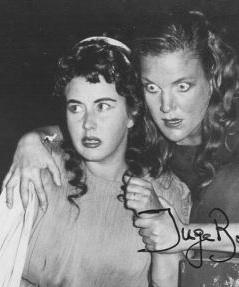
Isn't it true that Einstein said a minute sitting by a hot stove is like an eternity while a minute sitting on a pretty girl is like an instant? You know, I think I have my prepositions backward. But he said something like that. (Anyway, if you're the sort who would find it funny, imagine some lovely lass shrieking at Einstein "for fuck's sake get off my lap--you're a fully grown physicist!") I couldn't help but think about it tonight.
Why? Well Wagner, of course. I find it interesting that people tend to agree on the idea that Furtwangler can play things slow and still have them hang together better than other conductors (name your whipping boy--Barenboim?) who also play them slow. I agree, too, and yet I don't think it's one of those things you should just say and not think about what it means. On the face of it, it's pretty nonsensical. Could it be something we just say because we cathect to Furt and not to Bohm and once we've settled on an opinion, we become overly identified with it? I don't think it is, but I invite you to tell me how this works. Is it about proportion, perhaps, in subtle ways that can't be formulated? One friend of mine always speaks of Furtwangler in terms of an overarching architectural conception but you know how I hate metaphors. They are a poisoned arrow flying through the heart of a melancholic aardvark. I mean it.
Whatever the reason, tonight's date with Lorin Maazel was like five hours with a pretty girl sitting ON MY TRACHEA. It could hardly have gone by slower--matched, in fact, the visuals of Herr Schenk bore for bore. I left after the second act, feeling like I'd gotten way more for my money than I intended. Even the thunderous prelude felt leaden. Oddly enough this had one pleasant result: with nothing else to do, I really sat with James Morris' interpretation and found it, on such a backdrop, more profound than it had sounded before. Yes, I still flashed forward to a future hypothetical Pape-Wotan, but not with bitterness. The regret, the fear, the plain old age: all felt organic to the character, and necessary, highlighted somehow by the tedium in the pit.
I'm pretty tired of hearing myself talk about Voigt, moreso since so many reports of her have turned into a predictable "State of the Voice" address, but could only be nostalgic, hearing her Sieglinde, for a very long trip I made to hear it in another century. Her partner then was Domingo, who I heard as Siegmund twice, about ten years apart. Each time was a marvel, but I think I've heard his better in the role. Clifton Forbis should be singing every role at the Met that requires serious lungpower, which is not to say that's all he has. Nothing like it. Next year may call for a trip to Chicago to hear what bids fair to be the bona fide Tristan of, well, right now. Tonight was his last in this run and he looked triumphant at his "my character is dead and I'm going to Fiorello's" curtain call, as he should have. Beyond volume, there's a matter of authority in this kind of singing, and that's what was so wonderful to hear.
Harder to comment on Gasteen because the role opens with an iconic moment she objectively cannot deliver, which colors one's experience...ok and because I didn't hear half of her role. There's good heft to the instrument, and generosity or openness of spirit in the performance that stops short of fiery inspiration in the mode of Leider, but I'll have to hear her again before I really know what the deal is.
I'm in the vast minority here, but for my shekels, Michelle DeYoung is really a work in progress. People talk a lot about line in bel canto, but there's a Wagnerian sense of line one must have as well (think of Jon Tomlinson's King Mark for a great example) and I don't hear it in her singing. Certainly it's a fine voice, and I'm glad to hear the warm reception she gets.
***
On another topic altogether, the New Yorker article on Nico Muhly by Rebecca Mead quotes one of our own. It's rather an engrossing article, at least if you come in knowing zippo about Muhly. It does appear I'm going to need to familiarize myself with "Speaks Volumes" if I'm to continue thinking of myself as a snooty music fag, and in any case, the article makes mention of an upcoming commission at the You-Know-Where. (Rhymes with retro collagen.)
Wednesday, February 06, 2008


Happy Holidays!
Hey I just noticed on the street: it's Schmutz Wendesday! This is, insofar as I've been able to understand, the day when Jesus rises from the dead and goes, "oh hey, you've got some schmutz on your head" and wipes it off for you. He's like an amalgam of a zombie and some great aunt that way. Presumably then he goes back to being dead, but I'm not sure. Religion is confusing! Anyway it doesn't seem to be incredibly popular and I'm just wondering if they should branch out on the color scheme a little. Note to Our Lord and Savior: Black does not go with every outfit.
I have a hunch I make this joke every year. Let's just call it a holiday tradition.
I have a hunch I make this joke every year. Let's just call it a holiday tradition.
Monday, February 04, 2008
Who did I hear?
A recent discussion of Carmen found me googling Graciela von Gyldenfeldt. She seems to have existed also as Graciela de Gyldenfeldt. She's who I heard sing Carmen in Cincinnati in what the intertubes confirm was 1991, and she's the first person I ever heard have a full-on vocal crisis right in front of me. Maybe she didn't think she was having one, as she stayed on 'til the bitter, bitter end, but even my untrained ears and the healthily not hypercritical ears of my father recognized that when the bottom half sounds like a truck on a steep incline and the top half sounds like a Vespa, all is not well.
I love this kind of archeology. I've gone on about it before. One day I'll find out if the woman who sang now dimly recalled songs in German, one with a lyric about a traveler on a path at night, about whom some sophisticate at intermission was heard to say "she goes around the world singing Frauleinliebe und Leben was indeed Troyanos. This would be at the Singletary Center in Lexington, Kentucky in the late 80's or possibly 1990 but I don't think so. If you know, you're welcome to burst my bubble or make my day. And one day perhaps my father will unearth his programs and I'll know if it was Callas he heard in Dallas, as a kid.
Further searching this evening confirmed that it was Richard Leech we heard the night we raised our eyebrows at each other about some Verdi opera we'd never heard of called A Masked Ball. I thought it might have been Millo, too, and that would have been funny, but it wasn't. Who was in my first opera, and yours? Cinci doesn't seem to be one of those companies with an exhaustive history on their website, that I've found, but anyway I'm enjoying the mystery and the possibility I heard names I know now and love or turn up my nose at. It wasn't until years later I would keep track, because the names didn't mean anything to me and I had nothing to compare to.
I'll never be able to say, like so many New Yorkers I now know, it was Tucker, and it was a matinee, though I suppose when I'm 70 I can fudge and say it was Bartoli, and it was Houston, and it was 1992 or 3. That was sort of the first time I went on purpose and chose who to hear...
In other news, I have a Birth Opera after all. It was La Cieca's idea to rescue us Leos by looking to the Salzburg Festival. Here's what happened on my date of birth, and I'm most pleased with it:
COSÌ FAN TUTTE
ossia La scuola degli amanti
Dramma giocoso in two acts K. 588
Libretto by Lorenzo Da Ponte
Sung in Italian
Revival
Karl Böhm, Conductor
Günther Rennert, Stage director
Ita Maximowna, Stage sets
Ita Maximowna, Costumes
Walter Hagen-Groll, Chorus master
Gundula Janowitz, Fiordiligi
Brigitte Fassbaender, Dorabella
Reri Grist, Despina
Peter Schreier, Ferrando
Hermann Prey, Guglielmo
Dietrich Fischer-Dieskau, Don Alfonso
Walter Taussig, Cembalo
Chor der Wiener Staatsoper
Vienna Philharmonic
Venue:
Kleines Festspielhaus
Saturday, 11 August 1973, 7.30 p.m.
I love this kind of archeology. I've gone on about it before. One day I'll find out if the woman who sang now dimly recalled songs in German, one with a lyric about a traveler on a path at night, about whom some sophisticate at intermission was heard to say "she goes around the world singing Frauleinliebe und Leben was indeed Troyanos. This would be at the Singletary Center in Lexington, Kentucky in the late 80's or possibly 1990 but I don't think so. If you know, you're welcome to burst my bubble or make my day. And one day perhaps my father will unearth his programs and I'll know if it was Callas he heard in Dallas, as a kid.
Further searching this evening confirmed that it was Richard Leech we heard the night we raised our eyebrows at each other about some Verdi opera we'd never heard of called A Masked Ball. I thought it might have been Millo, too, and that would have been funny, but it wasn't. Who was in my first opera, and yours? Cinci doesn't seem to be one of those companies with an exhaustive history on their website, that I've found, but anyway I'm enjoying the mystery and the possibility I heard names I know now and love or turn up my nose at. It wasn't until years later I would keep track, because the names didn't mean anything to me and I had nothing to compare to.
I'll never be able to say, like so many New Yorkers I now know, it was Tucker, and it was a matinee, though I suppose when I'm 70 I can fudge and say it was Bartoli, and it was Houston, and it was 1992 or 3. That was sort of the first time I went on purpose and chose who to hear...
In other news, I have a Birth Opera after all. It was La Cieca's idea to rescue us Leos by looking to the Salzburg Festival. Here's what happened on my date of birth, and I'm most pleased with it:
COSÌ FAN TUTTE
ossia La scuola degli amanti
Dramma giocoso in two acts K. 588
Libretto by Lorenzo Da Ponte
Sung in Italian
Revival
Karl Böhm, Conductor
Günther Rennert, Stage director
Ita Maximowna, Stage sets
Ita Maximowna, Costumes
Walter Hagen-Groll, Chorus master
Gundula Janowitz, Fiordiligi
Brigitte Fassbaender, Dorabella
Reri Grist, Despina
Peter Schreier, Ferrando
Hermann Prey, Guglielmo
Dietrich Fischer-Dieskau, Don Alfonso
Walter Taussig, Cembalo
Chor der Wiener Staatsoper
Vienna Philharmonic
Venue:
Kleines Festspielhaus
Saturday, 11 August 1973, 7.30 p.m.
'Moor is Less
Here's what they're doing at Caramoor this summer. There's no press release to be found on the site but I assume that's a full account of what's being offered. It's...maybe a little disappointing. I mean, Barbiere has not exactly been underrepresented in town, though it is always pleasant to see it (or whatever else) in the country. Some of the singers are unknown to me, which might draw me out of my lair into the wilds--Ms. Di Giacomo was a pleasant surprise last year--but for Forza I'm content to stay home. That's just my peccadillo, but no, I refuse ever to be in the same room or outdoor space with Preziosilla again, no matter who plays her. Yes, even if it were You-Know-Whodles, who does not seem to be up for car alarms and mosquito bites this summer, tant pis. Maybe the Vivica Genaux recital of Falla and the like will be this season's enticement off the happy island.
Sunday, February 03, 2008
It may be like this around here for a little while
The first stroke of rhetorical genius in this season's campaigns is a musical one.
Saturday, February 02, 2008
Heldenpixie
I've always insisted it was practically opera. Sometimes, in fact, when people are all "hey, make me a CD to convince me I should like opera" and I'm not in the mood to say "who says you should like opera?" I will slip this in between, oh, Kathleen Battle and Jussi Bjorling. It's as close as you're going to hear to a dramatic soprano in pop music, which gives me a perverse thrill. Please ignore the cheezoid visuals and enjoy, and if you're not up to here with me for posting it in the first place, make sure to watch the end, where the real Inge Borkhing happens.
Oh and since I've recently been taken to task for not identifying what I'm posting, this is Blue Angel performing "I'm gonna be strong" by...I dunno, Pergolesi. You know the girl with the pipes as Cyndi Lauper.
Oh and since I've recently been taken to task for not identifying what I'm posting, this is Blue Angel performing "I'm gonna be strong" by...I dunno, Pergolesi. You know the girl with the pipes as Cyndi Lauper.
Thursday, January 31, 2008
More J-tube
The opera blogosphere is a little bit of a La DiDo lovefest right now and...I'm kind of fine with that. Listen, if you like this following clip and it comes out on DVD, please do the right thing, Spike Lee, and buy it. Because folks gotta make a living, and youtube is great but shouldn't stop that from happening. Anyway, without further ado, here is Joyce DiDonato managing to look happy and tiara-worthy while petting NIGHTMARISH GIANT HUMANOID MICE in a costume the word "shmatte" was invented for. Wait, one piece of further ado: if the timing on this is such as I understand it to be, she's singing this through a nasty sore throat. I mean jeez.
I've always imagined that pair of descending 2 octave runs to be a real terror.
A commenter on another clip says "Pero canta de p*** madre" (right before using the crazyhead vosotros form...it's like if "y'all" had its own separate verb forms) which means, literally, well nevermind, but it's a compliment even though it doesn't sound like one.
Hat tip to Coloraturafan for posting this.
I've always imagined that pair of descending 2 octave runs to be a real terror.
A commenter on another clip says "Pero canta de p*** madre" (right before using the crazyhead vosotros form...it's like if "y'all" had its own separate verb forms) which means, literally, well nevermind, but it's a compliment even though it doesn't sound like one.
Hat tip to Coloraturafan for posting this.
Wednesday, January 30, 2008
Moar! or: if loving Leyla is wrong, I don't want to be right!
Tuesday, January 29, 2008
Did you hear the one about the cell phone in the desert?
I think I'd like to have triplets so I could name them Sola, Perduta, and Abandonnata (Donna for short.) That's the thing, though. It seems like naming kids is the fun part and that lasts about a minute and then the rest of your life is basically terror and debt, so maybe I won't, after all.
Yes, I have gone back to the opera. A thousand times, yes. That must be my longest absence since, well, just summer I suppose, nothing all that dramatic. It was a fine welcome home, though, as long as one was willing to be a flexible listener.
I mean, golly, can you imagine trying to cast Puccini from the roster of stars currently on the boards in New York? We have some stellar talent, I don't need to say, but there are gaps, and the second biggest one is shaped like a Puccini soprano. The funny thing is Netrebko might have made something of it (hat/broach/pterodactyl) but the problem would have been in the last act: simultaneously portraying terrible weakness and yet somehow coming up with the strength for a twenty yard dash to the orchestra pit to dangle her locks in it. Wouldn't have been logical and god knows Manon Lescaut is a work of sobering rationality. Okay, or not.
I think actually there was no choice but Karita Mattila, despite the fact that she possesses almost objectively the wrong instrument for the job. Am I making any sense if I say it's not malleable enough? And in the climaxes, it cuts where it should billow? Certainly viable, but not ideal. But then on the other hand what else can you do when you need someone who can both give a physical suggestion of exposure and dehydration and perform a sarcastic minuet? Furthermore who else has the instinct in the second act to circumvent the irredeemable and fully unlikeable powder-my-wig-some-more banality of the character by going in for full-on camp? Also, though she surprisingly didn't demonstrate this as Salome, it appears she can do splits. Why was this in there? Why not. I am tempted to use the word kooky to describe her Act II Manon. You think I am knocking her, but I'm not.
I'd actually kind of like to know what the crowd that constantly bewails the golden age think about the Divine Miss M, Nordic edition. The thing is she's never done anything shabby, though it's hard to love her equally in everything. As far as I'm concerned, since she made an exit, quite expectedly, stark naked (in Salome) she's been a star, a true star, and never will be anything less. Yes, that's partly an excuse to paraphrase All About Eve (what isn't? you would be excused for asking), but it's also partly the truth. I'd never been at an operatic event where that kind of expectation hung in the air. That doesn't happen unless you're legit, by virtue of cords or by presence or both.
And though I've focused on her presence, it's not that the big numbers were wanting, through a vocal lense. "Sola, perduta" was rather wild, and sister, her chest voice is from the wrong side of the tracks. I guess I didn't love "In quelle trine morbide" but life's like that. On the whole, let's say, sometimes it wasn't great Puccini but it was every minute great opera. Very good opera, at least.
When KM was singing with Signor Giordani, it was a curious blend, but mostly in a good way. I've never heard Giordani sound quite so much in his element. There was some warming up that got done in front of us, but by "Tu, tu, piccolo iddio oh wait I'm in the wrong opera I mean amore, tu?" the rehearsal was over and he was taking it out and chopping it up. Slancio. Squillo. Oh I just thought I'd say those words because I'm talking about an Italian tenor and it's required by the laws of the universe. Did you think you were on opera-l for a minute? No, but they also happen to be appropriate, those words. Marcello Giordani is, how can I put this, what Franco Farina would sound like if he weren't awful. The top kicks your ass, and the rest at least slaps you around a little, or anyway calls you mean names. It's 1 am, you wanted normal compliments? Anyway, in this rep, in particular, there are moments of grandeur, and (thank you, jesus) abandon.
Croft, too, pleased me more than in recent memory. The hollow tone that sometimes haunts him at this stage of his career was not in evidence, nor was the line-breaking syllabic punch that, for me, makes his Germont like a ride with someone new to driving stick. Dale Travis was fine in the thankless role of Geronte, and debutant Sean Panikkar, though stylistically a little green, has a lot to work with and probably, down the road, a lot to offer.
If I can be a total killjoy for a minute, I'm actually getting a little tired of the lovefest that greets Levine at his first entrance to the pit--not because it's not deserved, you understand, but save some for the end, right? It starts to look like the reflexive standing O that happens at everything I ever go to on Broadway. think for a moment of future generations of Sirius broadcast listeners, folks. They're going to think audiences in the early 00's were coming to the theater drunk or something, which is actually my plan for Peter Grimes, but that's another story. I guess what I'm trying to speak of here is a cheapening effect. It's not the end of the world but it's just not my favorite audience phenomenon.
So yeah, of course, I'm going back Friday. I don't know that I'll have anything new to say then, but my season is back in gear. Wednesday week I'm at Die, Walkurie, Die!
Bonus: Carnegie Hall '08-'09. Upon cursory review, I can report that they're doing all the Mahler symphonies!! Probably not including the 10th because, um, he didn't write it. Featured in this morass of Mahler: bunch of Quasthoff and Roschmann!!! Hm, what else for voice fiends, Damnation of Faust with Kozena and Quast, Mentzer in L'enfant et les Sortileges, Measha Bruggergossman does Wesendoncks. Exciting in a "never gonna happen" way, non-vocal, Martha Argerich is scheduled to cancel the Prokofiev and Shostakovich concertos. JSU points out also a show in which Madame DiDonato will lose her marbles over and over again for our listening pleasure. Collecting her marbles and giving them back to her between numbers, presumably, will be Les Talens Lyriques. Anyway, this is not exhaustive. Check it out.
Yes, I have gone back to the opera. A thousand times, yes. That must be my longest absence since, well, just summer I suppose, nothing all that dramatic. It was a fine welcome home, though, as long as one was willing to be a flexible listener.
I mean, golly, can you imagine trying to cast Puccini from the roster of stars currently on the boards in New York? We have some stellar talent, I don't need to say, but there are gaps, and the second biggest one is shaped like a Puccini soprano. The funny thing is Netrebko might have made something of it (hat/broach/pterodactyl) but the problem would have been in the last act: simultaneously portraying terrible weakness and yet somehow coming up with the strength for a twenty yard dash to the orchestra pit to dangle her locks in it. Wouldn't have been logical and god knows Manon Lescaut is a work of sobering rationality. Okay, or not.
I think actually there was no choice but Karita Mattila, despite the fact that she possesses almost objectively the wrong instrument for the job. Am I making any sense if I say it's not malleable enough? And in the climaxes, it cuts where it should billow? Certainly viable, but not ideal. But then on the other hand what else can you do when you need someone who can both give a physical suggestion of exposure and dehydration and perform a sarcastic minuet? Furthermore who else has the instinct in the second act to circumvent the irredeemable and fully unlikeable powder-my-wig-some-more banality of the character by going in for full-on camp? Also, though she surprisingly didn't demonstrate this as Salome, it appears she can do splits. Why was this in there? Why not. I am tempted to use the word kooky to describe her Act II Manon. You think I am knocking her, but I'm not.
I'd actually kind of like to know what the crowd that constantly bewails the golden age think about the Divine Miss M, Nordic edition. The thing is she's never done anything shabby, though it's hard to love her equally in everything. As far as I'm concerned, since she made an exit, quite expectedly, stark naked (in Salome) she's been a star, a true star, and never will be anything less. Yes, that's partly an excuse to paraphrase All About Eve (what isn't? you would be excused for asking), but it's also partly the truth. I'd never been at an operatic event where that kind of expectation hung in the air. That doesn't happen unless you're legit, by virtue of cords or by presence or both.
And though I've focused on her presence, it's not that the big numbers were wanting, through a vocal lense. "Sola, perduta" was rather wild, and sister, her chest voice is from the wrong side of the tracks. I guess I didn't love "In quelle trine morbide" but life's like that. On the whole, let's say, sometimes it wasn't great Puccini but it was every minute great opera. Very good opera, at least.
When KM was singing with Signor Giordani, it was a curious blend, but mostly in a good way. I've never heard Giordani sound quite so much in his element. There was some warming up that got done in front of us, but by "Tu, tu, piccolo iddio oh wait I'm in the wrong opera I mean amore, tu?" the rehearsal was over and he was taking it out and chopping it up. Slancio. Squillo. Oh I just thought I'd say those words because I'm talking about an Italian tenor and it's required by the laws of the universe. Did you think you were on opera-l for a minute? No, but they also happen to be appropriate, those words. Marcello Giordani is, how can I put this, what Franco Farina would sound like if he weren't awful. The top kicks your ass, and the rest at least slaps you around a little, or anyway calls you mean names. It's 1 am, you wanted normal compliments? Anyway, in this rep, in particular, there are moments of grandeur, and (thank you, jesus) abandon.
Croft, too, pleased me more than in recent memory. The hollow tone that sometimes haunts him at this stage of his career was not in evidence, nor was the line-breaking syllabic punch that, for me, makes his Germont like a ride with someone new to driving stick. Dale Travis was fine in the thankless role of Geronte, and debutant Sean Panikkar, though stylistically a little green, has a lot to work with and probably, down the road, a lot to offer.
If I can be a total killjoy for a minute, I'm actually getting a little tired of the lovefest that greets Levine at his first entrance to the pit--not because it's not deserved, you understand, but save some for the end, right? It starts to look like the reflexive standing O that happens at everything I ever go to on Broadway. think for a moment of future generations of Sirius broadcast listeners, folks. They're going to think audiences in the early 00's were coming to the theater drunk or something, which is actually my plan for Peter Grimes, but that's another story. I guess what I'm trying to speak of here is a cheapening effect. It's not the end of the world but it's just not my favorite audience phenomenon.
So yeah, of course, I'm going back Friday. I don't know that I'll have anything new to say then, but my season is back in gear. Wednesday week I'm at Die, Walkurie, Die!
Bonus: Carnegie Hall '08-'09. Upon cursory review, I can report that they're doing all the Mahler symphonies!! Probably not including the 10th because, um, he didn't write it. Featured in this morass of Mahler: bunch of Quasthoff and Roschmann!!! Hm, what else for voice fiends, Damnation of Faust with Kozena and Quast, Mentzer in L'enfant et les Sortileges, Measha Bruggergossman does Wesendoncks. Exciting in a "never gonna happen" way, non-vocal, Martha Argerich is scheduled to cancel the Prokofiev and Shostakovich concertos. JSU points out also a show in which Madame DiDonato will lose her marbles over and over again for our listening pleasure. Collecting her marbles and giving them back to her between numbers, presumably, will be Les Talens Lyriques. Anyway, this is not exhaustive. Check it out.
Saturday, January 26, 2008
Figlio impuro
Not even a hint of relevance, but I do love a good hatchet job and I know some of you do, too. If you haven't already heard about it, you absolutely have to read the NYT endorsement of McCain, not for anything having to do with McCain (because who cares, Edith) but for the deeply satisfying thrashing of Giuliani in the middle. I guess if everything must relate to you-know-what, you're welcome to imagine it translated into Italian and delivered by the great Gencer. The clause "then exploited his city’s and the country’s nightmare to promote his presidential campaign" would contain a high D and at least three glottal attacks.
In another moment of local relevance to Met audiences, John Edwards, who is working the "little old me from the country" angle so hard we will not be surprised to see him on Tim Russert wearing a straw hat, has in some ill-thought-out misprisal* of disdain for things urban for progressive class politics, made Masa Takayama his unlikely Sistah Souljah.
If it wasn't obvious, the coveted endorsement of MFI goes to Senator Obama.
Hi to anyone who made his unlikely way here from the mention in the NYRB, about which I am unseemlily** amused. This is usually about opera.
*almost certainly not a word
**even more certainly not a word
By the way, I return to the 'politan next week and should resume writing about that mysterious art form I once upon a time used to write about, the one where people don wigs and speak on pitches.
In another moment of local relevance to Met audiences, John Edwards, who is working the "little old me from the country" angle so hard we will not be surprised to see him on Tim Russert wearing a straw hat, has in some ill-thought-out misprisal* of disdain for things urban for progressive class politics, made Masa Takayama his unlikely Sistah Souljah.
If it wasn't obvious, the coveted endorsement of MFI goes to Senator Obama.
Hi to anyone who made his unlikely way here from the mention in the NYRB, about which I am unseemlily** amused. This is usually about opera.
*almost certainly not a word
**even more certainly not a word
By the way, I return to the 'politan next week and should resume writing about that mysterious art form I once upon a time used to write about, the one where people don wigs and speak on pitches.
Thursday, January 24, 2008
Tuesday, January 22, 2008
almost inexhaustibly amusing
I keep looking back at this line from the notes to the Price/Bergonzi/Merrill/Verrett/Grist Ballo and laughing:
"The large crowd of citizens already there is in a state of considerable excitement, for the sorceress is expecting an immediate call from her good friend the Devil."
That is among the funnier sentences ever written.
Also why did I not know there was a Ballo with such a perfect cast until it made a lunge for my wallet at Academy?
"The large crowd of citizens already there is in a state of considerable excitement, for the sorceress is expecting an immediate call from her good friend the Devil."
That is among the funnier sentences ever written.
Also why did I not know there was a Ballo with such a perfect cast until it made a lunge for my wallet at Academy?
Monday, January 21, 2008
JD-Tube
Ok, I did hesitate to link to this clip...it's not 100% clear what the source is, but there seems to be no commercial release. So, crossing my fingers and hoping it isn't dripping with bad karma, I thank the original youtube poster, er, hotazzoperastud, and present to you some formidable music-making, courtesy of Joyce DiDonato and Eric Cutler. p.s. not to be a boring high note queen but check out the B at the end. Srsly.
Sunday, January 20, 2008
Pronounce it "Lou-a-vul" please
Picture your host as a young man, driving around on a Saturday with a broadcast of Rosenkavalier (with, like, Mechtild Gessendorf) on the radio of his 1983 Tercel, and you must perforce picture Kentucky, where this took place. Well, picturing it is better than growing up there, but it's hard to find an unkind word about Louisville, the state's smartest and most progressive corner. Home to the Humana Festival, the elegant Seelbach (mentioned in passing, under a nom de plume in The Great Gatsby), and my high school friend Michelle who probably had a personality disorder but was very funny, Louisville is the faint praise that damns the rest of the state. Wait, that came out all wrong. Seriously a lovely town. And here's what they're seeing next season at the opera.
Friday, January 18, 2008
What's left?
So mostly now one is curious about Houston and Chicago. (This is not to slight the many fine houses not yet mentioned.) Anyone heard rumblings thereof, therefrom? Me, I also keep clicking on Caramoor's site because I think they announced pretty early last year and of course they have been something of a Podles Festspielhaus the last couple of years. Also, even with the indispensible augury of the Met Futures Page, surely the official reveal from the Big House will have a casting surprise or two.
Thursday, January 17, 2008
News from the North
...or: When it Rains, it Snows
Here's what they'll be seeing in the land of socialized medicine and a suspiciously forward placement of the /o/ vowel. P'chonkadonk is now officially sneaking up on ubiquity, is it not so? From my limited experience of her vocalism, that could be a welcome development.
Here's what they'll be seeing in the land of socialized medicine and a suspiciously forward placement of the /o/ vowel. P'chonkadonk is now officially sneaking up on ubiquity, is it not so? From my limited experience of her vocalism, that could be a welcome development.
Wednesday, January 16, 2008
Scooped!
Wow, the Opera Tattler has all the dirt on next season.
Of particular interest there, Seattle's '08-'09, including Joyce Castle in Figaro. I assume she's playing Cherubino. Well I don't assume that of course but it's fun to try and picture. Blythe's first (?) Amneris: intriguing. Also, is LePage's Erwartung the one with crazy wall=floor tricks we saw in Cincinnati maybe five years ago?
ETA: Burns, who gets some sort of lifetime achievement award for correcting my incorrectnesses, points out that Ms. Blythe will first sing Amneris closer to home (well, my home)--in Baltimore, I'm assuming. Baltimore has in fact posted the titles of their next season with no casting information I can find, but anyway: Aida, Norma, Barbiere, Porgy & Bess.
More hat tips to Jessica, this time for pointing us to the details for Baltimore.. I know at least one person who is likely to faint from joy at the prospect of a lyric rather than a mezzo singing the 'gisa.
Of particular interest there, Seattle's '08-'09, including Joyce Castle in Figaro. I assume she's playing Cherubino. Well I don't assume that of course but it's fun to try and picture. Blythe's first (?) Amneris: intriguing. Also, is LePage's Erwartung the one with crazy wall=floor tricks we saw in Cincinnati maybe five years ago?
ETA: Burns, who gets some sort of lifetime achievement award for correcting my incorrectnesses, points out that Ms. Blythe will first sing Amneris closer to home (well, my home)--in Baltimore, I'm assuming. Baltimore has in fact posted the titles of their next season with no casting information I can find, but anyway: Aida, Norma, Barbiere, Porgy & Bess.
More hat tips to Jessica, this time for pointing us to the details for Baltimore.. I know at least one person who is likely to faint from joy at the prospect of a lyric rather than a mezzo singing the 'gisa.
Pleasant, unpleasant surprise
Cynthia Lawrence is, I understand, a stalwart cover at the 'politan. I've heard her once, only, as Rosalinde, so all I really knew about her was that she wasn't proficient at delivering treacly shtick. Imagine my surprise, then, to tune in last night and hear her sing, no, not a perfect Lady M. but in any case rings around the (relatively) name brand star given the prima and the HD movie-cast. A lot of what you'd want was there, if the microphones were fair: unabashed chest voice, at least on air an ample and solid sound, acuti that were here serviceable, there good (as opposed to the other singer's weird half-air sound of song in collapse...and do bear in mind, again, I loved her in Tabarro, just, please folks, don't sing what you can't sing) and even a certain degree of abandon that puts the lady's delicious malevolence over. Was she convincingly beastly onstage, can anyone tell me? La luce, usually a better test than the thorny gauntlet of the letter scene, hit the nail on the head.
I note this partly because the good performance of a cover is a special thing and should not go untrumpeted. But also it's enough to entice me back into the hall to hear it again, mixed-to-negative feelings about the production notwithstanding. I should look to see if she's in the last performances where Alvarez will presumably ease painful memories of Ataneli's pitch problems, and though I found Pittas more committed and stylish than earlier, far more worthy of the roar that greeted him at curtain, I'm positively mad to hear Calleja sing it. And Pape, well, it is boring to heap garlands on those who are already a greenhouse, but...
Incidentally, I meant to write up something about Fiona Shaw as the Fonze at BAM, but it seemed not to want to be written, so just: yeah, go.
I note this partly because the good performance of a cover is a special thing and should not go untrumpeted. But also it's enough to entice me back into the hall to hear it again, mixed-to-negative feelings about the production notwithstanding. I should look to see if she's in the last performances where Alvarez will presumably ease painful memories of Ataneli's pitch problems, and though I found Pittas more committed and stylish than earlier, far more worthy of the roar that greeted him at curtain, I'm positively mad to hear Calleja sing it. And Pape, well, it is boring to heap garlands on those who are already a greenhouse, but...
Incidentally, I meant to write up something about Fiona Shaw as the Fonze at BAM, but it seemed not to want to be written, so just: yeah, go.
Tuesday, January 15, 2008
Oh, look! Actual content!
Here's an article about Washington's next season. As per the Facts of Life theme song, we have Radvanovsky as the B-cast Lucrezia Borgia (though SR is nobody's second fiddle) and Guleghina singing Turandot, otherwise known as "the role wherein 50% of the notes are ones she can't sing."
Oh, hey, it's January! What other news can we dig up?
Dallas is fulfilling a lot of people's dream by putting on Roberto Devereux. The linked article doesn't provide casting info, though the photo suggests local favorite/local source of virulent backlash skepticism Stephen Costello will be on hand. Other good news: Dallas' last season at the Fairgrounds Music Hall.
And it gets better: they've already announced 2009-2010 (that's a PDF, btw, if it's going to crash your browser or tie things up) in the new house. There's an opera of Moby Dick by Jake Heggie starring Ben Heppner, which is exciting if you look at it from a certain angle. Then if you scroll down you get more casting info on both seasons, for instance promising young tenor James Valenti is in the Boheme, and Manuela Custer about whom I heard excited rumblings a year or two back is in Italiana. Also Hasmik "Will Travel" Papian is Elisabetta or Cunegonde or Flosshilde or whatever the lead in Roberto Devereux is. The way I function, as usual, the main character in Roberto Devereux is Beverly Sills.
There's a little info here about L.A. They're getting Wilson's Butterfly, which aren't you a little bit curious at least?
More news as it breaks. Probably after everyone else has already reported it, but you get what you pay for.
Oh, hey, it's January! What other news can we dig up?
Dallas is fulfilling a lot of people's dream by putting on Roberto Devereux. The linked article doesn't provide casting info, though the photo suggests local favorite/local source of virulent backlash skepticism Stephen Costello will be on hand. Other good news: Dallas' last season at the Fairgrounds Music Hall.
And it gets better: they've already announced 2009-2010 (that's a PDF, btw, if it's going to crash your browser or tie things up) in the new house. There's an opera of Moby Dick by Jake Heggie starring Ben Heppner, which is exciting if you look at it from a certain angle. Then if you scroll down you get more casting info on both seasons, for instance promising young tenor James Valenti is in the Boheme, and Manuela Custer about whom I heard excited rumblings a year or two back is in Italiana. Also Hasmik "Will Travel" Papian is Elisabetta or Cunegonde or Flosshilde or whatever the lead in Roberto Devereux is. The way I function, as usual, the main character in Roberto Devereux is Beverly Sills.
There's a little info here about L.A. They're getting Wilson's Butterfly, which aren't you a little bit curious at least?
More news as it breaks. Probably after everyone else has already reported it, but you get what you pay for.
Are you there, god? It's me, Maurgret
Dear god,
Yeah, I know, I have a lot of nerve addressing a blog entry to you, all things considered.
But, say, listen, big guy. Here's my bargain basement version of Pascal's Wager: I pretend you exist just in case; you maybe do me a favor. After that, seriously, other than Mike Huckabee not winning the election, I'll never ask you for another you-damn thing.
What I'd like, god, old buddy, old pal, is for Patricia Racette to expand her Puccini rep and cover for Karita Mattila in February, and for KM to have a cold or something not particularly unpleasant but momentarily incapacitating like that, because then Racette would go on instead and in addition to the pleasure of hearing her sing it, I could use the subject line "Manon Lesbo" for my review. In a loving way, you understand. Because it's 2008* and we can kid each other about that kind of thing. I think.
Ok, I'm gonna let you go in case you're busy coming up with more fascinating tokens of your affection like AIDS and famine and, not to reuse a punchline, but Mike Huckabee, in your infinite benevolence. But consider it, alright?
Fondly as ever,
Maurizio Q. D'Annato
***
Yes, eventually I'm going back to the opera so I can stop posting crap like this. Promise.
*Thanks, Gert. You win the "Maury is a Simpleton" award for this week.
Yeah, I know, I have a lot of nerve addressing a blog entry to you, all things considered.
But, say, listen, big guy. Here's my bargain basement version of Pascal's Wager: I pretend you exist just in case; you maybe do me a favor. After that, seriously, other than Mike Huckabee not winning the election, I'll never ask you for another you-damn thing.
What I'd like, god, old buddy, old pal, is for Patricia Racette to expand her Puccini rep and cover for Karita Mattila in February, and for KM to have a cold or something not particularly unpleasant but momentarily incapacitating like that, because then Racette would go on instead and in addition to the pleasure of hearing her sing it, I could use the subject line "Manon Lesbo" for my review. In a loving way, you understand. Because it's 2008* and we can kid each other about that kind of thing. I think.
Ok, I'm gonna let you go in case you're busy coming up with more fascinating tokens of your affection like AIDS and famine and, not to reuse a punchline, but Mike Huckabee, in your infinite benevolence. But consider it, alright?
Fondly as ever,
Maurizio Q. D'Annato
***
Yes, eventually I'm going back to the opera so I can stop posting crap like this. Promise.
*Thanks, Gert. You win the "Maury is a Simpleton" award for this week.
Wednesday, January 09, 2008
Monday, January 07, 2008
God(s) I've missed Wagner
Just tuned in halfway through "Du bist der Lenz...nein, nein, du bist der Lenz, Nein, wirklich, DU bist der Lenz, ich insistiere." I think Upstate Julie Brown is liveblogging, so maybe I will, too. So far I'm just really pleased with Adrienne Pieczonka, who has a pretty solid sound with some vulnerability to it, and who also just did the Rysanek scream at the, er, unsheathing. Forbis, while lacking some of the suavity we've gotten used to with Domingo has a very gratifying virility. This is going well. More as it unfolds.
...and the crowd misses Wagner, too. I've heard the end of the act sound a bit more ecstatic but [he added later] some of the melancholic stuff with Brunnhilde & Pops is rewardingly rich and pensive.
I'm not going to go on about James Morris, I guess, because that wouldn't be sporting.
Gasteen is a singer I enjoyed immensely as Elektra, with the caveat that the top is a mess. It's still a mess, though starting with hojotoho is nobody's idea of a good time. So far, I'd still rather hear her than Eaglen, for the reason that probably goes without saying: she's singing a role, not notes.
Excellent role for Blythe, who is very word-attentive. Ok, more in a bit.
Oh, sorry. It appears people are reading and commenting and I'm half nodding despite a terrific performance, including (who always admits when he's wrong? Maury does) some very committed, if woolly, sounds from Morris. It's just, as I was saying not three minutes ago, "act ii of walkuere is interminable, like a cheap uruguayan pinot noir." I know, that doesn't make ANY sense at all, but in context, it did, as much as anything I say.
Longeurs: a word invented for Wotan's monologues. And I can't say Morris was thrilling there, but it's wordy stuff, in the worst way. Yeah, Wagner, gift horse, whatever, the outer acts are much more thrilling, aren't they? Or am I just missing something? I bought the Andrew Porter translation to listen along with sometime because I figure a singing translation (while sometimes embarrassing) at least removes the dilemma of which kind of mediation you want, to some extent: read the German and understand not enough, or read the English and it doesn't fit. Anyway the great thing about Wagner as librettist is that enough of it is WTF-inducing that you can sort of indulge in willing suspension of serious-taking, and just say "either this bit sucked in the original or it is translated in a clumsy way, and I shall never know."
A Furtwangler-mad friend of mine used to grow positively livid about Levine's Wagner, referring to his style as "curatorial," but whatever you may think of that, he's certainly made this an orchestra that plays Wagner as if it were the Haydn "Surprise!" Symphony. (Exclamation point, mine, and ironic. It's actually not that surprising.) Some gratitude is due to the universe for that. Ok, back to active listening. It gets exciting again here I think.
Ok wow, I didn't know it was Margaret Juntwait DDS, but she is sure as hell pulling teeth in this interview. This lady is doubtless wonderful at her job, but I think at the point that we were reduced to her critiquing MJ's pronunciation of the Valkyries' names, perhaps they could have yanked someone out of the audience. p.s. operas she'd like to hear more? Die Freschutz, huh? Yeah, wow that would be terrific, call me when that happens. I'll be picking out what magazines to bring and possibly programming playlists on my ipod. See now at this point Die Freischutz always turns out to be someone's favorite and I feel like a cad, but...I'm having a hard time believing Die Freischutz is anyone's favorite opera.
Did I mention I like the outer acts much, much better than Act II? Probably. Did I also mention Satan or someone made me stay up 'ti 2 watching Valley of the Dolls which I don't even really love? So I'm actually going to bed after a little bit of this act. But it looks a bit like you guys went to bed, too, so it's probably alright.
...and the crowd misses Wagner, too. I've heard the end of the act sound a bit more ecstatic but [he added later] some of the melancholic stuff with Brunnhilde & Pops is rewardingly rich and pensive.
I'm not going to go on about James Morris, I guess, because that wouldn't be sporting.
Gasteen is a singer I enjoyed immensely as Elektra, with the caveat that the top is a mess. It's still a mess, though starting with hojotoho is nobody's idea of a good time. So far, I'd still rather hear her than Eaglen, for the reason that probably goes without saying: she's singing a role, not notes.
Excellent role for Blythe, who is very word-attentive. Ok, more in a bit.
Oh, sorry. It appears people are reading and commenting and I'm half nodding despite a terrific performance, including (who always admits when he's wrong? Maury does) some very committed, if woolly, sounds from Morris. It's just, as I was saying not three minutes ago, "act ii of walkuere is interminable, like a cheap uruguayan pinot noir." I know, that doesn't make ANY sense at all, but in context, it did, as much as anything I say.
Longeurs: a word invented for Wotan's monologues. And I can't say Morris was thrilling there, but it's wordy stuff, in the worst way. Yeah, Wagner, gift horse, whatever, the outer acts are much more thrilling, aren't they? Or am I just missing something? I bought the Andrew Porter translation to listen along with sometime because I figure a singing translation (while sometimes embarrassing) at least removes the dilemma of which kind of mediation you want, to some extent: read the German and understand not enough, or read the English and it doesn't fit. Anyway the great thing about Wagner as librettist is that enough of it is WTF-inducing that you can sort of indulge in willing suspension of serious-taking, and just say "either this bit sucked in the original or it is translated in a clumsy way, and I shall never know."
A Furtwangler-mad friend of mine used to grow positively livid about Levine's Wagner, referring to his style as "curatorial," but whatever you may think of that, he's certainly made this an orchestra that plays Wagner as if it were the Haydn "Surprise!" Symphony. (Exclamation point, mine, and ironic. It's actually not that surprising.) Some gratitude is due to the universe for that. Ok, back to active listening. It gets exciting again here I think.
Ok wow, I didn't know it was Margaret Juntwait DDS, but she is sure as hell pulling teeth in this interview. This lady is doubtless wonderful at her job, but I think at the point that we were reduced to her critiquing MJ's pronunciation of the Valkyries' names, perhaps they could have yanked someone out of the audience. p.s. operas she'd like to hear more? Die Freschutz, huh? Yeah, wow that would be terrific, call me when that happens. I'll be picking out what magazines to bring and possibly programming playlists on my ipod. See now at this point Die Freischutz always turns out to be someone's favorite and I feel like a cad, but...I'm having a hard time believing Die Freischutz is anyone's favorite opera.
Did I mention I like the outer acts much, much better than Act II? Probably. Did I also mention Satan or someone made me stay up 'ti 2 watching Valley of the Dolls which I don't even really love? So I'm actually going to bed after a little bit of this act. But it looks a bit like you guys went to bed, too, so it's probably alright.
Thursday, January 03, 2008
The Lark of the Border
I've heard several epithets applied to Tejano songstress Lydia Mendoza, who died just a few days ago at 91, among them "the lark of the border" and "la reina de la musica ranchera"--the kind of intentionally iconic labels people attach to a certain, bewitching kind of art, in this instance music that sounds as lost the past to us now (and which therefore of course draws us in the more) as the Carter Family or McCormack singing old sentimental songs on a '78. Nobody could write (or perform, I think) a new Lydia Mendoza song idiomatically in the present any more than they could write a new Mozart symphony. In both cases, not a matter just of a stilled voice, but a language with no native speakers left. Here is the song I think of as iconic.
[Note: I read somewhere today that she took the plotwise pulpy words for Mal Hombre from a story printed on candy wrappers! I can't help but find them poetic just the same: "tan ruin es tu alma que no tiene nombre"!]
[Note: I read somewhere today that she took the plotwise pulpy words for Mal Hombre from a story printed on candy wrappers! I can't help but find them poetic just the same: "tan ruin es tu alma que no tiene nombre"!]
Tuesday, January 01, 2008
Cat
Hey does anyone want a very adorable orange tabby I found wandering on 35th Street on New Year's Eve? I named him Nellie before I realized he had the wrong parts. Off chance here, but I don't want to take him to animal control and there ain't room in these parts for two cats. Very friendly, about six months old.
Monday, December 31, 2007
A cup of kindness
Edited for saccharine...
Madame Melba sings for you a sentimental song, to usher in the new year. [I swear, that syntax totally works if you imagine, like, the Voices of Firestone theme in the background.]
Madame Melba sings for you a sentimental song, to usher in the new year. [I swear, that syntax totally works if you imagine, like, the Voices of Firestone theme in the background.]
Tuesday, December 25, 2007
Now that you're near
Oh shit. Here it is, that holiday I always forget the name of, and me without a thing to post about. Only post I will, as post I must. It is a point of pride around here, as you know.
Well I can write a little something about Xanadu, I suppose, having taken in that very spectacle with my sister. That's how the D'Annato family says "Happy Birthday, Jesus! You don't look a day over 2,000!"--by standing in line at TKTS. It is as if to say: see? We suffer, too.
There's no reason to convince you folks that you should or should not see Xanadu. I think more than any play in Broadway history, you pretty much know from the name, the poster, and the crowd lined up in front of the theater whether this is going to be your cup of merde or not. Although actually, my sister went in thinking they had just settled for staging the unvarnished affront to a first grade education that is Xanadu, the movie. And so was taken aback to find that those responsible have chosen to parody what is already parody.
The main question is whether you've seen the movie, and even that doesn't help entirely. Sure, it makes sense, or perhaps I should dust off the scare quotes and say "sense" of a few details like the streamers they all pull out at the end of "I'm Alive." But I think it is also possible to feel a tiny bit sad for Olivia Newton-John while you're watching the hilarious, disarming Kerry Butler making sport of the world's least self-conscious performance of anything, ever. I mean, isn't that why Xanadu is somewhat beloved camp instead of completely unwatchable crap, because of its infinite sincerity?
I can tell you that if, long about 1980, you were a seven-year-old who was just beginning, in the depths of his latency-stage soul, to wonder if maybe possibly you were actually....Olivia Newton-John, some of this is actually unironically life-affirming. Yes, you now think I'm either kidding or mildly retarded, and that's fine. But I know when I beheld the scene where poor Gene Kelly's character is reminiscing about the 40's and Sonny is talking about that rad new 80's music, and an imaginary Andrews Sisters type ensemble gets aesthetically smooshed together with the very worst of what I believe was called New Wave, saw it taking place in the flesh in front of me, it was like I relived those ten minutes or so when I didn't mind being 8 again. That scene, as I may have said, is the Ariadne auf Naxos of movie musicals on rollerskates.
The part you've probably heard most about is, say, can you have a subplot when the plot itself is already rather sub-everything? Well I mean the added characters played by Mary Testa and Jackie Hoffman, and they are indeed hilarious, I think not so much because their lines are great but because they're just very funny people--the genius of their use here is about context more than material. Jackie Hoffman's very being seems to scream out "are you kidding me with this shit?"
But, also too--as I used to hear people in the midwest begin their sentences, shortly before I beat them to death with a style manual--there is low-key genius in the performances of Kerry Butler and the inhumanly attractive Cheyenne Jackson. Srsly, I went in ready to hate him because he is the embodiment of phenotypal unfairness in the universe, but he gives this completely goofy performance that exonerates him for looking like everything you ever hated about The Big Cup. (Hey did you ever see how there were actual I-kid-you-not candles burning in front of that place after it closed? Some friends and I stumbled upon that little funeral and I coudn't stop myself from muttering "e avanti a lui, tremava tutta Chelsea" to nobody's particular delight.)
And Kerry Butler, yeah, was like a big beacon radiating fun as Clio/Kira, the role mortalized by ONJ in the Ur-Xanadu. Once in a while she privileged humor over singing in a tiresome way in songs that I really do think are rather fine exemplars of their era, but until ELO does one of these "back from the nursing home" tours everyone else is doing, I guess I am alone in taking them semi-seriously anyway. Ms. Butler has lots of things to commend her: she's a New Yorker, she has very good comic timing and a solid set of pipes, and she never looks like she's going to crash into the orchestra pit.
Xanadu is playing at the Helen Hayes maybe for a while longer. Or forever. I keep getting them mixed up. Get me with the actual Xanadu quotes, huh? Guys like me shouldn't blog!
Next up: good question. I keep saying War & Peace and I keep not going.
Well I can write a little something about Xanadu, I suppose, having taken in that very spectacle with my sister. That's how the D'Annato family says "Happy Birthday, Jesus! You don't look a day over 2,000!"--by standing in line at TKTS. It is as if to say: see? We suffer, too.
There's no reason to convince you folks that you should or should not see Xanadu. I think more than any play in Broadway history, you pretty much know from the name, the poster, and the crowd lined up in front of the theater whether this is going to be your cup of merde or not. Although actually, my sister went in thinking they had just settled for staging the unvarnished affront to a first grade education that is Xanadu, the movie. And so was taken aback to find that those responsible have chosen to parody what is already parody.
The main question is whether you've seen the movie, and even that doesn't help entirely. Sure, it makes sense, or perhaps I should dust off the scare quotes and say "sense" of a few details like the streamers they all pull out at the end of "I'm Alive." But I think it is also possible to feel a tiny bit sad for Olivia Newton-John while you're watching the hilarious, disarming Kerry Butler making sport of the world's least self-conscious performance of anything, ever. I mean, isn't that why Xanadu is somewhat beloved camp instead of completely unwatchable crap, because of its infinite sincerity?
I can tell you that if, long about 1980, you were a seven-year-old who was just beginning, in the depths of his latency-stage soul, to wonder if maybe possibly you were actually....Olivia Newton-John, some of this is actually unironically life-affirming. Yes, you now think I'm either kidding or mildly retarded, and that's fine. But I know when I beheld the scene where poor Gene Kelly's character is reminiscing about the 40's and Sonny is talking about that rad new 80's music, and an imaginary Andrews Sisters type ensemble gets aesthetically smooshed together with the very worst of what I believe was called New Wave, saw it taking place in the flesh in front of me, it was like I relived those ten minutes or so when I didn't mind being 8 again. That scene, as I may have said, is the Ariadne auf Naxos of movie musicals on rollerskates.
The part you've probably heard most about is, say, can you have a subplot when the plot itself is already rather sub-everything? Well I mean the added characters played by Mary Testa and Jackie Hoffman, and they are indeed hilarious, I think not so much because their lines are great but because they're just very funny people--the genius of their use here is about context more than material. Jackie Hoffman's very being seems to scream out "are you kidding me with this shit?"
But, also too--as I used to hear people in the midwest begin their sentences, shortly before I beat them to death with a style manual--there is low-key genius in the performances of Kerry Butler and the inhumanly attractive Cheyenne Jackson. Srsly, I went in ready to hate him because he is the embodiment of phenotypal unfairness in the universe, but he gives this completely goofy performance that exonerates him for looking like everything you ever hated about The Big Cup. (Hey did you ever see how there were actual I-kid-you-not candles burning in front of that place after it closed? Some friends and I stumbled upon that little funeral and I coudn't stop myself from muttering "e avanti a lui, tremava tutta Chelsea" to nobody's particular delight.)
And Kerry Butler, yeah, was like a big beacon radiating fun as Clio/Kira, the role mortalized by ONJ in the Ur-Xanadu. Once in a while she privileged humor over singing in a tiresome way in songs that I really do think are rather fine exemplars of their era, but until ELO does one of these "back from the nursing home" tours everyone else is doing, I guess I am alone in taking them semi-seriously anyway. Ms. Butler has lots of things to commend her: she's a New Yorker, she has very good comic timing and a solid set of pipes, and she never looks like she's going to crash into the orchestra pit.
Xanadu is playing at the Helen Hayes maybe for a while longer. Or forever. I keep getting them mixed up. Get me with the actual Xanadu quotes, huh? Guys like me shouldn't blog!
Next up: good question. I keep saying War & Peace and I keep not going.
Tuesday, December 18, 2007
Dial M
This blog is new to me via The Rest is Noise, but it looks like fun, especially if you're a musicologist groupie, and I just know I'm not the only one. Hey, aren't crickets more of a summer thing?
Sunday, December 16, 2007
Upstate Julie Brown (a blogospheric term of art--what did MTV do when they had two Julie Browns?) is insisting I listen to Judy's concert at Carnegie Hall, because apparently sitting up nights wondering what Leider sounded like in person makes me not-quite-gay-enough. I will make every attempt to spare you my musings as I embark upon this potentially crippling new fandom.
It's true, I'm not going to very much in December. December's a bit of a lull. I'm certainly interested in seeing War and...That Other Thing and maybe even a Ballo but December has a way of making me hide under the bed. Forgive the de facto hiatus.
It's true, I'm not going to very much in December. December's a bit of a lull. I'm certainly interested in seeing War and...That Other Thing and maybe even a Ballo but December has a way of making me hide under the bed. Forgive the de facto hiatus.
Saturday, December 15, 2007
If I had a dime for each (I'd still have a lot of student loans)
I think I got my actual 100,000th hit sometime back, but way back when I changed the name of the blog, I couldn't figure out how to do it without sitemeter resetting...so the kinda-sorta 100,000th visitor to My Favorite Intermissions is somebody in Ridgefield, NJ that clicked over my way about 8:30 this sunny morning. I would have thrown confetti or something, dear citizen of Ridgefield, but I was still asleep.
Saturday, December 08, 2007
August
Of course there's no real way for me to write about August: Osage County because I feel a (somewhat spurious) personal connection to the thing. I have a mostly visual memory of being at Tracy Letts' 13th birthday party in Durant, Oklahoma--I would have been five--and picking out a firecracker for someone of age to set off. No, he wouldn't know me from Adam, but I had fond, vague memories of his folks, Billie (a novelist) & Dennis, who has what amounts to a one-aria role--lovingly and lyrically delivered--in his son's sprawling, grandiose, wonderful play. He's the kind of person that makes you, despite everything, miss the South. So there's a substantial misting of sentiment on the lens.
After the play, I stood outside the stage door, feeling a tiny bit like Eve Harrington, and because I am apparently still five years old, muttered "Mr. Letts" when Dennis walked out. As we stood in the cold, surprised to know each other so many years later, someone I can tell you about more objectively walked out, kissed him on the cheek, and went on her way. That would be Amy Morton, one of under ten things I miss about Chicago.* Ms. Morton is, on the basis of what I've seen, as riveting an actress as they make, and I've never been at any of her birthday parties. In the impossible opening monologue of Homebody:Kabul she spoke for an hour and then vanished, haunting the rest of the play.
Here, in August, as Barbara Weston, she is asked to make a long, grueling transformation whose finality is announced at the end of the second act by one of the most shattering curtain lines I have ever witnessed. She delivers it with the kind of terror and truth you associate with Silja at the end of Jenufa's second act ("Jako by sem smrt nacuhovala!") It took several minutes to stop ringing in my ears. The role contains notes of cruelty, despair, love, and a hundred other things; whether they're reined in to realistically fit in one digestible character by Ms. Morton's art or Mr. Letts' vision, I cannot say.
The second act is the strongest; at other times during the play it's possible to regard what you're taking in as extraordinarily polished southern gothic. Isherwood, in the Times, said as much: the raw materials here are those of pulp genres, and in fact the single moment in over three hours that struck me as a misstep was the one that most self-consciously tried to escape this genre, strove most seriously for bigness, the final moment of the play. Up to that moment, though--a sentimental one in its way--the younger Letts strikes the damndest balance between the essential sympathy for his creations without which no play is very worth watching and a merciless black humor founded on genuinely unsettling, existential skepticism. (Without that, black humor is a teenager's bravado and nothing more.)
Even when the play succeeds mostly as wickedness, it's a sort of miracle of pacing and of ensemble. The playwright knows when to let a joke go on far too long (if you've seen anything more uncomfortably funny than the scene where they say grace recently, email me) and when to make everything happen at once. The latter happens as fluidly as it does, I think, in part thanks to a game and agile director, but also very much because things like that happen when you have actors who really feel each other's rhythms. It's kind of a shame Broadway doesn't have an ensemble like Steppenwolf, where that phenomenon is the bedrock everything rests upon.
Morton, then, is prima inter pares, sharing the spotlight with the likes of Deanna Dunagan, in many ways the star, who goes for broke as Violet, the matriarch and the undoing of the Weston family. She's given some tough material and sails through it, funny as she is dreadful. Dunagan provides no footholds for understanding Violet; to do so would ring false with everything else going on. Instead she barrels through the role, and if you're with her, you're with her, and if not, well, at least she's not real, because you wouldn't want to be on her bad side. Jeff Perry plays husband and foil to Morton's Barbara, the two of them portraying a marriage in the last stages of distress. It's great to watch them shift responsibility for their demise as a couple, suggesting at many times that culpability where two people are concerned is neither stable nor proportional. On balance, Barbara is about 40% to blame; her husband, about 75%. There are plenty of dark suggestions here about how likely any two people are to make it, often made palatable with a devastatingly funny riposte.
Letts picks interesting targets, not all of them safe. The moment I'm hearing most reactions to is a lethal smackdown directed at "the greatest generation." I of course will reveal nothing. He also doesn't exempt kids from his withering gaze, making good use of Madeleine Martin, who you may see occasionally in your nightmares if you took in The Pillow Man (by Martin MacDonough, who cites Letts' earlier, more physically violent plays as an inspiration, I read). Martin now plays an understandably creepy wreck of a teenager.
A certain type of New Yorker will get a kick out of knowing the role of Johnna is played by Jerry's girlfriend in the "Indian giver" episode of Seinfeld. Probably something she's trying to escape, but I couldn't help bringing it up. Her role is the only one that gives me pause. There's an element of the "magical negro" in a native American variant in her final moments, but enough has been given to her earlier that it's not a serious failing.
The show has no serious failing. Even the design strikes this often visually obtuse viewer as somehow simultaneously expansive and efficient, evocative of a place and what it has come to mean, being there.
This is a limited run, folkses, and after the Times review, I imagine despite the fate of musicless plays on Broadway, you may need to get while the getting's good.
*the others are: about four friends, Margie's Candies in Bucktown, blond boys of Nordic heritage who never give me a second look, and Harold's Fried Chicken.
After the play, I stood outside the stage door, feeling a tiny bit like Eve Harrington, and because I am apparently still five years old, muttered "Mr. Letts" when Dennis walked out. As we stood in the cold, surprised to know each other so many years later, someone I can tell you about more objectively walked out, kissed him on the cheek, and went on her way. That would be Amy Morton, one of under ten things I miss about Chicago.* Ms. Morton is, on the basis of what I've seen, as riveting an actress as they make, and I've never been at any of her birthday parties. In the impossible opening monologue of Homebody:Kabul she spoke for an hour and then vanished, haunting the rest of the play.
Here, in August, as Barbara Weston, she is asked to make a long, grueling transformation whose finality is announced at the end of the second act by one of the most shattering curtain lines I have ever witnessed. She delivers it with the kind of terror and truth you associate with Silja at the end of Jenufa's second act ("Jako by sem smrt nacuhovala!") It took several minutes to stop ringing in my ears. The role contains notes of cruelty, despair, love, and a hundred other things; whether they're reined in to realistically fit in one digestible character by Ms. Morton's art or Mr. Letts' vision, I cannot say.
The second act is the strongest; at other times during the play it's possible to regard what you're taking in as extraordinarily polished southern gothic. Isherwood, in the Times, said as much: the raw materials here are those of pulp genres, and in fact the single moment in over three hours that struck me as a misstep was the one that most self-consciously tried to escape this genre, strove most seriously for bigness, the final moment of the play. Up to that moment, though--a sentimental one in its way--the younger Letts strikes the damndest balance between the essential sympathy for his creations without which no play is very worth watching and a merciless black humor founded on genuinely unsettling, existential skepticism. (Without that, black humor is a teenager's bravado and nothing more.)
Even when the play succeeds mostly as wickedness, it's a sort of miracle of pacing and of ensemble. The playwright knows when to let a joke go on far too long (if you've seen anything more uncomfortably funny than the scene where they say grace recently, email me) and when to make everything happen at once. The latter happens as fluidly as it does, I think, in part thanks to a game and agile director, but also very much because things like that happen when you have actors who really feel each other's rhythms. It's kind of a shame Broadway doesn't have an ensemble like Steppenwolf, where that phenomenon is the bedrock everything rests upon.
Morton, then, is prima inter pares, sharing the spotlight with the likes of Deanna Dunagan, in many ways the star, who goes for broke as Violet, the matriarch and the undoing of the Weston family. She's given some tough material and sails through it, funny as she is dreadful. Dunagan provides no footholds for understanding Violet; to do so would ring false with everything else going on. Instead she barrels through the role, and if you're with her, you're with her, and if not, well, at least she's not real, because you wouldn't want to be on her bad side. Jeff Perry plays husband and foil to Morton's Barbara, the two of them portraying a marriage in the last stages of distress. It's great to watch them shift responsibility for their demise as a couple, suggesting at many times that culpability where two people are concerned is neither stable nor proportional. On balance, Barbara is about 40% to blame; her husband, about 75%. There are plenty of dark suggestions here about how likely any two people are to make it, often made palatable with a devastatingly funny riposte.
Letts picks interesting targets, not all of them safe. The moment I'm hearing most reactions to is a lethal smackdown directed at "the greatest generation." I of course will reveal nothing. He also doesn't exempt kids from his withering gaze, making good use of Madeleine Martin, who you may see occasionally in your nightmares if you took in The Pillow Man (by Martin MacDonough, who cites Letts' earlier, more physically violent plays as an inspiration, I read). Martin now plays an understandably creepy wreck of a teenager.
A certain type of New Yorker will get a kick out of knowing the role of Johnna is played by Jerry's girlfriend in the "Indian giver" episode of Seinfeld. Probably something she's trying to escape, but I couldn't help bringing it up. Her role is the only one that gives me pause. There's an element of the "magical negro" in a native American variant in her final moments, but enough has been given to her earlier that it's not a serious failing.
The show has no serious failing. Even the design strikes this often visually obtuse viewer as somehow simultaneously expansive and efficient, evocative of a place and what it has come to mean, being there.
This is a limited run, folkses, and after the Times review, I imagine despite the fate of musicless plays on Broadway, you may need to get while the getting's good.
*the others are: about four friends, Margie's Candies in Bucktown, blond boys of Nordic heritage who never give me a second look, and Harold's Fried Chicken.
Friday, December 07, 2007
Hang on a few while this pretends it's about Tristan. It's not really.
Almost everyone learns the same lesson the first time he or she hears Tristan und Isolde, at least supposing the listener in question is a fanatic of the voice and not, say, a Furtwangler nut who's listened to every possible recording of it seven times through. The listener I'm imagining, who was me, hearing Tristan for the first time has heard pieces, and most especially the Love-Frog, as we have taken to calling it, the Love-Frog over and over and over. It's a fine thing to know and of course stands on its own as a piece of heavenliness, but what you learn later on is that it is in fact even more exquisite if you've just listened to all of Tristan und Isolde. It's a lesson about water and thirst, not to say that the rest of the opera is a lack of something, but if you know what the crowning moment is, you'll be thinking of it throughout. Won't you? And, unless you are a Wagner fanatic of the first rank, there really are moments of Tristan that it's tough to get absorbed in, and in those moments especially, you might think, "could someone sing just a few phrases of the Liebestod, please?"
This is a little like what happens with Einstein on the Beach unless I'm totally wrong and it's not that typical to have heard the closing monologue long before ever hearing the other 3-5 hours of music. My friend the classical guitarist in college who introduced me with contagious enthusiasm to many things ranging from pot to Perotin to the Pixies once said (and maybe he was stoned) you have to listen to the end of Einstein on the Beach, because it's so great, and then he recited a little of it in a creaky old-man voice that made me assume Einstein was actually a character in the opera. And I had heard this and that in high school--my friend M. and his friend M. would act out one of the Songs from Liquid Days--but there is something sweet and instantly memorable about that last scene with its text. It gives you very little flavor of the rest of the work if it's what you've heard first, because it makes narrative sense, and is concise, but there it sits at the end, like the Love Frog, and it's even better if you've just been through a lot.
Saying it that way makes Einstein sound like an ordeal, and it sort of is. Maybe I'm speaking here for the listener still somewhat ambivalent about much avant-garde music (and yes, E on the B is thirty years old and it's only minimalism and etc etc etc but it's a challenge, verily.) Jonathan says that in the most positive way, there are parts of this piece that make you want to scream. I can't disagree. It's sensory overload, and for me the only way to enjoy it is to go in having written yourself a permission slip to let your mind wander as it will. Unlike Tristan, E/B has moments that you simply cannot process: the text is solfege syllables, going by at a rapid clip to changing rhythms, and the most you can do is register it unless perhaps you're my other concert-going companion A, but I'd venture to say most of us aren't. Hell, in fact all of us aren't, except A.
I'd like to think of this kind of listening not as inattention but as the psychoanalytic concept of floating consciousness or, as one analyst has it, listening with the third ear. You will almost inevitably go in and out, especially if you're seeing it in concert without any Robert Wilsoning going on in the background, and some of the sonic assault may in fact be difficult, unpleasant. You can't not hear it, and perhaps it will resonate in your head as any number of things including fear and distaste, which are a valid response to art as well, and do not mean the art is bad. And when, as floating consciousness implies, you tune finely back in, it may be on a moment of textual revelation or sonic splendor. I'm not guaranteeing anything, but it might.
So was for me, at times, as in Tim Fain's solo in the "knee play" section: precise, elegant, alarming on the simplest level of "how does he keep count", and with a core of emotion and dynamic nuance you may or may not associate with this kind of music. At other times, I read my program notes, more than once over. Mrs. Dalloway remained closed, at my side, though at times I wondered what the reasonable limit might be on my decision to drift in and out of music deliberately devoid of obvious footholds. What is the difference between thinking about your day while the tedious dancing gypsy scene in Traviata goes by and cracking a book at Einstein on the Beach, especially in the age of mechanical reproduction of music, some of us listening to Penderecki on the treadmill?*
Lucinda Childs (whose name I almost typed as "Lucinda Williams" and kept mentally confusing with minor 90's pop chanteuse Toni Childs during the performance) was on hand to deliver what the program note described, I believe, as her famous reading of the "Prematurely air-conditioned supermarket" monologue, and indeed it was something to behold. I'm told by A, who knows more about these things, that it's kind of crazy and wonderful of her to show up to do this as she is, as confirmed by her program bio, busy elsewhere being Really Important. The "lovers on a park bench" monologue I started talking about back before the Rhine overflowed was delivered by Melvin van Peebles, who is a little bit mumblier than whoever does it on the old recording, but speaks with poetry in his voice, so it was fine.
It's tough to comment on the rest. This is obviously not an opera review. I'm not sure it's a review at all, and I'm not sure it's an opera. Most things seemed to go musically very right, and it was another fun evening with Event Buzz in the air. It was also pointed out by those present that, given E/B's busy performance schedule on the order of once every fifteen years, we may have witnessed the last performance led by its creator, which is a large thought to get in one's ear, a responsibility almost.
*not me, not bragging here. I hate exercise and am not sure about Penderecki.
Next up: Iphigenie! Unless I decide to write about the play I'm going to tonight.
This is a little like what happens with Einstein on the Beach unless I'm totally wrong and it's not that typical to have heard the closing monologue long before ever hearing the other 3-5 hours of music. My friend the classical guitarist in college who introduced me with contagious enthusiasm to many things ranging from pot to Perotin to the Pixies once said (and maybe he was stoned) you have to listen to the end of Einstein on the Beach, because it's so great, and then he recited a little of it in a creaky old-man voice that made me assume Einstein was actually a character in the opera. And I had heard this and that in high school--my friend M. and his friend M. would act out one of the Songs from Liquid Days--but there is something sweet and instantly memorable about that last scene with its text. It gives you very little flavor of the rest of the work if it's what you've heard first, because it makes narrative sense, and is concise, but there it sits at the end, like the Love Frog, and it's even better if you've just been through a lot.
Saying it that way makes Einstein sound like an ordeal, and it sort of is. Maybe I'm speaking here for the listener still somewhat ambivalent about much avant-garde music (and yes, E on the B is thirty years old and it's only minimalism and etc etc etc but it's a challenge, verily.) Jonathan says that in the most positive way, there are parts of this piece that make you want to scream. I can't disagree. It's sensory overload, and for me the only way to enjoy it is to go in having written yourself a permission slip to let your mind wander as it will. Unlike Tristan, E/B has moments that you simply cannot process: the text is solfege syllables, going by at a rapid clip to changing rhythms, and the most you can do is register it unless perhaps you're my other concert-going companion A, but I'd venture to say most of us aren't. Hell, in fact all of us aren't, except A.
I'd like to think of this kind of listening not as inattention but as the psychoanalytic concept of floating consciousness or, as one analyst has it, listening with the third ear. You will almost inevitably go in and out, especially if you're seeing it in concert without any Robert Wilsoning going on in the background, and some of the sonic assault may in fact be difficult, unpleasant. You can't not hear it, and perhaps it will resonate in your head as any number of things including fear and distaste, which are a valid response to art as well, and do not mean the art is bad. And when, as floating consciousness implies, you tune finely back in, it may be on a moment of textual revelation or sonic splendor. I'm not guaranteeing anything, but it might.
So was for me, at times, as in Tim Fain's solo in the "knee play" section: precise, elegant, alarming on the simplest level of "how does he keep count", and with a core of emotion and dynamic nuance you may or may not associate with this kind of music. At other times, I read my program notes, more than once over. Mrs. Dalloway remained closed, at my side, though at times I wondered what the reasonable limit might be on my decision to drift in and out of music deliberately devoid of obvious footholds. What is the difference between thinking about your day while the tedious dancing gypsy scene in Traviata goes by and cracking a book at Einstein on the Beach, especially in the age of mechanical reproduction of music, some of us listening to Penderecki on the treadmill?*
Lucinda Childs (whose name I almost typed as "Lucinda Williams" and kept mentally confusing with minor 90's pop chanteuse Toni Childs during the performance) was on hand to deliver what the program note described, I believe, as her famous reading of the "Prematurely air-conditioned supermarket" monologue, and indeed it was something to behold. I'm told by A, who knows more about these things, that it's kind of crazy and wonderful of her to show up to do this as she is, as confirmed by her program bio, busy elsewhere being Really Important. The "lovers on a park bench" monologue I started talking about back before the Rhine overflowed was delivered by Melvin van Peebles, who is a little bit mumblier than whoever does it on the old recording, but speaks with poetry in his voice, so it was fine.
It's tough to comment on the rest. This is obviously not an opera review. I'm not sure it's a review at all, and I'm not sure it's an opera. Most things seemed to go musically very right, and it was another fun evening with Event Buzz in the air. It was also pointed out by those present that, given E/B's busy performance schedule on the order of once every fifteen years, we may have witnessed the last performance led by its creator, which is a large thought to get in one's ear, a responsibility almost.
*not me, not bragging here. I hate exercise and am not sure about Penderecki.
Next up: Iphigenie! Unless I decide to write about the play I'm going to tonight.
Saturday, December 01, 2007
The danger of a good night out
See now I'm thinking what Wadsworth and his team ought to be doing once they're permanent fixtures at the Met, which surely they will be. And the perverse thing I keep landing on is La Vestale. Cuz here's the thing: Gluck is at best riveting if not religious, and at worst, a little dull. Even in the hands of someone whose musical intelligence is pretty much universally acknowledged (I'm talking about Mark Morris, of course) things can go pretty wrong, and you're stuck in a living, breathing version of what, er, normal people think opera is like, an airless pageant of artifice and pretense. Mr. Wadsworth is the enemy of that kind of aesthetic death, if the current production is fair evidence of his work. So I say sic him on the things that feel lost to the accreted dust of changing taste. No, for once, I don't have a Giulia in mind, nor a Licinia, nor a Cinna, not at all. It's just a formless idea.
article
Did you guys read this article? I am posting after having read 1/4 of it because it's so fascinating and irritating.* I'm of course tickled to see that Wellsung has again influenced the Lexicon (viz: Trebs) but also look: Peter Gelb either reads the blogs or has someone do it and tell him about it. At least it sounds that way, since the Peanut Gallery @ Parterre is the place you're most likely to hear charges of "Gelb likes the lookers." Ok maybe I'll go finish the article now. Small pedantic point from the metaphor police aimed at I'm not sure whom: kvass can't be gooey.
Here's something Trebs says later in the article that ought to piss plenty of people off:
I am charmed by the fact that she talks about needing to work on coloratura. How I do go up and down with AN. Fortunately, the up is mostly when I'm actually watching her.
*irritating that it refers to bloggers as catty about thrice and trots out some stuff like the business about the Greek soprano...
Here's something Trebs says later in the article that ought to piss plenty of people off:
There are so many young singers he’s given opportunities to — big roles at a young age, which never happens in America. They have what they call the young artists’ programs, but what they’re really doing is putting singers in their graves. They’re sitting there in the big theaters wasting their best years, studying, covering, looking at the big stars. It’s so wrong. You can never learn to sing if you are just watching.
I am charmed by the fact that she talks about needing to work on coloratura. How I do go up and down with AN. Fortunately, the up is mostly when I'm actually watching her.
*irritating that it refers to bloggers as catty about thrice and trots out some stuff like the business about the Greek soprano...
Tuesday, November 27, 2007
Malheureuse Iphegenie, Tres heureux Maury
There we all were 24 hours earlier saying rather (pronounced "rah-ther" for effect) uncharitable things about a perfect Tabarro Giorgetta who flew, nu, a little too near the sun. Who was to know that 24 hours back this way, a lucky some of us would be transported to the place where there are no jokes to be made. Not from suffering, you understand, but from dumb joy at having ears and eardrums issued with them.
Can I pull that trick that always made me throw bricks at the tube when they did it on Alias? You know, Sydney's about to jump out of a plane and the door opens and they play that sul ponticello tremolo of danger and the screen goes black and it says:
Twelve hours earlier...
Twelve hours earlier, I wrote a rather pissy post about how trop cher it's gotten to hear a lousy pack of Bohemians moan about the cold, or what have you. Write something like that and you run the risk of sounding like you're asking the universe for a ticket, so the only honest thing to do is decide, but really, not to go. Which I did. It is after all Domingo in a bit of stunt casting, Ms. Graham who (let's not pretend) I have hemmed and hawed over in the past, mostly hawed. It's another new production in a season where, despite the sparky wattage of Dessay, one was forced to recall stories of theatrical directors in opera asking the conductor, "What should they do here? There's music, but no words." Maybe there will be no Minghella-fly this season--didn't you think as much?
Sometimes you gotta be rescued from your own stupid. My white knight was the voracious listener whose impeccable verbiage you read at Night after Night, among other places. After all, nobody's going to say no to meeting the folks who do for real what you and I (well, some of you) play at with tea sets and barbies, and if there's a prima involved, more's the incentive to accept.
There's something I have to say about tonight's Iphegenie, but I'm asking you to let me off the hook if I sober up later. Maybe I'm just high, but I may have just spent my finest evening at the Met. "But Maury," says my cat, who was not asked, "what about Frau? And Troyens? And Jenufa? And Tebaldi's Gioconda?" She's trying to make me feel old, I think. I wasn't at Tebaldi's Gioconda, nor was I in Our American Cousin the night Lincoln was shot.
And she has a point. I think it's fine, though, to have all-time favorites that last until the next. So correct me next time something is the best EVAR if you will, but right now, I am at the feet of all who performed and perhaps most of all, Stephen Wadsworth and his team, who must, must becomes fixtures at the Metropolitan. You know I'm serious when I use its full name, right?
Because what Wadsworth did was, I guess, magically sidestep the problem of whether to try to wrench a stageworthy performance, in some naturalistic sense, out of someone who must at the same time sing, or just try to get everyone comfortable in stock gestures that are almost impossible to produce with aplomb. How he did this exactly I am still working out, but I think it was embodied most fully in the Act III trio between Iphegenie, Pylade, and Oreste are basically reenacting the duet from The Impressario where Madames Herz and Silberklang spend twenty minutes saying "No, I am the prima donna!" "No, I am the prima donna!" [lather, rinse repeat] except in this case it's "No, I want to die!" It's static stuff.
So Mr. Wadsworth a) chained them to an altar, which meant nobody got to run to the front of the stage, and b) let them all sit down together, Graham in the middle. Because yes, some really important conversations take place without people facing each other and without anyone getting up. All I can compare it to is Barak, in aforementioned Frau, sitting forlornly in front of an open fridge, also known as My Favorite Thing Anyone Has Ever Made an Opera Singer Do. I'm probably making too much of this.
The set itself seemed conceived as a visual whole in a burst of inspiration, where so many seem to have come from words: so there are these screens, and they move around a lot; or, so they're all about to be in a photograph. It divides the stage seemingly instinctively rather than practically. I am staunchly opposed to stage action before music, but am fully prepared to make an exception for the admittedly ostentatious gesture that begins this work. I wouldn't dream of ruining it for you. If you don't get to go, ask me later.
If you'd like to serve me a plate of cold crow regarding Susan Graham, I will fetch the A-1 sauce. It's true. I've never liked her singing, or never liked it enough, and hearing her praised I could only shrug and feel defined by my minority opinion. Now, I don't think much of epiphanies and conversions, and if you asked who I'd rather hear as der Komponist in an Ariadne to be mounted tomorrow, I'd still write "Mentzer" on my slip of paper without hesitation. As Iphegenie, however, there is nothing that could be done that Susan Graham did not do. She has found what JSU once termed (in discussing what makes a soprano able to deliver "Es Gibt ein Reich" as it must be delivered) inner stillness. I credit her and her director, oh and Gluck while I'm at it. The sync between artist and role was immaculate. And, since this is always my barometer, yes: the acting was as much in the chords as the hands or the face. Or that hair that is such a problem in the posters.
I find it interesting that Domingo has not, last I looked, sold this show out. As we all know, the little old ladies would knock down the hearty to hear him sing Die Toten Augen. Either Gluck is beyond the pale, or someone let it out that he's not singing tenor here, or not exactly so. Oreste, so I understand it, is proto-zwischenfach, and what better to sink your teeth into when you're an already notably baritonal tenor many years past his last Manrico? As Oreste, making sometimes a different sound than the one we know, he was fascinating, and not in the least doing a star turn. You could hardly fault Paul Groves for going all gay for him, I mean really. His lack of vanity was equaled only by his trust in the role, which he treated as no less a sing than Siegmund. Of course there's a certain contingent whose only comment will be "I told you he never had a C." On them a pox, as always.
Speaking of Groves, though, despite his high standards in Mozart, didn't we all think of Groves as a leetle bit of a reliable milquetoast? And then, like the quiet kid who it turns out has a mean left jab, we all sat there slowly realizing as he sang "La calme rentre dans mon coeur" that he can sing Gluck with that balance of passion and elegance that matters here perhaps even more than in Mozart.
William Shimell as Thoas sang with great commitment and, well, limited vocal resources. You know what else, before I try and wring a few hours' sleep out of the night, though? Not enough can be said about how much the Met needs to keep it coming with the Gluck. Maybe it was Louis Langree's extraordinary sense of how to make Gluck sound appropriate in a huge hall without turning into into old-school steroidal proto-Bruckner, but I think just as much, what happened tonight was a cue for anyone listening to reevaluate Gluck, not an academic figure of reform from a textbook or a dusty champion of mythology, but rather as a musical mind whose dramatic heart beat fast and urgent as Wagner's. I'm thinking it's time to dig up my Minkowski Armide and listen to the terrifying ending and hope Peter Gelb might own it as well.
No kidding, I think I may have to see it again before I can tell you everything that was great about it. It is a terrible burden of duty, you understand, but I suffer for you kids.
Next up: probaby another Iphigenie. Jonathan of Wellsung and I are thinking of having a bake sale or just selling our furniture on craigslist as a means of funding several more times on this particular ride.
My thanks again to my kind and gregarious host, who I'm guessing will have words for you as well.
ETA: for all you versionologists out there, Matthew Westphal at Playbill Arts clarifies just what it is we've seen.
Can I pull that trick that always made me throw bricks at the tube when they did it on Alias? You know, Sydney's about to jump out of a plane and the door opens and they play that sul ponticello tremolo of danger and the screen goes black and it says:
Twelve hours earlier...
Twelve hours earlier, I wrote a rather pissy post about how trop cher it's gotten to hear a lousy pack of Bohemians moan about the cold, or what have you. Write something like that and you run the risk of sounding like you're asking the universe for a ticket, so the only honest thing to do is decide, but really, not to go. Which I did. It is after all Domingo in a bit of stunt casting, Ms. Graham who (let's not pretend) I have hemmed and hawed over in the past, mostly hawed. It's another new production in a season where, despite the sparky wattage of Dessay, one was forced to recall stories of theatrical directors in opera asking the conductor, "What should they do here? There's music, but no words." Maybe there will be no Minghella-fly this season--didn't you think as much?
Sometimes you gotta be rescued from your own stupid. My white knight was the voracious listener whose impeccable verbiage you read at Night after Night, among other places. After all, nobody's going to say no to meeting the folks who do for real what you and I (well, some of you) play at with tea sets and barbies, and if there's a prima involved, more's the incentive to accept.
There's something I have to say about tonight's Iphegenie, but I'm asking you to let me off the hook if I sober up later. Maybe I'm just high, but I may have just spent my finest evening at the Met. "But Maury," says my cat, who was not asked, "what about Frau? And Troyens? And Jenufa? And Tebaldi's Gioconda?" She's trying to make me feel old, I think. I wasn't at Tebaldi's Gioconda, nor was I in Our American Cousin the night Lincoln was shot.
And she has a point. I think it's fine, though, to have all-time favorites that last until the next. So correct me next time something is the best EVAR if you will, but right now, I am at the feet of all who performed and perhaps most of all, Stephen Wadsworth and his team, who must, must becomes fixtures at the Metropolitan. You know I'm serious when I use its full name, right?
Because what Wadsworth did was, I guess, magically sidestep the problem of whether to try to wrench a stageworthy performance, in some naturalistic sense, out of someone who must at the same time sing, or just try to get everyone comfortable in stock gestures that are almost impossible to produce with aplomb. How he did this exactly I am still working out, but I think it was embodied most fully in the Act III trio between Iphegenie, Pylade, and Oreste are basically reenacting the duet from The Impressario where Madames Herz and Silberklang spend twenty minutes saying "No, I am the prima donna!" "No, I am the prima donna!" [lather, rinse repeat] except in this case it's "No, I want to die!" It's static stuff.
So Mr. Wadsworth a) chained them to an altar, which meant nobody got to run to the front of the stage, and b) let them all sit down together, Graham in the middle. Because yes, some really important conversations take place without people facing each other and without anyone getting up. All I can compare it to is Barak, in aforementioned Frau, sitting forlornly in front of an open fridge, also known as My Favorite Thing Anyone Has Ever Made an Opera Singer Do. I'm probably making too much of this.
The set itself seemed conceived as a visual whole in a burst of inspiration, where so many seem to have come from words: so there are these screens, and they move around a lot; or, so they're all about to be in a photograph. It divides the stage seemingly instinctively rather than practically. I am staunchly opposed to stage action before music, but am fully prepared to make an exception for the admittedly ostentatious gesture that begins this work. I wouldn't dream of ruining it for you. If you don't get to go, ask me later.
If you'd like to serve me a plate of cold crow regarding Susan Graham, I will fetch the A-1 sauce. It's true. I've never liked her singing, or never liked it enough, and hearing her praised I could only shrug and feel defined by my minority opinion. Now, I don't think much of epiphanies and conversions, and if you asked who I'd rather hear as der Komponist in an Ariadne to be mounted tomorrow, I'd still write "Mentzer" on my slip of paper without hesitation. As Iphegenie, however, there is nothing that could be done that Susan Graham did not do. She has found what JSU once termed (in discussing what makes a soprano able to deliver "Es Gibt ein Reich" as it must be delivered) inner stillness. I credit her and her director, oh and Gluck while I'm at it. The sync between artist and role was immaculate. And, since this is always my barometer, yes: the acting was as much in the chords as the hands or the face. Or that hair that is such a problem in the posters.
I find it interesting that Domingo has not, last I looked, sold this show out. As we all know, the little old ladies would knock down the hearty to hear him sing Die Toten Augen. Either Gluck is beyond the pale, or someone let it out that he's not singing tenor here, or not exactly so. Oreste, so I understand it, is proto-zwischenfach, and what better to sink your teeth into when you're an already notably baritonal tenor many years past his last Manrico? As Oreste, making sometimes a different sound than the one we know, he was fascinating, and not in the least doing a star turn. You could hardly fault Paul Groves for going all gay for him, I mean really. His lack of vanity was equaled only by his trust in the role, which he treated as no less a sing than Siegmund. Of course there's a certain contingent whose only comment will be "I told you he never had a C." On them a pox, as always.
Speaking of Groves, though, despite his high standards in Mozart, didn't we all think of Groves as a leetle bit of a reliable milquetoast? And then, like the quiet kid who it turns out has a mean left jab, we all sat there slowly realizing as he sang "La calme rentre dans mon coeur" that he can sing Gluck with that balance of passion and elegance that matters here perhaps even more than in Mozart.
William Shimell as Thoas sang with great commitment and, well, limited vocal resources. You know what else, before I try and wring a few hours' sleep out of the night, though? Not enough can be said about how much the Met needs to keep it coming with the Gluck. Maybe it was Louis Langree's extraordinary sense of how to make Gluck sound appropriate in a huge hall without turning into into old-school steroidal proto-Bruckner, but I think just as much, what happened tonight was a cue for anyone listening to reevaluate Gluck, not an academic figure of reform from a textbook or a dusty champion of mythology, but rather as a musical mind whose dramatic heart beat fast and urgent as Wagner's. I'm thinking it's time to dig up my Minkowski Armide and listen to the terrifying ending and hope Peter Gelb might own it as well.
No kidding, I think I may have to see it again before I can tell you everything that was great about it. It is a terrible burden of duty, you understand, but I suffer for you kids.
Next up: probaby another Iphigenie. Jonathan of Wellsung and I are thinking of having a bake sale or just selling our furniture on craigslist as a means of funding several more times on this particular ride.
My thanks again to my kind and gregarious host, who I'm guessing will have words for you as well.
ETA: for all you versionologists out there, Matthew Westphal at Playbill Arts clarifies just what it is we've seen.
The version of Iphigénie used by the Met for this production is something of a hybrid, adapted for the particular strengths of this cast. The bulk of the score will be performed in the original version Gluck wrote for Paris in 1779, but with some changes taken from the adaptation the composer made for its 1781 Vienna premiere, in which Oreste is a tenor rather than a baritone role. Other borrowings from the Vienna version include the transposed version of King Thoas's opera and several orchestral movements.
Out of Gluck
I know it's a well worn chant that if the Met wants younger audiences they should find a way around charging a fortune for tickets (more corporate sponsorships? I don't know; I don't run an opera company for very good reasons.) But you know what? It's true. If the Broadway strike ends anytime soon, I'm hoping to spend $26ish to see August: Osage County from seats where I can see the actors' lips move. Because of a last minute price reduction, I could possibly pay $26 for a seat in rear fam circ for the Gluck prima. From which I could see the mooring mast on the Empire State Building, if the roof were off.
But I'm not. For the first time in two seasons, I'm skipping an opening night. Not that it's anyone's god-given* right to go to opening night or sit in good seats, but since I started writing these little reviews, I've gotten in the habit. Hopefully later in the run I can find a decent balcony box seat, the only remaining bargain for people whose day jobs preclude the rush line and whose standfleisch** is no longer game for long hauls. Yes, I could probably have managed twenty-six bucks, but there's a fine balance of "this is still a lot of money" vs. "for all I know, that's not Placido Domingo but some other stocky Lebanese gentleman up there" that tips as I grey.
I'm actually very excited about Iphigenie, less because of the cast than because it's Gluck, but I just had to cry uncle on this one. My apologies to anyone who does what I do, once I'm done writing anyway, clicking around 'til all hours looking for the first review. Doubtless there is some other blogger loopy enough to stay up past midnight or one on a Tuesday who will satisfy this late night craving.
*huh, I'm having a vocabulary-poor morning and can't think of a satisfactory secular alternative to this irritating phrase
**is it just me or does that sound obscene? I suppose I just mean lower back muscles but I was, y'know, thinking sitzfleisch/standfleich
But I'm not. For the first time in two seasons, I'm skipping an opening night. Not that it's anyone's god-given* right to go to opening night or sit in good seats, but since I started writing these little reviews, I've gotten in the habit. Hopefully later in the run I can find a decent balcony box seat, the only remaining bargain for people whose day jobs preclude the rush line and whose standfleisch** is no longer game for long hauls. Yes, I could probably have managed twenty-six bucks, but there's a fine balance of "this is still a lot of money" vs. "for all I know, that's not Placido Domingo but some other stocky Lebanese gentleman up there" that tips as I grey.
I'm actually very excited about Iphigenie, less because of the cast than because it's Gluck, but I just had to cry uncle on this one. My apologies to anyone who does what I do, once I'm done writing anyway, clicking around 'til all hours looking for the first review. Doubtless there is some other blogger loopy enough to stay up past midnight or one on a Tuesday who will satisfy this late night craving.
*huh, I'm having a vocabulary-poor morning and can't think of a satisfactory secular alternative to this irritating phrase
**is it just me or does that sound obscene? I suppose I just mean lower back muscles but I was, y'know, thinking sitzfleisch/standfleich
Thursday, November 22, 2007
In memory as usual of that Thanksgiving or was it Christmas when my only companion was Margarete Klose
Here at MFI, we like to stay open on major holidays in case it's not your holiday. Nothing's so dull as finding everything closed, tout le monde indoors celebrating whatever their perception of the holiday's meaning happens to be (I think we've all grown up past believing the nice pilgrims and the nice natives collectively revved up the can opener for the tubular cranberries, but the gesture of thinking what you have to be content about is a good one in inwardly- and outwardly-directed ways.)
The truth is, though, I haven't gone to anything in weeks now and I have little to entertain you with. I did, on the bus down here to DC, come to the ipod-fueled realization yesterday that no matter how much of her I have on my ipod because she's the kind of thing I should adore based on everything else, I'm never going to love Emmylou Harris in that visceral way...but that's about my only musical thought in the last few days. So instead I'm going to go on about nothing for the benefit of the truly bored.
I guess for the sake of a shallow joke I can snap in place a phone photo of some ecrevisses pas du tout a la bordelaise from the seafood stand on the Potomac. God I hope the ecrevisses don't actually live in/get fished out of the Potomac. Uh huh, I've gotten obsessed with that menu. I swear one day I'm going to have a Vanessa themed dinner party, hopefully not ending with a spontaneous abortion in the woods. Now all's I need to do is learn to cook.
)
Here's a recipe from some crayfish-centered site.
Ecrevisses a la Bordelaise
This is the traditional French recipe for cooking crayfish which are served whole and unshelled. The dish can be prepared the day before and re-heated gently. To serve 4 people
Ingredients:
12-16 whole crayfish
3 cup of dry white wine
4-6 carrots
2 tablespoons of tomato paste
4 onions
8 tablespoons of cream
300gm butter
Salt & pepper
8 sprigs parsley
Cayenne pepper to taste
2 bay leaves
Method:
Chop vegetables into thin strips ( julienne). Melt butter in a large pan and simmer the vegetables and herbs until the former are soft. Add the crayfish and cook over high heat, stirring continually until the shells are red. Add the win and tomato paste and boil gently for a further 15 minutes. Add the cream. Take off the stove and season to taste.
[from: http://www.crayfishremovaloxon.co.uk/cookingcrayfish.html]
My favorite part is "add the win." I have a feeling with my cooking skills, I would not be adding the win. Say, look [he said, editing later]: La Cieca, too, is having a culinary moment. In the part of the world La Cieca and I hail from, you know, ecrevisses are known oh so elegantly as "crawdads." Well, you can just think of us as the Giada di Laurentis and Rachael Ray of opera, for today. (Sue me, I picked the cute ones instead of the ones who make anything interesting.)
Aright. Enough. Have a great holiday if you're doing that, and if you're not, I hope something else good happens today.
ETA: here's something else good, in case nothing else came up of its own accord. Who wouldn't feel a little grateful to the universe for this?
The truth is, though, I haven't gone to anything in weeks now and I have little to entertain you with. I did, on the bus down here to DC, come to the ipod-fueled realization yesterday that no matter how much of her I have on my ipod because she's the kind of thing I should adore based on everything else, I'm never going to love Emmylou Harris in that visceral way...but that's about my only musical thought in the last few days. So instead I'm going to go on about nothing for the benefit of the truly bored.
I guess for the sake of a shallow joke I can snap in place a phone photo of some ecrevisses pas du tout a la bordelaise from the seafood stand on the Potomac. God I hope the ecrevisses don't actually live in/get fished out of the Potomac. Uh huh, I've gotten obsessed with that menu. I swear one day I'm going to have a Vanessa themed dinner party, hopefully not ending with a spontaneous abortion in the woods. Now all's I need to do is learn to cook.
Here's a recipe from some crayfish-centered site.
Ecrevisses a la Bordelaise
This is the traditional French recipe for cooking crayfish which are served whole and unshelled. The dish can be prepared the day before and re-heated gently. To serve 4 people
Ingredients:
12-16 whole crayfish
3 cup of dry white wine
4-6 carrots
2 tablespoons of tomato paste
4 onions
8 tablespoons of cream
300gm butter
Salt & pepper
8 sprigs parsley
Cayenne pepper to taste
2 bay leaves
Method:
Chop vegetables into thin strips ( julienne). Melt butter in a large pan and simmer the vegetables and herbs until the former are soft. Add the crayfish and cook over high heat, stirring continually until the shells are red. Add the win and tomato paste and boil gently for a further 15 minutes. Add the cream. Take off the stove and season to taste.
[from: http://www.crayfishremovaloxon.co.uk/cookingcrayfish.html]
My favorite part is "add the win." I have a feeling with my cooking skills, I would not be adding the win. Say, look [he said, editing later]: La Cieca, too, is having a culinary moment. In the part of the world La Cieca and I hail from, you know, ecrevisses are known oh so elegantly as "crawdads." Well, you can just think of us as the Giada di Laurentis and Rachael Ray of opera, for today. (Sue me, I picked the cute ones instead of the ones who make anything interesting.)
Aright. Enough. Have a great holiday if you're doing that, and if you're not, I hope something else good happens today.
ETA: here's something else good, in case nothing else came up of its own accord. Who wouldn't feel a little grateful to the universe for this?
Tuesday, November 20, 2007
;_; ;_;
Beyond a fondness for fortified Estonian vanilla liqueur, the Straussmonster and I have a good many things in common. One of these is that we turn into profoundly emo walrii (see subject line for illustration) when folks hate on the libretto Giancarlo Menotti wrote for Samuel Barber's Vanessa. Bemoaning this fact this evening, between big, walrusy tears, we came upon one review that started out by defending the opera itself, only to join in slagging on the book. "Vanessa," the review went on, "is about Vanessa." Well yes, and many other things besides. It's a funny review, with a madcap reference to "Three's Company," but as I said to the Straussmonster, said I, "'x is about y' is almost never an interesting or meaningful sentence unless Y is a pretty long and detailed clause." I meant it, too.
Not to keep you in suspense, here is what your monster and your Maury think Vanessa is about: Vanessa is about (obviously) regret and self-deception, about the disasters inherent to family, the disasters inherent to patriarchy if you'll pardon the undergraduate-level gender politics in summary, the horror of aging, the narcissism inherent to love, and about the importance of never serving ecrevisses a la bordelaise and langoustines grillees sauce aux huitres on the same menu. Vanessa is about the lies that we all tell ourselves, the unknowability of another human being, and the need to get along to go along. Vanessa, finally, and we feel a number of reviews we have read miss this point most of all, is about the failure of the human character to provide satisfying resolutions a good deal of the time.
La Monstre has also not unreasonably noted the misogyny that underlies certain opera queen readings of Vanessa, ones that do give us pause as we look past the trees to the forest and think about opera queen discourse in general. (And if you care to look further than that, there's lookin' to be done.) We hope, as we sit here in our cozy fit of not quite pique, that no-one will take this as a personally pointed finger, unless of course they should.
Not to keep you in suspense, here is what your monster and your Maury think Vanessa is about: Vanessa is about (obviously) regret and self-deception, about the disasters inherent to family, the disasters inherent to patriarchy if you'll pardon the undergraduate-level gender politics in summary, the horror of aging, the narcissism inherent to love, and about the importance of never serving ecrevisses a la bordelaise and langoustines grillees sauce aux huitres on the same menu. Vanessa is about the lies that we all tell ourselves, the unknowability of another human being, and the need to get along to go along. Vanessa, finally, and we feel a number of reviews we have read miss this point most of all, is about the failure of the human character to provide satisfying resolutions a good deal of the time.
La Monstre has also not unreasonably noted the misogyny that underlies certain opera queen readings of Vanessa, ones that do give us pause as we look past the trees to the forest and think about opera queen discourse in general. (And if you care to look further than that, there's lookin' to be done.) We hope, as we sit here in our cozy fit of not quite pique, that no-one will take this as a personally pointed finger, unless of course they should.
Sunday, November 18, 2007
The best at their worst: Video Edition
Well, they're actually in good form, it's just irredeemably dreadful anyway. Note the English line right at the beginning that would surely get a few guffaws these days. Anyway, here are two of my very favorites in a clip I couldn't watch through to the end.
Friday, November 16, 2007
Apocryphal or not?
"For three and a half hours you sing and sing your heart out, and then it turns out the opera is about Maria Jeritza."
Somewhere, a million years ago, I read that Lehmann said this about Frau but I don't know where and can't find any reference to it. Did she say it? I've always found it a hilarious+poignant expression of second fiddledom.
If by any chance you are reading this RIGHT NOW, go log on to WFMT's streaming broadcast of Frau with Voigt, Brewer, Grove, Hawlata. I had high expectations and still am shocked at how good it sounds. Travel-plan-inducingly good. I am off the fence about Brewer.
Somewhere, a million years ago, I read that Lehmann said this about Frau but I don't know where and can't find any reference to it. Did she say it? I've always found it a hilarious+poignant expression of second fiddledom.
If by any chance you are reading this RIGHT NOW, go log on to WFMT's streaming broadcast of Frau with Voigt, Brewer, Grove, Hawlata. I had high expectations and still am shocked at how good it sounds. Travel-plan-inducingly good. I am off the fence about Brewer.
Thursday, November 15, 2007
Word on the street (62nd Street, that is)
We're hearing very good things about the current cast of Figaro, centering around Anja Harteros, an upcoming Met Violetta if the Met Futures Page is to be believed, and it usually is. As sampled in half an act of last night's broadcast, Harteros is a countess verging on the overripe, which is certainly preferable to the too sedate countesses you get at times. Also heard in that half act, the Barbarina of your beloved singing blogstress Anne-Carolyn Bird. ACB's a pal of mine, but I heard and liked the voice before I knew and liked the person, so you can take it as relatively objective when I tell you her verses were delivered in fresh and youthful tones. I think I'm gonna stand on Saturday and see for myself what the fuss is about.
Tuesday, November 13, 2007
Gong!
Someone didn't fully explain to Franco Farina the rules of the Gong Show, it would seem. Oh, that's in the score? Never mind then.
I can't shake the irritation I experienced, reading one discussion of Norma where it was suggested that the opera be shelved for twenty (was it forty?) years until someone worthy of, oh, what was the rhetoric, "the mantel of the great priestess" no doubt, should burst upon the scene. I don't remember, but I'm guessing this was in reference to the rumored Fleming/Wilson Norma. Actually for what it's worth, I think a Robert Wilson Norma might be just the thing. Just as Lohengrin is the better for taking singers' instincts about what to do during static moments out of the picture (well, and directors' frequent inability to help them), Norma might really lose some of the awkwardness it's frequently bestowed with if Waco Bob had a shot at it. Robert Wilson: for operas that are marginally viable in a non-concert setting. I dunno, I'd show up.
But we hear Fleming has sensibly dropped the project, and it was hard not to think about this and approve last night. While I do think the difficulty of filling Norma's apron, er shoes--sorry, Norma is such an archetypally waitressy name, I sometimes forget what the opera's about--is slobbered upon rather too much, it is a big sing. Fleming would be terrific in The Aria, if recent habits have any permanency, and then she'd be lost. Someone more fixated on fach than I might be tempted to think of Fleming as Adalgisa, but hell hasn't frozen over, last I checked, so again never mind.
Meanwhile, back in the real world, the role is being sung by Hasmik Papian, and not badly either. Thank god nobody locked that forty-year safe. Not to say she was at all moments electrifying. Here and there the voice goes all squishy, seriously I can't think of a better word for it. And the top is a sometime thing, potent when the approach is felicitous; short or flat when it ain't. But she's not what I recalled from Aida in the 90's, a soft and wholly unmemorable presence. Her phrasing is, while not riveting, attentive and regal, and in the last scene of the opera, she found some inner resources of tragedy and shared them with us.
Oh, Dolora Zajick. How long has it been now for you and me? I'd say about ten years. What a long strange trip its been, huh pal? First there was Aida, and I really think at that point I'd never heard a bigger voice. Then there was Marfa in Khovanschina, we still laugh about that one, right? Oh and then there was the time I got super cranky because I went to a dress rehearsal for Cavalleria and you marked a lot, and your cover sang the aria, because yes, a rehearsal is a rehearsal, but what can I say? I'm a prick when I'm disappointed. Last time I heard you, you were ripping it up as the annoyingly pious mom in An American Tragedy and I think that's how, twenty years from now, forcibly regaling the young 'uns with stories of the old days, I'd like to remember you.
Adalgisa is an ok fit. Like Papian, Zajick has a good florid technique, which I guess is why everyone constantly thinks of her as slightly edgy casting for Macbeth. There are a couple of little opportunities to belt. From a dramatic standpoint, it's kind of a mistake, though, and all the soft singing brings out the more generic side of her formidable instrument. Know what, I do think she's oddly used at the Met. Ideas I've heard tossed around by the geekerati include Die Amme, which would be ever so much more gratifying than Adalgisa. Or, again, Macbeth, though the potential complexity of the character would be missed.
The singing of Eduardo Valdes was a welcome relief.
Ok, I'm not going to let it go at that. Farina sang well for about twenty measures of the opera, when he was singing softly. And the rest of the time, well, you pretty much know how I feel. No need to harp on it. But the thing is, am I on crack or did he take several low variants in his first act aria that aren't there? That pissed me off as much as the monochrome bawling. I covered my eyes, because it seemed slightly less rude than covering my ears.
Julianna di Giacomo, who made such a nice showing at Il Podlatore, was certainly a bit of luxury as Clotilde. Vitalij Kowaljow, who I somehow forgot about until I was editing this, for my money made the finest vocal showing of all.
Next up: was going to be another Vanessa, but for a scheduling snafu. I'd get up and look at the ticket pile but the cat is having none of that idea.
I can't shake the irritation I experienced, reading one discussion of Norma where it was suggested that the opera be shelved for twenty (was it forty?) years until someone worthy of, oh, what was the rhetoric, "the mantel of the great priestess" no doubt, should burst upon the scene. I don't remember, but I'm guessing this was in reference to the rumored Fleming/Wilson Norma. Actually for what it's worth, I think a Robert Wilson Norma might be just the thing. Just as Lohengrin is the better for taking singers' instincts about what to do during static moments out of the picture (well, and directors' frequent inability to help them), Norma might really lose some of the awkwardness it's frequently bestowed with if Waco Bob had a shot at it. Robert Wilson: for operas that are marginally viable in a non-concert setting. I dunno, I'd show up.
But we hear Fleming has sensibly dropped the project, and it was hard not to think about this and approve last night. While I do think the difficulty of filling Norma's apron, er shoes--sorry, Norma is such an archetypally waitressy name, I sometimes forget what the opera's about--is slobbered upon rather too much, it is a big sing. Fleming would be terrific in The Aria, if recent habits have any permanency, and then she'd be lost. Someone more fixated on fach than I might be tempted to think of Fleming as Adalgisa, but hell hasn't frozen over, last I checked, so again never mind.
Meanwhile, back in the real world, the role is being sung by Hasmik Papian, and not badly either. Thank god nobody locked that forty-year safe. Not to say she was at all moments electrifying. Here and there the voice goes all squishy, seriously I can't think of a better word for it. And the top is a sometime thing, potent when the approach is felicitous; short or flat when it ain't. But she's not what I recalled from Aida in the 90's, a soft and wholly unmemorable presence. Her phrasing is, while not riveting, attentive and regal, and in the last scene of the opera, she found some inner resources of tragedy and shared them with us.
Oh, Dolora Zajick. How long has it been now for you and me? I'd say about ten years. What a long strange trip its been, huh pal? First there was Aida, and I really think at that point I'd never heard a bigger voice. Then there was Marfa in Khovanschina, we still laugh about that one, right? Oh and then there was the time I got super cranky because I went to a dress rehearsal for Cavalleria and you marked a lot, and your cover sang the aria, because yes, a rehearsal is a rehearsal, but what can I say? I'm a prick when I'm disappointed. Last time I heard you, you were ripping it up as the annoyingly pious mom in An American Tragedy and I think that's how, twenty years from now, forcibly regaling the young 'uns with stories of the old days, I'd like to remember you.
Adalgisa is an ok fit. Like Papian, Zajick has a good florid technique, which I guess is why everyone constantly thinks of her as slightly edgy casting for Macbeth. There are a couple of little opportunities to belt. From a dramatic standpoint, it's kind of a mistake, though, and all the soft singing brings out the more generic side of her formidable instrument. Know what, I do think she's oddly used at the Met. Ideas I've heard tossed around by the geekerati include Die Amme, which would be ever so much more gratifying than Adalgisa. Or, again, Macbeth, though the potential complexity of the character would be missed.
The singing of Eduardo Valdes was a welcome relief.
Ok, I'm not going to let it go at that. Farina sang well for about twenty measures of the opera, when he was singing softly. And the rest of the time, well, you pretty much know how I feel. No need to harp on it. But the thing is, am I on crack or did he take several low variants in his first act aria that aren't there? That pissed me off as much as the monochrome bawling. I covered my eyes, because it seemed slightly less rude than covering my ears.
Julianna di Giacomo, who made such a nice showing at Il Podlatore, was certainly a bit of luxury as Clotilde. Vitalij Kowaljow, who I somehow forgot about until I was editing this, for my money made the finest vocal showing of all.
Next up: was going to be another Vanessa, but for a scheduling snafu. I'd get up and look at the ticket pile but the cat is having none of that idea.
Monday, November 12, 2007
Answer

For someone who asked, and anyone who wondered.
Tosca
Ti soffoca il sangue?
E ucciso da una donna!
M'hai assai torturata!...
Odi tu ancora? Parla!... Guardami!...
Son Tosca!... O Scarpia!
Scarpia
Soccorso, aiuto!
Muoio!
Tosca
Muori dannato! Muori, Muori!
Thursday, November 08, 2007
A return to form
Remember this statement from The Restaurant at the End of the Universe?
Maybe you weren't geek enough to have read The Restaurant at the End of the Universe. That's possible, too.
When you're tired of Traviata, you're probably also tired of life, or at least of opera, as Traviata kind of is opera. Um, but I'm really, really tired of La Traviata. So this is going to be a simulacrum of a review, written by me pretending I care more. The truth is I spent a lot of time keeping a mental scorecard, which doesn't happen when I'm truly engrossed.*
It's been a long, hard road for me from die-hard Flemingian to disciple of that Cassandra of the ether known to you and me as La Cieca. "Why is La Cieca so mean?" I would sit and wonder, fanning myself with a program from RF's jewel-like Arabella in Houston, long about 1998. And then there were a number of excruciating outings in a row, my personal low point being Manon with Alvarez, and these days I go in with a sense of trepidation if not dread. I think I'm not alone in this dreary progression, and La Cieca must be feeling awfully vindicated.
People can always surprise you, you know. While I'll note with some dismay that the voice is at times during the first act so small as to occasion questions about the appropriateness of the Metropolitan as a venue, the overwhelming impression of last night's Violetta was one of relief and admiration. Here again was the singer who (was it only six years ago?) sang a Desdemona in Chicago of such purity and grace as to largely excuse her Handel outings, otherwise a one-way ticket to art hell. "E Strano"--potentially the staging ground for her most indulgent cooing--was done 98% straight, though with evident joy and introspection. The flights of coloratura that followed in the aria were wholly flawless, from my vantage.
As the evening went on, the sound grew and the vocalism remained impeccable. Yes, for me it lacked some of the glamor of Gheorghiu, and the last act aria (both verses!) was more accomplished than moving, but from start to finish, this was Renee Fleming demonstrating why she's famous to begin with, and neglecting to demonstrate why lots of people think she's overrated. Report card moments such as "Amami Alfredo" were absolutely lavished with voice, and "Dite alla giovine" took me back to Houston and Arabella and the moment during the duet where I was conscious only of the music and the slowed passage of time.
Now, I mostly went, it must be said, to hear Polenzani, lately the Met's jack of all trades, master of most. And though I've heard him do other things better, his Alfredo was certainly a pleasure. This may be the first time I've ever heard a tenor do much acting in the role; utterances like "O ciel! Domani!" were sung with actual "o ciel!" in them. I wish I had been more conscious of him when I went to Troyens or maybe just more familiar with Troyens. I daydream about what he must have done with "O blonde Ceres." Feel free to tell me, if you recall it well, or just send an mp3.
Dwayne Croft continues to sing with great dignity, but I wish he didn't always punch at the beginning of every note. It tramples the legato, or so think I.
'at's about all I got. I'll say this though: several people I talked to at intermission expressed something like horror at this production, but I gotta say: as heavily doilied productions go, I think it's a keeper. The second set is gently atmospheric in the kitchen-sink mode, and the stage elevator moment in the last act strikes me as a little moment of absolutely viable theater magic. Right, yes, the big party can only be described as ongepotchket, but if I were sneaking around the warehouse with a can of kerosene and a book of matches, this one wouldn't be high on my list of targets.
Next up: Norma
*Know what, that's a big lie. I always keep score. It just isn't the main eveny under ideal conditions.
"...when a recent edition of Playbeing magazine headlined an article with the words 'When you are tired of Ursa Minor Beta you are tired of life', the suicide rate there quadrupled overnight."
Maybe you weren't geek enough to have read The Restaurant at the End of the Universe. That's possible, too.
When you're tired of Traviata, you're probably also tired of life, or at least of opera, as Traviata kind of is opera. Um, but I'm really, really tired of La Traviata. So this is going to be a simulacrum of a review, written by me pretending I care more. The truth is I spent a lot of time keeping a mental scorecard, which doesn't happen when I'm truly engrossed.*
It's been a long, hard road for me from die-hard Flemingian to disciple of that Cassandra of the ether known to you and me as La Cieca. "Why is La Cieca so mean?" I would sit and wonder, fanning myself with a program from RF's jewel-like Arabella in Houston, long about 1998. And then there were a number of excruciating outings in a row, my personal low point being Manon with Alvarez, and these days I go in with a sense of trepidation if not dread. I think I'm not alone in this dreary progression, and La Cieca must be feeling awfully vindicated.
People can always surprise you, you know. While I'll note with some dismay that the voice is at times during the first act so small as to occasion questions about the appropriateness of the Metropolitan as a venue, the overwhelming impression of last night's Violetta was one of relief and admiration. Here again was the singer who (was it only six years ago?) sang a Desdemona in Chicago of such purity and grace as to largely excuse her Handel outings, otherwise a one-way ticket to art hell. "E Strano"--potentially the staging ground for her most indulgent cooing--was done 98% straight, though with evident joy and introspection. The flights of coloratura that followed in the aria were wholly flawless, from my vantage.
As the evening went on, the sound grew and the vocalism remained impeccable. Yes, for me it lacked some of the glamor of Gheorghiu, and the last act aria (both verses!) was more accomplished than moving, but from start to finish, this was Renee Fleming demonstrating why she's famous to begin with, and neglecting to demonstrate why lots of people think she's overrated. Report card moments such as "Amami Alfredo" were absolutely lavished with voice, and "Dite alla giovine" took me back to Houston and Arabella and the moment during the duet where I was conscious only of the music and the slowed passage of time.
Now, I mostly went, it must be said, to hear Polenzani, lately the Met's jack of all trades, master of most. And though I've heard him do other things better, his Alfredo was certainly a pleasure. This may be the first time I've ever heard a tenor do much acting in the role; utterances like "O ciel! Domani!" were sung with actual "o ciel!" in them. I wish I had been more conscious of him when I went to Troyens or maybe just more familiar with Troyens. I daydream about what he must have done with "O blonde Ceres." Feel free to tell me, if you recall it well, or just send an mp3.
Dwayne Croft continues to sing with great dignity, but I wish he didn't always punch at the beginning of every note. It tramples the legato, or so think I.
'at's about all I got. I'll say this though: several people I talked to at intermission expressed something like horror at this production, but I gotta say: as heavily doilied productions go, I think it's a keeper. The second set is gently atmospheric in the kitchen-sink mode, and the stage elevator moment in the last act strikes me as a little moment of absolutely viable theater magic. Right, yes, the big party can only be described as ongepotchket, but if I were sneaking around the warehouse with a can of kerosene and a book of matches, this one wouldn't be high on my list of targets.
Next up: Norma
*Know what, that's a big lie. I always keep score. It just isn't the main eveny under ideal conditions.
Wednesday, November 07, 2007
And so he did
Update the blogroll, that is, somewhat. I imagine I missed some folks, so I'll keep an eye out.
Well as long as I'm posting, I think it's worth noting that lots of people out there seem to be of the opinion, hunch-wise, that Erika is indeed the daugther of Vanessa and Anatol, Sr. I can't say I had ever thought so, but then I pay so little attention to the plots of things I only recently realized Violetta had an evening job. No, I kid, but what do you think? Oh oh oh. I just thought of a tiny contextual clue: what does Erika pull off the bookshelf to read to Vanessa? Why, it's Oedipus, which is also about the wacky hijinx that ensue when you sleep with family members.
Well as long as I'm posting, I think it's worth noting that lots of people out there seem to be of the opinion, hunch-wise, that Erika is indeed the daugther of Vanessa and Anatol, Sr. I can't say I had ever thought so, but then I pay so little attention to the plots of things I only recently realized Violetta had an evening job. No, I kid, but what do you think? Oh oh oh. I just thought of a tiny contextual clue: what does Erika pull off the bookshelf to read to Vanessa? Why, it's Oedipus, which is also about the wacky hijinx that ensue when you sleep with family members.
Sunday, November 04, 2007
With the cold, already, enough
News Item: somebody kidnapped that ragtag band of fiddlers that is sometimes indoors long enough to accompany operas at the Little Opera that Occasionally Could and replaced them with a top notch ensemble of musicians.
Alternate theory: all they ever needed at City Opera was (the music, and the mirror...wrong song) a conductor with a little vision because obviously this is New York and if they weren't terrific musicians they wouldn't be down in that there pit, now would they? Anne Manson is pretty clearly the hero of the day, leading NYCO's roundly excellent new production of--at long last--Barber's Vanessa with as sure a feel for the unapologetic romanticism of the work as for its jaggedy edges. If this were the sole virtue of the thing, I'd still kind of be glad to have gone and end this by urging you to go, too, which you know by now is what I'm gonna do.
Yes, we had a moment of panic when it looked like someone might not have gotten the memo, written in 1979, that the scrim craze was over, but it went away quick as you please, revealing an essentially conservative but not unimaginative production of this work, not staged in New York so far as I can tell in the last forty years. Truly, I can't for the life of me figure out why this is so, by the way. It's not drastically, Trovatorically hard to cast. The Met could do it right now, like literally tomorrow though I guess it'd be with piano and maybe sets by Ikea, with Voigt, DiDonato, and Polenzani.*/2 (Not that I think the casting would play out quite that way if they did put it on, but hey, welcome to the opera house in my head.) It's also a reasonable bet as a house-filer: profoundly accessible without ever flirting with banality. Melodrama, yes. Banality, no. Who wouldn't want to hear that?
I've long thought of Vanessa as a Douglas Sirk film with music, actually, but better.* It has more dimensions without being needlessly more subtle or less sentimental. Which is, upon several seconds of reflection, an impression I formed on the basis of the original cast recording, and the broadcast, and the Salzburg Festival air check with everyone the same except I think Ira Malaniuk as the old biddy. Hi, have I mentioned I'm obsessed with Vanessa?
Today's cast actually took a slower-burning approach, I think, starting with Katharine Goeldner, our Erika. Now, Erika's best known music, and that of the whole opera, is of course "Must the winter come so soon?" On the old recordings, Erika is already burning at both ends in this whisp of an aria, but I'm pretty sure Goeldner make a conscious departure, and I think it's totally valid. Remember that in the first act, Vanessa asks her niece to read to her, and after she has complied with a strophe or two of Oedipus**. The next part never made sense with Rosalind Elias: Steber/Vanessa chews her out for her boring reading. And you're sitting there going, "wait, that was totally not boring. Who died and made you Pauline Kael?"
So I think there was a deliberate blankness (I hope, or else I'm going to sound really backhanded) to Goeldner's reading of Erika in the first quarter of the opera. It's like Enzo Bordello says: if Lucia starts out crazy from the word "ancor," there's nowhere left to go. In the similarly heightened emotional clime of the unspecified, weirdly intense Scandinavian country wherein takes place Vanessa, it's good to leave some room, and Goeldner did indeed give her character an arc of development. "Must the winter," was very pretty and not a character manifesto. Anatol, thus it seems, opened her horizons. Unfortunately not in the good way. In act I, an emotionally frigid girl; in Act II, a somewhat grown up neurotic mess. Again with the possible unintentional backhandedness, one thing I loved about her portrayal was that Erika was never particularly likable. By the same token, she was never completely pitiable, a choice that may sit well with those uncomfortable with opera's endless profusion of feminine victims.
Now on to her sister. The transitions department in my brain closed early this evening. It is, in fact, staffed by French brain cells, and they are on strike.
Lauren Flanigan is at an interesting place in her vocal lifespan. It can only have had something to do with her casting that they chose the revised version of the big V, senza skating aria. Fond as my memories are of Flanigan skating, nay, roller blading in the 90's mounting of Intermezzo***, the skating aria probably would have been thin ice under the weight of her mature instrument, a pliant but rather drab thing that for all its essential lack of character allows her to create, as always, characterizations straight from the gut. Some voices are like blank canvasses, and when we're lucky, they're allotted to people who see gesso and think of paint.
Ms. Flanigan made her entrance in, well, did you ever drive through Williamsburg on a Saturday when all the Bukharian Jews are wandering back from presumably shul with the hats that look like a spare tire made of cheapish fur? (The last part of the mink, my grandfather would have said, to go over the fence.) Swear to god, she was wearing one of those. It gave us a delightful moment of imagining a Vanessa where everyone's Jewish. Vanesseleh. Potage aux matzoh balls? Potage aux matzoh balls. Reubens maybe? Feh, too many sauces. He just got here--you want he should plotz? Except then the entire opera would be them planning the menu, and you'd have to somehow squeeze the rest into a tiny epilogue.
That (alas for you) said, Flanigan delivered. It didn't sound easy, but it also didn't sound like a walk on the tightrope. Which is, probably, to say: she too is much unlike her predecessor. Steber's Vanessa is a triumph of Stimm, though she doesn't skimp on the Kunst either. Note how she's able to make, unless I'm imagining it, a subtle difference of tone on the protracted "ay" in "this very day" in her big scena after the music around it resolves. Flanigan didn't lay on that kind of vocal filigree; her Vanessa was a little older and wiser and tougher, underneath the mannerisms of the time, as imagined, more bent on getting what she wanted maybe. She sounded haunted, though, and desperate, and pounded on the window when they men who had gone to find Erika were dragging her back to the house, and it was a fully realized character. In the last act, before the devastating quintet, her carriage was younger, her choice of hats, much more flattering.
The young and the old fared well here: Ryan MacPherson overcame his terrible stage moustache to sing a crystal clear Anatol, diction to make Gedda proud really. Perhaps he lacked a little swagger that makes Anatol, Jr. seductive to the audience instead of just poor, sheltered Erika who honestly if you think about it would have jumped on anything in pants that walked through the door. He found the character's nihilism more easily than his charm. The voice is meanwhile easily produced and substantial. On the other end of the range, veteran Richard Stillwell must have been doing something right since his house debut in 1970. He has plenty of voice left for the wistfully comic little monologue of the doctor right up through that very long G, and if his acting was on the frenetic side, it was none the less assured. Pro stuff.
The real veteran, though, is Rosalind Elias, the creatrix of Erika in 1958. It doesn't take long with the abacus to figure out that she's flirting with 80. It is an honor to have her in the role, though if I'm going to be 100% honest (which isn't usually worth doing) it's an honor and a compromise. Something about Vanessa gets me obsessed with everyone's age, and I find myself noting that Regina Resnik would have been about 35 when she created the Old Countess. You come to think of it as a sort of cameo because her character is defined by her silence, but the fact is there are some real vocal demands in the beginning of the second act, and of course she's an equal partner in the quintet. Still, she brought great conviction to the role and many would be thankful to have that much left at her age. Anyway the opera is so suffused with nostalgia, nobody could really argue with the choice. And once in a while you heard a flash of Erika's archetypal voice, and that was terribly poignant.
Most generally what I'm trying to say is: go. Please. For you, because dollars to donuts you'll like it, and for me and the rest of us who wish City Opera would do this instead of a good deal of the things they do instead. I'm going again next week, and then, if I may drop (I promise) my last hint to the universe, again when they put it on a hundred yards northwest.
*/2 right, not literally tomorrow, unless it was on-book. These young opera singers, showing up to imaginary productions in my head not knowing the score. What do they teach you in imaginary school today?
*nuh-huh, I've only ever seen one Douglas Sirk movie, but you get the drift pretty quickly and it's a handy reference.
**um, why'd the audience crack up when she said what she was going to read? my new favorite line from Vanessa is "I hate your laughter!" No joke: they also laughed when the Doctor, in the last act, sang the line, " have always known I am a bad doctor. Now I know I am a bad poet as well, for I have never learned to read the human heart." Fine, it's a little bit campy, but who ARE you people? As long as I'm on this, did I ever mention the time I went to see Glenngarry Glen Ross, and Alan Alda was in the cast, so le tout New Jersey assumed it was a sitcom and laughed at the whole thing? GLENNGARRY GLEN ROSS IS NOT A COMEDY. NEITHER IS VANESSA. kthanxbye.
***I'm pretty sure I suggested at the time that if Tobias Picker felt like writing a biographical opera about Wayne Gretzky, they'd know who to call. Thus concludes this year's sports reference.
Oh, footnote. Just to fight the trend of so many irritating reviews and program notes, so often, I'd like to mention for the record that Menotti and Barber, just in case you didn't know, were, without further euphemism, doing it. I'm sure it was much more beautiful and loving than that, but just to be on the safe side and not leave anyone with the possible impression they were housemates, yeah, I don't know the details, but there was definite intercourse going on there.
Alternate theory: all they ever needed at City Opera was (the music, and the mirror...wrong song) a conductor with a little vision because obviously this is New York and if they weren't terrific musicians they wouldn't be down in that there pit, now would they? Anne Manson is pretty clearly the hero of the day, leading NYCO's roundly excellent new production of--at long last--Barber's Vanessa with as sure a feel for the unapologetic romanticism of the work as for its jaggedy edges. If this were the sole virtue of the thing, I'd still kind of be glad to have gone and end this by urging you to go, too, which you know by now is what I'm gonna do.
Yes, we had a moment of panic when it looked like someone might not have gotten the memo, written in 1979, that the scrim craze was over, but it went away quick as you please, revealing an essentially conservative but not unimaginative production of this work, not staged in New York so far as I can tell in the last forty years. Truly, I can't for the life of me figure out why this is so, by the way. It's not drastically, Trovatorically hard to cast. The Met could do it right now, like literally tomorrow though I guess it'd be with piano and maybe sets by Ikea, with Voigt, DiDonato, and Polenzani.*/2 (Not that I think the casting would play out quite that way if they did put it on, but hey, welcome to the opera house in my head.) It's also a reasonable bet as a house-filer: profoundly accessible without ever flirting with banality. Melodrama, yes. Banality, no. Who wouldn't want to hear that?
I've long thought of Vanessa as a Douglas Sirk film with music, actually, but better.* It has more dimensions without being needlessly more subtle or less sentimental. Which is, upon several seconds of reflection, an impression I formed on the basis of the original cast recording, and the broadcast, and the Salzburg Festival air check with everyone the same except I think Ira Malaniuk as the old biddy. Hi, have I mentioned I'm obsessed with Vanessa?
Today's cast actually took a slower-burning approach, I think, starting with Katharine Goeldner, our Erika. Now, Erika's best known music, and that of the whole opera, is of course "Must the winter come so soon?" On the old recordings, Erika is already burning at both ends in this whisp of an aria, but I'm pretty sure Goeldner make a conscious departure, and I think it's totally valid. Remember that in the first act, Vanessa asks her niece to read to her, and after she has complied with a strophe or two of Oedipus**. The next part never made sense with Rosalind Elias: Steber/Vanessa chews her out for her boring reading. And you're sitting there going, "wait, that was totally not boring. Who died and made you Pauline Kael?"
So I think there was a deliberate blankness (I hope, or else I'm going to sound really backhanded) to Goeldner's reading of Erika in the first quarter of the opera. It's like Enzo Bordello says: if Lucia starts out crazy from the word "ancor," there's nowhere left to go. In the similarly heightened emotional clime of the unspecified, weirdly intense Scandinavian country wherein takes place Vanessa, it's good to leave some room, and Goeldner did indeed give her character an arc of development. "Must the winter," was very pretty and not a character manifesto. Anatol, thus it seems, opened her horizons. Unfortunately not in the good way. In act I, an emotionally frigid girl; in Act II, a somewhat grown up neurotic mess. Again with the possible unintentional backhandedness, one thing I loved about her portrayal was that Erika was never particularly likable. By the same token, she was never completely pitiable, a choice that may sit well with those uncomfortable with opera's endless profusion of feminine victims.
Now on to her sister. The transitions department in my brain closed early this evening. It is, in fact, staffed by French brain cells, and they are on strike.
Lauren Flanigan is at an interesting place in her vocal lifespan. It can only have had something to do with her casting that they chose the revised version of the big V, senza skating aria. Fond as my memories are of Flanigan skating, nay, roller blading in the 90's mounting of Intermezzo***, the skating aria probably would have been thin ice under the weight of her mature instrument, a pliant but rather drab thing that for all its essential lack of character allows her to create, as always, characterizations straight from the gut. Some voices are like blank canvasses, and when we're lucky, they're allotted to people who see gesso and think of paint.
Ms. Flanigan made her entrance in, well, did you ever drive through Williamsburg on a Saturday when all the Bukharian Jews are wandering back from presumably shul with the hats that look like a spare tire made of cheapish fur? (The last part of the mink, my grandfather would have said, to go over the fence.) Swear to god, she was wearing one of those. It gave us a delightful moment of imagining a Vanessa where everyone's Jewish. Vanesseleh. Potage aux matzoh balls? Potage aux matzoh balls. Reubens maybe? Feh, too many sauces. He just got here--you want he should plotz? Except then the entire opera would be them planning the menu, and you'd have to somehow squeeze the rest into a tiny epilogue.
That (alas for you) said, Flanigan delivered. It didn't sound easy, but it also didn't sound like a walk on the tightrope. Which is, probably, to say: she too is much unlike her predecessor. Steber's Vanessa is a triumph of Stimm, though she doesn't skimp on the Kunst either. Note how she's able to make, unless I'm imagining it, a subtle difference of tone on the protracted "ay" in "this very day" in her big scena after the music around it resolves. Flanigan didn't lay on that kind of vocal filigree; her Vanessa was a little older and wiser and tougher, underneath the mannerisms of the time, as imagined, more bent on getting what she wanted maybe. She sounded haunted, though, and desperate, and pounded on the window when they men who had gone to find Erika were dragging her back to the house, and it was a fully realized character. In the last act, before the devastating quintet, her carriage was younger, her choice of hats, much more flattering.
The young and the old fared well here: Ryan MacPherson overcame his terrible stage moustache to sing a crystal clear Anatol, diction to make Gedda proud really. Perhaps he lacked a little swagger that makes Anatol, Jr. seductive to the audience instead of just poor, sheltered Erika who honestly if you think about it would have jumped on anything in pants that walked through the door. He found the character's nihilism more easily than his charm. The voice is meanwhile easily produced and substantial. On the other end of the range, veteran Richard Stillwell must have been doing something right since his house debut in 1970. He has plenty of voice left for the wistfully comic little monologue of the doctor right up through that very long G, and if his acting was on the frenetic side, it was none the less assured. Pro stuff.
The real veteran, though, is Rosalind Elias, the creatrix of Erika in 1958. It doesn't take long with the abacus to figure out that she's flirting with 80. It is an honor to have her in the role, though if I'm going to be 100% honest (which isn't usually worth doing) it's an honor and a compromise. Something about Vanessa gets me obsessed with everyone's age, and I find myself noting that Regina Resnik would have been about 35 when she created the Old Countess. You come to think of it as a sort of cameo because her character is defined by her silence, but the fact is there are some real vocal demands in the beginning of the second act, and of course she's an equal partner in the quintet. Still, she brought great conviction to the role and many would be thankful to have that much left at her age. Anyway the opera is so suffused with nostalgia, nobody could really argue with the choice. And once in a while you heard a flash of Erika's archetypal voice, and that was terribly poignant.
Most generally what I'm trying to say is: go. Please. For you, because dollars to donuts you'll like it, and for me and the rest of us who wish City Opera would do this instead of a good deal of the things they do instead. I'm going again next week, and then, if I may drop (I promise) my last hint to the universe, again when they put it on a hundred yards northwest.
*/2 right, not literally tomorrow, unless it was on-book. These young opera singers, showing up to imaginary productions in my head not knowing the score. What do they teach you in imaginary school today?
*nuh-huh, I've only ever seen one Douglas Sirk movie, but you get the drift pretty quickly and it's a handy reference.
**um, why'd the audience crack up when she said what she was going to read? my new favorite line from Vanessa is "I hate your laughter!" No joke: they also laughed when the Doctor, in the last act, sang the line, " have always known I am a bad doctor. Now I know I am a bad poet as well, for I have never learned to read the human heart." Fine, it's a little bit campy, but who ARE you people? As long as I'm on this, did I ever mention the time I went to see Glenngarry Glen Ross, and Alan Alda was in the cast, so le tout New Jersey assumed it was a sitcom and laughed at the whole thing? GLENNGARRY GLEN ROSS IS NOT A COMEDY. NEITHER IS VANESSA. kthanxbye.
***I'm pretty sure I suggested at the time that if Tobias Picker felt like writing a biographical opera about Wayne Gretzky, they'd know who to call. Thus concludes this year's sports reference.
Oh, footnote. Just to fight the trend of so many irritating reviews and program notes, so often, I'd like to mention for the record that Menotti and Barber, just in case you didn't know, were, without further euphemism, doing it. I'm sure it was much more beautiful and loving than that, but just to be on the safe side and not leave anyone with the possible impression they were housemates, yeah, I don't know the details, but there was definite intercourse going on there.
Saturday, November 03, 2007
The best at their worst
There's some small, sad fascination in hearing our favorites do things they can't, I'm going to say. This Clemenza currently on Sirius features Troyanos as Sesto, and she just barely made it through "Parto, parto" with her life. A moment of true desperation. Levine could have tossed her a life preserver but for some reason instead chose to barrel along with his hapless star bouncing along on the road behind. It's not a fun listen; you can hear the distress of this famously nervous singer as she approximates the ruthless triplets and gets a breath wherever the hell she can. Just the same I think it enriches one's love of Madame T., the shade that makes the painted apple rounder.
ETA: of course she's wonderful in the rest. And Roberta Alexander is maybe even better. Why was this her last performance at the Met?
Next up in real life: Vanessa! Tomorrow!
ETA: of course she's wonderful in the rest. And Roberta Alexander is maybe even better. Why was this her last performance at the Met?
Next up in real life: Vanessa! Tomorrow!
Subscribe to:
Posts (Atom)